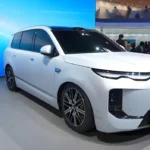

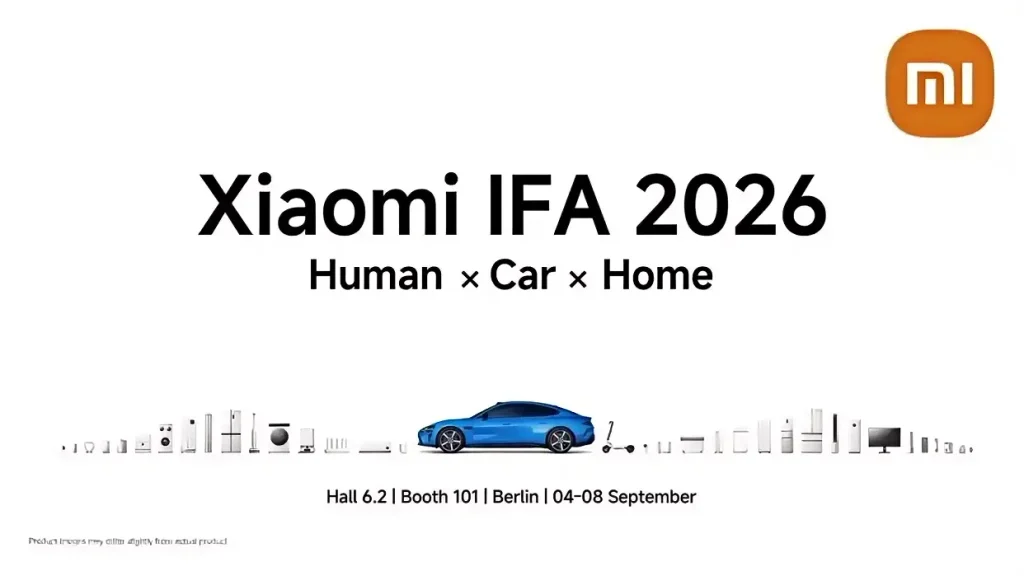
Xiaomi Auto used the media day of IFA Berlin 2026 to make its European intentions concrete. On September 3, the company confirmed it will enter Germany and other European markets in 2027 — and signed memorandums of understanding with eight of Germany’s largest automotive dealer groups. It is the first real brick in a European retail network. It is also, read carefully, a story about a cost problem Xiaomi has not yet solved.
The signing is genuine news, and the partner list is stronger than most entrants manage. But three things were conspicuously absent from the announcement: a tariff rate, a European factory, and a price. Xiaomi has none of the three, and every one of them will decide whether this launch works.
Xiaomi Europe Launch: What Was Actually Signed at IFA Berlin
The eight groups that signed are Ernst Dello GmbH & Co. KG, Autohaus Dinnebier GmbH, Emil Frey Germany, Fett & Wirtz Automobile GmbH & Co. KG, Hahn Automobile GmbH + Co. KG, LUEG Mobility GmbH, Penske-Jacobs Innovation GmbH, and SPT Avior SE & Co. KG.
The roster matters. Emil Frey is one of Europe’s largest dealer groups. LUEG was among the first authorised Mercedes-Benz retailers in Germany. These are not grey-import operators — they are businesses with decades of premium-brand service experience, which is precisely what a company with no European aftersales history needs.
Yu Liguo, Xiaomi Auto’s vice president and head of international business, framed it as a long-term commitment: the company will lean on its Munich-based European R&D centre and a growing partner network, with local partnerships “at the heart” of the strategy. Xiaomi says it will add more European partners as 2027 approaches.
What it did not disclose: how many stores each group will run, which territories they cover, how much anyone is investing, the partnership terms, which models come first, European pricing, or anything more specific than “2027.” The global website that went live on August 26 still has no configurator, no local pricing and no purchase portal — only a dealer-inquiry form.
Accuracy note: These are memorandums of understanding, not definitive dealership agreements — a distinction Taiwanese financial outlet cnyes also flagged. An MoU signals intent and starts work; it does not bind either side to open showrooms. Any headline reading “Xiaomi signs 8 German dealers” overstates what happened.
Xiaomi Europe Launch Math: The Tariff Xiaomi Doesn’t Have Yet
Here is the part that will actually determine the outcome. Since late 2024, the EU has layered a countervailing duty on top of its standard 10% import tariff for Chinese-built battery-electric cars. Rates were set per company:
| Manufacturer | Countervailing duty | Incl. 10% base |
|---|---|---|
| BYD | 17.0% | 27.0% |
| Geely | 18.8% | 28.8% |
| Tesla (Shanghai) | 7.8% | 17.8% |
| SAIC | 35.3% | 45.3% |
| Xiaomi | not assigned | unknown |
Xiaomi was not selling cars when Brussels ran its investigation, so it has no rate of its own. Depending on how the Commission classifies it, Xiaomi lands either in the “other cooperating companies” bucket at 20.7% — 30.7% all-in — or in “all other companies” at 35.3%, or 45.3% all-in. (French outlet Frandroid lays out both scenarios in more detail than any English-language report we could find.)
Run that through a pure-export model and the arithmetic gets ugly. Take a car with a Chinese ex-factory price around €30,000: add roughly €1,500 in sea freight, €7,500–10,500 in duty, about €500 in amortised homologation cost, and 8–10% channel commission. Landed cost lands near €43,000 before dealer margin or aftersales network build-out. Chinese trade analysis puts the resulting European sticker at €43,000–55,000 — more than 50% above the domestic price — with rigid import costs consuming 47–62% of the China retail price and per-car gross margin possibly as thin as €3,000–4,000.
There is one escape hatch. On January 12, 2026, Brussels published a guidance document on minimum-import-price undertakings — model-by-model price floors offered in exchange for lifting the countervailing duty. The first one accepted went to Volkswagen’s Anhui plant together with SEAT in February, covering the China-built Cupra Tavascan. The guidance explicitly lists “future investments in the EU” among the factors it weighs. The catch is obvious: a price floor takes away the value proposition Xiaomi built its phone business on.
Accuracy note: The duty rates above are the EU’s published figures for named manufacturers. Xiaomi’s own rate has not been assigned and any figure applied to it is a projection, not a ruling. The landed-cost and margin figures are third-party trade estimates, not Xiaomi disclosures.
Why the Xiaomi Europe Launch Starts in Germany
Germany as the beachhead is a deliberate choice, and not just because it is Europe’s largest car market. Xiaomi already runs a European R&D centre in Munich staffed by roughly 50 people, drawing on former BMW, Porsche and Lamborghini executives to adapt vehicles to European safety standards and charging infrastructure. It has also hired a former Tesla Central Europe delivery-operations executive to build out European logistics.
The wider plan borrows from the phone playbook: Xiaomi wants 10,000 overseas Xiaomi Home stores within five years, sharing retail space across phones, AIoT and cars. In Europe, where Xiaomi phones already have brand recognition, that is a cheaper route to footfall than building an auto-only network from zero.
Author’s Take. The dealer list is the easy part, and Xiaomi cleared it impressively. The hard part is that it signed retailers before knowing what it will charge. A dealer group can commit to floor space on an MoU; it cannot commit to volume without a price, and Xiaomi cannot set a price until Brussels tells it what the duty is. Until then, every number in the European business plan is provisional — which is likely why the company is comfortable signing intent now and deferring terms.
Xiaomi Europe Launch vs BYD: The Local-Production Gap
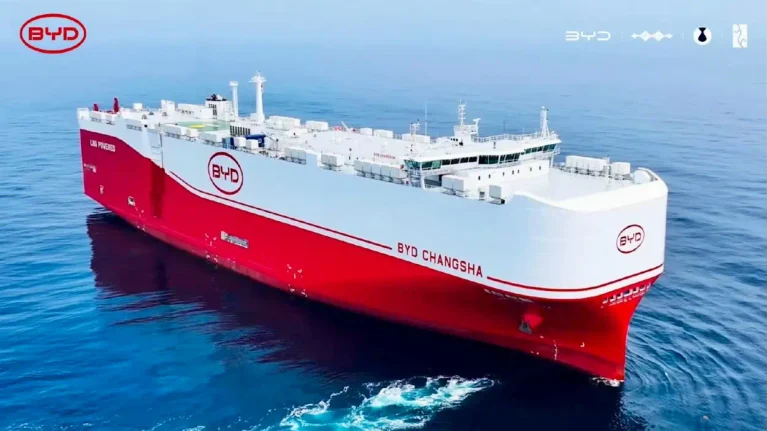
The comparison Xiaomi will hate is the one that matters most. BYD is building a €4–5 billion plant in Hungary that starts production in the fourth quarter of 2026 with 150,000 units of annual capacity — cars made inside the bloc, outside the duty regime entirely. Xiaomi has announced no European production timeline at all.
That gap compounds with timing. By the time Xiaomi delivers its first European car in 2027, BYD, Leapmotor, Xpeng and MG will have roughly three years of registrations, warranty history and residual-value data on the continent. Chinese brands already took 8.9% of the European market in the first half of 2026, with 643,000 vehicles.
Xiaomi is also arriving while its home numbers soften. Cumulative mainland deliveries have passed 700,000 since the first car shipped in March 2024 — the SU7 series took 28.5 months to clear 500,000, and the YU7 drew more than 240,000 lock-in orders in 18 hours. But July deliveries came in at 31,267 units, up just 2.68% year on year and down about 10% from June, leaving the 550,000 annual target only about 39% complete by end-July. The auto and AI division lost RMB 2.6 billion (about US$358 million) in the second quarter, and management has promised profitability in the second half of 2026 — right as it has to fund a European launch.
None of this makes the German signing meaningless. It makes it early. The Sky Nomad range launching September 7 will tell us more about Xiaomi’s near-term product cadence, and the brand’s Nürburgring credentials give it engineering credibility that most Chinese entrants lack. But credibility does not pay duty.
The Bottom Line. Xiaomi has done the visible work of entering Europe — eight credible dealer groups, a Munich R&D centre, a global storefront. What it has not done is solve the two things that decide whether a Chinese EV launch in Europe makes money: a duty rate it can plan around, and a factory inside the tariff wall. Eight MoUs is a good first step. It is not a business model. Watch for a minimum-import-price filing or a European plant announcement — whichever comes first will tell you what Xiaomi actually thinks its European margin is worth.
Sources & Further Reading
- CnEVPost — “Xiaomi Auto signs first German dealers, paving way for 2027 European sales” (2026-09-03) — primary English report; full partner list and disclosure gaps.
- CarNewsChina — “Xiaomi Auto partners with eight major German dealer groups for European expansion” (2026-09-03) — English corroboration, Yu Liguo quotes.
- Frandroid — “Xiaomi Auto confirme l’Europe en 2027” (2026-09-03) — most detailed breakdown of the EU duty buckets Xiaomi could fall into and the minimum-import-price route.
- News18a Auto (网通社汽车) — “Xiaomi’s 2027 Europe entry faces tariff and certification hurdles” — landed-cost breakdown, compliance timeline (digital battery passport, UN R171), competitive context.
- Cnyes (鉅亨網) — “SU7, YU7 cumulative deliveries top 700,000” (2026-09-04) — Xiaomi share price reaction and confirmation that the documents are MoUs, not dealership contracts.
- CnEVPost — Xiaomi Auto launches global website and social channels (2026-08-26) — the “coming to Europe in 2027” site and dealer-inquiry portal.
- CnEVPost — Xiaomi SU7 series tops 500,000 cumulative deliveries (2026-08-17) — delivery milestone cited above.
- European Commission — countervailing duties on BEVs from China (Implementing Regulation (EU) 2024/2754) — official source for every duty rate in the table above.
- European Commission — Guidance Document on price undertaking offers (2026-01-12) — the minimum-import-price route.
- EU Official Journal — Implementing Decision (EU) 2026/328 (2026-02-09) — acceptance of the VW Anhui / SEAT undertaking covering the Cupra Tavascan.
Sourcing note: Primary reporting from CnEVPost (English first-hand) with corroboration from CarNewsChina and Frandroid. Duty rates are the European Commission’s published figures for named manufacturers; Xiaomi’s rate is unassigned and any figure applied to it here is clearly labelled a projection. Landed-cost and margin estimates are third-party trade analysis, not company disclosures. USD conversions calculated at RMB 7.25 to the dollar. Analysis and interpretation are original to EVsays.