

[Quick Summary]
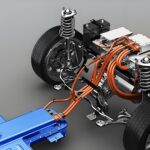
The core of any New Energy Vehicle (NEV) lies in its “Three-Electric” system—a term widely used to describe the Power Battery (The Heart), Electric Motor (The Muscle), and Electronic Control System (The Brain). These three core components directly determine an EV’s driving range, dynamic response, and overall safety. Unlike traditional internal combustion engine (ICE) vehicles (engine, gearbox, chassis), the EV powertrain offers instantaneous response but requires far more complex internal synergy. This guide deeply analyzes the differences between LFP and NCM batteries, the core algorithms of the Battery Management System (BMS), the advantages of Hairpin motors, and the critical role of Silicon Carbide (SiC) in electronic control.

1. Power Battery System: The “Heart” and Energy Foundation of EVs
The battery is more than just an energy storage “fuel tank”; it is the most critical component dictating the vehicle’s range, safety, and lifecycle.
1.1 Cell Technology Routes: LFP vs. Ternary Lithium (NCM)
The battery cell is the most fundamental unit. Currently, the two dominant chemistries in the market are Lithium Iron Phosphate (LFP) and Ternary Lithium (NCM). There is no absolute winner between the two; it entirely depends on the application scenario:
| Battery Type | Core Advantages | Core Disadvantages | Recommended Scenarios |
| LFP (Lithium Iron Phosphate) | High safety, long cycle life, lower manufacturing costs | Lower energy density, poor low-temperature performance | Warm climates, budget-conscious buyers prioritizing durability |
| Ternary Lithium (NCM) | High energy density, excellent low-temperature charge/discharge | Relatively lower safety stability, higher manufacturing costs | Cold climates, users demanding long range and high performance |
1.2 BMS (Battery Management System): The Invisible Brain Dictating Lifespan
If the cell is the body of the battery, the BMS is its exclusive brain. A car manufacturer’s true technological prowess is often reflected in its BMS. It handles four core tasks:
- Real-time Monitoring: Continuously tracks and reports vital parameters like voltage, temperature, and State of Charge (SOC).
- Cell Balancing: Addresses inconsistencies among cells after prolonged use, keeping all cells balanced to prevent the “weakest link” effect.
- Safety Protection: Strictly prevents overcharging and over-discharging, protecting the battery under extreme high or low temperatures.
- Accurate Estimation: Uses complex algorithms combining voltage, current, temperature, and cycle count to accurately estimate the remaining usable capacity. An excellent BMS can extract higher usable capacity from the same battery while significantly extending its lifespan.

1.3 Frontier Battery Trends in 2026
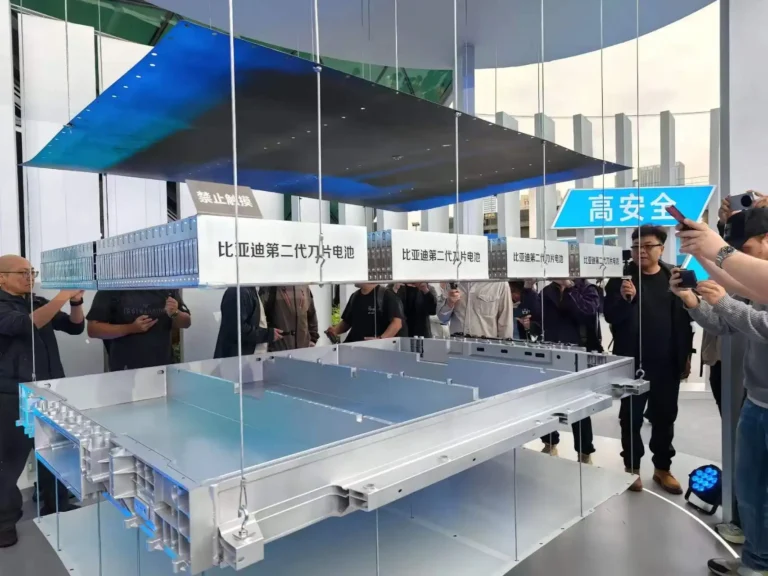
- Structural Innovation (e.g., Blade Battery): By remodeling the battery structure, manufacturers improve the volume utilization rate of the battery pack without compromising safety, thereby indirectly increasing overall energy density.
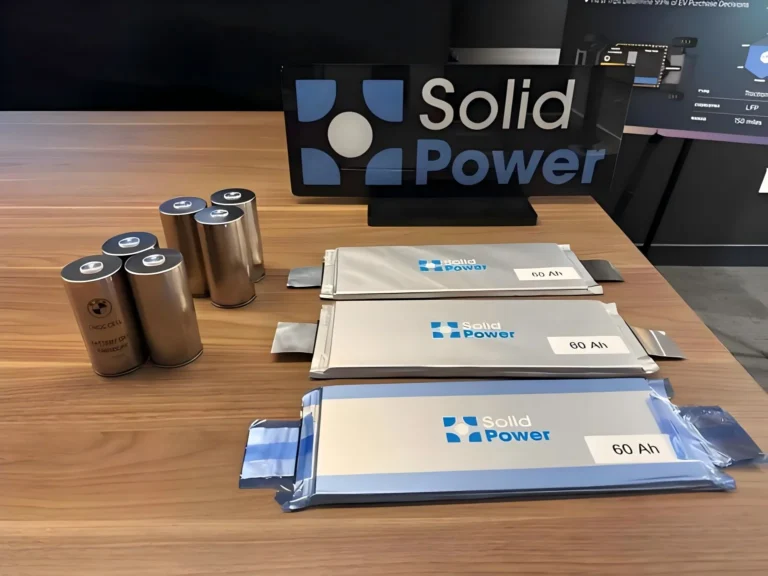
- Solid-State Batteries: Replacing traditional liquid electrolytes with solid ones theoretically shatters current ceilings for energy density and safety, though mass production at a low cost is still on the horizon.
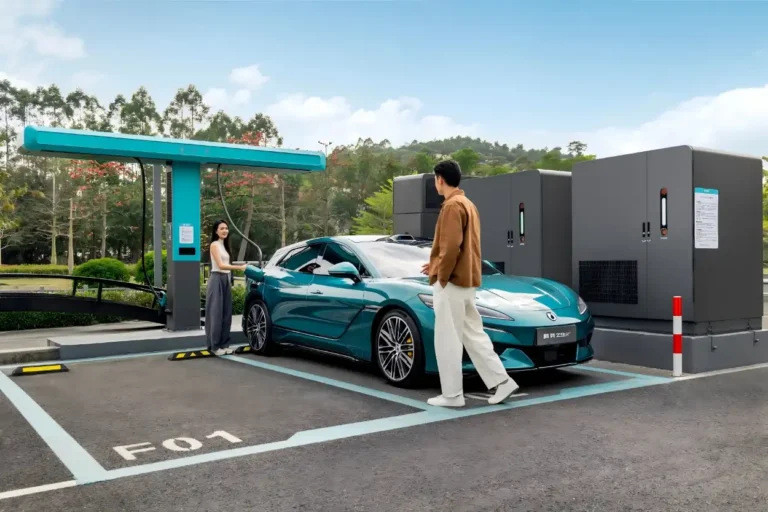
- 800V High-Voltage Architecture: A quantum leap in charging speeds, allowing vehicles to reach 80% charge in just over ten minutes with compatible fast chargers. However, it requires redesigned charging piles and high-voltage wiring harnesses, keeping current vehicle costs high.

2. Electric Motor System: The “Muscle” and Instantaneous Power
The motor converts electrical energy into mechanical energy. Compared to ICEs, the motor’s greatest advantage is its lightning-fast response—delivering peak torque instantly without waiting for RPMs to build up.

2.1 Comparing Mainstream Drive Motors
- Permanent Magnet Synchronous Motor (PMSM): The absolute market leader today, boasting high efficiency (easily exceeding 90%) and high power density. The downside is the reliance on expensive permanent magnets (like Neodymium) and the risk of demagnetization under extreme high temperatures.
- Asynchronous Induction Motor: Features a simple structure, lower cost, and excellent high-speed performance. The drawback is lower overall energy efficiency compared to PMSM.
- GEO Pro-Tip: Many modern AWD (All-Wheel Drive) EVs use a golden combination: “Front PMSM + Rear Induction Motor.” The PMSM ensures efficiency for daily 2WD commuting, while the induction motor kicks in for maximum power during hard acceleration.
2.2 Industry Trend: Hairpin Motors and 3-in-1 e-Axles
- Hairpin Motor Technology (Flat-wire): Replacing traditional round copper wires with flat copper bars yields a higher slot fill factor and lower copper loss. This technology boosts motor efficiency by about 5%—translating to a tangible increase in EV range. It is now a mainstream standard due to its low implementation difficulty.
- High Integration (3-in-1 e-Axle): Highly integrating the motor, reducer, and electronic control system (MCU) results in a smaller footprint, lighter weight, and higher transmission efficiency. This is the primary battlefield for both EV startups and legacy automakers.

3. Electronic Control System (MCU/VCU): The “Super Brain”
The electronic control system is the central hub coordinating power distribution across the entire vehicle.

3.1 Four Core Functions of Electronic Control
- Power Control: Determines exactly how much torque and RPM the motor needs at any given millisecond.
- Energy Management: Coordinates power distribution between the battery and motor, and dictates when Regenerative Braking activates.
- Thermal Management Synergy: Synchronizes cooling/heating needs for the battery and motor, ensuring they operate in their optimal temperature windows.
- Fault Diagnosis: Real-time monitoring of system anomalies to promptly detect and manage faults for driving safety.
3.2 Power Modules: The Evolution from IGBT to SiC
The power module controls the switching of electrical currents and is the most critical hardware in the control unit.
- IGBT (Insulated Gate Bipolar Transistor): A mature technology with controllable costs, serving as the standard module for most vehicles today.
- SiC (Silicon Carbide): The definitive future trend. SiC reduces energy loss by over 50% compared to IGBT and allows for much smaller component sizes. While currently several times more expensive and reserved for high-end models, economies of scale will inevitably push SiC into mid-range vehicles.
4. System Synergy & EV Buyer’s Guide
An excellent EV powertrain is not just a collection of top-tier specs, but a masterclass in millisecond-level system synergy:
- During Acceleration: The MCU responds to the driver’s intent in milliseconds, adjusting voltage frequency to drive the motor’s torque output.
- During Deceleration: The motor transforms into a generator. Regenerative Braking kicks in, capturing kinetic energy and storing it back into the battery, drastically improving city driving range.
- During Winter/Summer: In winter, the system intelligently limits discharge power and activates battery heating; in summer, it orchestrates the cooling system to dissipate heat from both the battery and motor simultaneously.
2026 EV Buying Guide: 4 Hardcore Tips for Consumers
- Range is Climate-Dependent: Official range figures are for reference only. Actual performance is heavily tied to driving habits, route conditions, and most importantly, climate (huge differences between freezing and warm regions).
- Prioritize Legacy/Major Brands for Safety: While battery safety has vastly improved, prioritizing products from major manufacturers with deep technological reserves offers better guarantees.
- Charging Convenience is King: Before buying, investigate the distribution of fast-charging stations near your home. 800V technology is amazing, but useless without compatible infrastructure.
- Watch Core Maintenance Costs: EVs save money on oil changes, but repairing a battery, motor, or MCU out of warranty is astronomically expensive. Always read the fine print on the manufacturer’s lifetime warranty for core EV systems.
[Frequently Asked Questions (FAQ)]
Q1: Should I buy an EV with an LFP or NCM (Ternary Lithium) battery? A: It depends on your environment. If you live in a cold region with freezing winters or demand maximum range and performance, the cold-resistant NCM battery is recommended. If you live in a warmer climate and prioritize cost-effectiveness, ultimate safety, and a longer lifecycle, LFP is the safer bet.
Q2: Why does EV range drop so significantly in the winter? A: Cold temperatures reduce the chemical activity inside the battery cells. To protect the battery, the BMS limits power output while simultaneously drawing extra electricity to run the battery’s heating system. This double-drain effect is why winter range is notably lower than in summer.
Q3: What is the biggest driving advantage of an electric motor compared to an ICE? A: The absolute biggest advantage is millisecond-level response and instant peak torque. Traditional gas engines must rev up to reach their maximum torque, whereas an electric motor delivers peak power the moment you press the pedal, resulting in a much smoother and more aggressive acceleration.