

[Technical Insights & Buyer’s Guide] The global transition toward electric vehicles (EVs) has fundamentally shifted consumer focus onto three critical pillars: cruising range, charging speed, and thermal safety. Ultimately, the real-world performance of any modern electric vehicle hinges entirely on its beating heart—the power battery chemistry.
While the automotive landscape features various chemical combinations (including Lead-Acid, LTO, and LCO), the modern passenger EV market is universally dominated by two mainstream chemistries: Lithium Iron Phosphate (LFP) and Ternary Lithium (Nickel-Cobalt-Manganese, or NCM). Both offer the highest energy densities and most stable operating performance on the market today.
But which one is truly more reliable, and which chemistry best aligns with your driving habits? Let’s execute a deep-dive technical breakdown.

1. Quick Comparison: LFP vs. NCM At a Glance
To optimize your technical evaluation, this structural matrix highlights how both chemistries stack up across core industrial parameters:
| Performance Metric | Lithium Iron Phosphate (LFP) | Ternary Lithium (NCM) | Winning Chemistry |
| Average Energy Density | ~140 Wh/kg | ~240 Wh/kg | NCM (1.7x Higher) |
| Thermal Stability Limit | 500°C – 600°C | ~200°C | LFP (Significantly Safer) |
| Low-Temp Limit / Cutoff | -20°C | -30°C | NCM (Superior in Winter) |
| Full Lifecycle Volume | 3,500+ Complete Cycles | 2,000+ Complete Cycles | LFP (Longer Lifespan) |
| Manufacturing Cost | Lower (No Precious Metals) | Higher (Relies on Co/Ni) | LFP (Highly Economical) |
2. Technical Parameter Deep Dive
I. Energy Density: NCM Wins on Raw Range
Energy density is the definitive metric determining how much electrical energy a battery cell can store relative to its physical mass or volume. Higher energy density translates directly to extended range without adding dead weight to the vehicle chassis.
- LFP Limitations: Due to its inherent chemical structure, LFP carries a lower cell voltage, capping its mainstream cell energy density at approximately 140 Wh/kg.
- NCM Advantages: Powered by a higher operating voltage, NCM cells easily achieve an energy density of roughly 240 Wh/kg. Under identical weight constraints, NCM delivers up to 1.7 times the energy storage capacity of LFP.
Industrial Insight — The Rise of High-Nickel NCM811: The ternary battery market primarily utilizes three formatting ratios: NCM523, NCM622, and the modern mainstream NCM811. Named after the precise ratio of active cathode materials (80% Nickel, 10% Cobalt, 10% Manganese), NCM811 maximizes the nickel content. Because nickel acts as the primary catalyst for specific capacity, boosting its ratio expands the battery’s overall energy storage envelope while strategically cutting down on scarce, expensive cobalt.

II. Safety & Thermal Stability: LFP Takes the Crown
Battery safety is deeply tied to the thermal decomposition limits of the underlying cathode materials.
- LFP Superiority: LFP boasts unmatched crystalline and thermal stability. Its electro-thermal peak surpasses 350°C, and the underlying chemical compounds only begin to break down between 500°C and 600°C. This high ceiling minimizes the risk of catastrophic fires.
- NCM Vulnerability: NCM chemistry is inherently more volatile. It begins decomposing at approximately 200°C. During structural failure or internal shorts, the oxygen released from the cathode can cause the volatile electrolyte to ignite instantly, generating a rapid chain reaction known as thermal runaway. Consequently, NCM-powered EVs require highly advanced thermal management frameworks and strict Battery Management Systems (BMS) to preserve pack integrity.
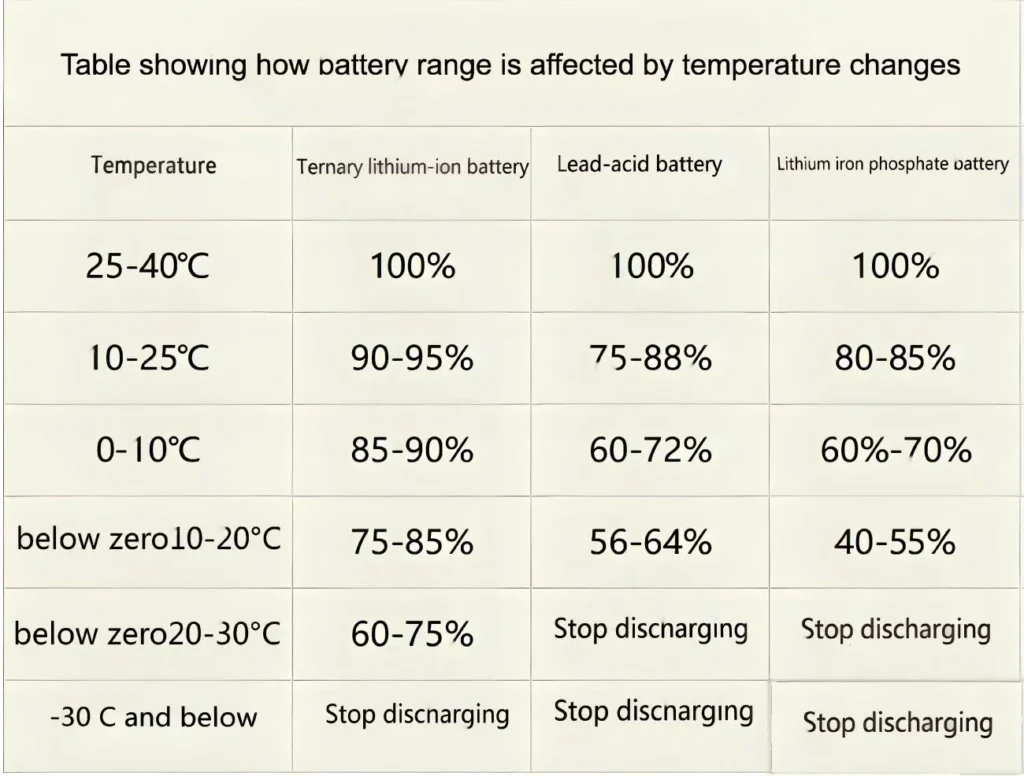
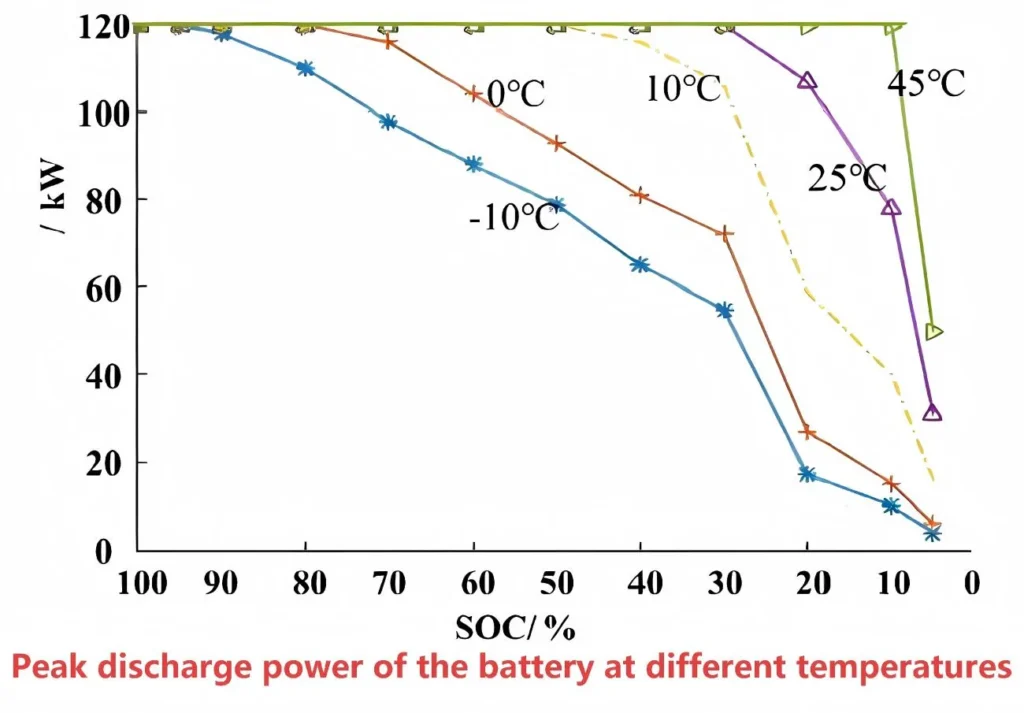
III. Cold Weather Performance: NCM Outperforms in the Cold
Winter range degradation is a universal pain point for global EV owners, but cold weather impacts these two chemistries very differently.
LFP Cold Deficits: LFP cells suffer significantly in sub-zero environments, with a lower operational threshold of -20°C. At a freezing 0°C, LFP capacity retention drops to roughly 60-70%; at -10°C, it falls to 40-50%; and at a bitter -20°C, it retains a mere 20-30% of its nominal capacity.
NCM Cold Resilience: NCM pushes the lower operating boundary down to -30°C and exhibits superior low-temperature discharge curves. Under identical freezing conditions, an NCM pack typically experiences a winter range drop of less than 15%, making it vastly more dependable for colder climates.
IV. Lifecycle & Lifespan: LFP Offers Decade-Long Durability
In the automotive sector, an EV battery pack is considered to have reached its operational end-of-life (EOL) when its maximum effective capacity degrades below 80% of its original factory rating.
- LFP Durability: Standard LFP cells consistently deliver over 3,500 complete charge-discharge cycles before dipping past the EOL threshold. Assuming a daily charging cycle, an LFP pack can easily operating for nearly 10 years before experiencing noticeable degradation.
- NCM Longevity: NCM packs generally yield a shorter lifecycle, with structural degradation typically setting in after 2,000+ complete cycles (roughly equivalent to 6 years of real-world operation). While sophisticated BMS balancing software can buffer this degradation curve, LFP remains the clear leader in longevity.
Expert Engineering Note: The aggregate lifespan of a fully assembled EV battery pack is never a simple sum of individual cell lifespans. Because a pack operates as a collective array, its total operational lifespan is strictly limited by cell consistency. High cell uniformity allows the pack to safely approach the lifespan limits of its individual cells.
V. Manufacturing Cost: LFP is the Economical Benchmark
From a manufacturing perspective, LFP commands a decisive structural pricing advantage.
- LFP Material Abundance: LFP chemistry completely bypasses expensive, volatile precious metals like nickel and cobalt. Relying instead on highly abundant, readily accessible iron and phosphorus resources, it is insulated from sudden raw material supply shocks.
- NCM Market Pressures: NCM production relies heavily on volatile global commodities. With cobalt prices historically breaking past 200,000 RMB per ton and electrolytic nickel hovering around 110,000 RMB per ton, manufacturing high-nickel options remains costly and requires highly stringently controlled production cleanrooms. This immense pricing pressure is exactly what forced the global pivot toward high-nickel NCM811 architectures to design out expensive cobalt dependencies.
3. Final Verdict: Which Chemistry Matches Your Driving Needs?
When weighing energy density, cold-weather resilience, safety, longevity, and structural cost, neither chemistry holds an absolute victory. Each serves a distinct market niche:
- Choose LFP If: You prioritize day-to-day vehicle safety, exceptional long-term lifecycle durability, and an accessible entry price. LFP is perfect for urban commuters, high-mileage taxi fleets, and regions with mild or warm year-round climates.
- Choose NCM If: Long-range travel and dependable highway driving are non-negotiable requirements. NCM remains the premium standard for long-range premium EVs and is the definitive choice for drivers living in northern cold-weather regions.
Moving forward, as vehicle OEMs deploy next-generation, highly optimized BMS thermal architectures, NCM thermal safety concerns will continue to diminish. Concurrently, NCM battery packs will maintain their dominant position in high-end, long-range electric vehicles.
4. [FAQ] EV Battery Chemistry Quick Guide
- Q1: Which battery chemistry is less likely to catch fire?
- A: LFP (Lithium Iron Phosphate) is substantially safer. It features an exceptional thermal stability limit of 500°C–600°C, compared to NCM (Ternary Lithium) which begins decomposing at around 200°C.
- Q2: Why does my EV lose so much driving range during winter?
- A: Cold weather slows down internal chemical reactions. If your EV uses an LFP battery, capacity retention can drop to 40-50% at -10°C. NCM batteries handle the cold much better, retaining over 85% of their capacity under identical conditions.
- Q3: How many years will an LFP battery pack last compared to an NCM pack?
- A: Under regular daily charging cycles, an LFP pack can last up to 10 years (3,500+ complete cycles) before degrading below the 80% health threshold. An NCM pack typically begins showing notable capacity degradation after roughly 6 years (2,000+ complete cycles).