
The Big Picture
- CATL sodium battery Europe: 5 GWh deal with Alfen NV, a leading European renewable energy integrator. First GW-scale sodium export to Europe. First systems online in the Netherlands and Western Europe, 2027.
- Tener Sodium specs: 25-year operational lifespan, roughly 2% better round-trip efficiency than comparable LFP systems, >30 MWh rated capacity per unit, supports 1-8 hour storage durations. Critically — compatible with LFP systems, allowing hybrid deployments.
- This is the third sodium megadeal in four months: 60 GWh with HyperStrong (China, April), a $739M, 40 GWh sodium factory in Fujian (May), and now 5 GWh with Alfen (July). CATL is betting that sodium replaces lithium in stationary storage — not in cars.
1. CATL Sodium Battery Europe: The Product and the Partnership
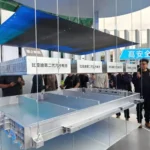
CATL sodium battery Europe moved from product unveiling to export contract in less than a month. The Tener Sodium system was announced on June 22 as the “world’s first field-validated sodium-ion battery energy storage solution.” On July 16 — 24 days later — CATL has a signed memorandum of understanding with Alfen NV for 5 GWh of deployments across the Netherlands and Western Europe. The speed of the deal suggests Alfen had been evaluating the technology well before the public launch.
The system’s specifications explain why. At >30 MWh per unit with a 25-year design life, Tener Sodium competes directly with utility-scale LFP storage on total cost of ownership — not on upfront capital cost alone. The roughly 2% improvement in round-trip efficiency compounds over two and a half decades of daily charge-discharge cycles. Alfen, as an integrator, cares about lifetime economics, not just purchase price. CATL won this deal on the numbers, not on the novelty.
Compatibility with LFP systems is the underrated feature here. CATL explicitly stated that Alfen can mix sodium and LFP chemistries within the same deployment. When lithium prices are low, lean LFP. When lithium prices spike — as they have twice in the last five years — switch to sodium. That flexibility turns a battery supply contract into a hedging instrument. Alfen pays for insurance against lithium volatility, not just for batteries.
2. Why Sodium, Why Europe, Why Now
Sodium-ion batteries have one structural advantage over every lithium chemistry: zero lithium, zero cobalt, zero nickel. The cathode material is Prussian white — an iron-based compound. The anode is hard carbon. Sodium is abundant and geographically distributed. A sodium battery supply chain cannot be cornered by any single country, the way lithium processing is concentrated in China.
That supply-chain argument matters enormously in Europe. The EU’s Critical Raw Materials Act requires battery supply chains to diversify away from single-country dependencies. European grid operators and renewable developers are under regulatory pressure to prove their storage procurement is geopolitically resilient. A sodium-based system from CATL — still a Chinese company, but using materials that are not subject to Chinese supply-chain dominance — satisfies both the technical requirement (storage capacity) and the regulatory requirement (diversified chemistry).
CATL’s statement said the partnership would help “build localized experience in applying sodium-ion batteries to European power grids and improve the product’s compatibility with European grid standards.” That’s not the language of a one-off export deal. That’s the language of a company planting a flag and preparing to expand. The synchronization of the timelines is revealing: China deliveries start in September 2026, with 1 GWh expected by year-end. Global commercial deliveries begin in June 2027 — exactly when the Alfen deployment is scheduled to start. The domestic ramp-up and the export pipeline are designed to run in parallel.
3. The Bigger Picture: Sodium’s Role in CATL’s Empire
CATL’s sodium strategy is not a side project. In April, the company signed a three-year, 60 GWh supply agreement with HyperStrong — the largest sodium-ion battery order in history. In May, it announced a 5 billion yuan ($739 million) investment to build 40 GWh of sodium-ion battery production capacity in Fujian province. The Alfen deal represents the third pillar: export commercialization.
The pattern is classic CATL: dominate the home market at scale, use the cost advantage to win international contracts, and build production capacity ahead of demand so that competitors face a cost curve they cannot match. CATL’s 40.2% global EV battery market share was built on this playbook in lithium. It’s now applying the same logic to sodium — and it’s doing it before any major competitor has a commercial sodium product.
Sodium will not replace lithium in EVs. Energy density is too low. But in stationary storage — where density doesn’t matter and cost-per-cycle is everything — sodium has a path to becoming the dominant chemistry. If CATL can build 40 GWh of sodium capacity while competitors are still running pilot lines, it will own the sodium storage market the same way it owns lithium. The Alfen deal is the first shot in that war.
Author’s TakeSodium-ion batteries have been the “next year” technology for the better part of a decade. Today’s Alfen deal changes that not because the technology got better — it’s the same Tener Sodium system unveiled three weeks ago — but because the economics crossed a threshold that a European grid integrator was willing to bet 5 GWh on.
Alfen is not a startup looking for a press release. It’s a publicly listed company that builds and operates energy infrastructure for utilities and industrial customers across Europe. Its procurement team ran the numbers on sodium versus LFP over a 25-year asset life and concluded that sodium wins — at least for some portion of its pipeline. That’s the signal worth paying attention to. Not CATL’s marketing. Alfen’s capex allocation.
The Bottom Line
CATL sodium battery Europe is no longer a technology demonstration or a policy aspiration. It’s a 5 GWh commercial contract with a European grid integrator, deploying from 2027. The Tener Sodium system was unveiled 24 days ago. It’s already being sold. CATL has booked 65 GWh of sodium orders this year — 60 GWh in China, 5 GWh in Europe — and is building a 40 GWh factory to supply them. Sodium-ion isn’t replacing lithium in cars. It’s replacing lithium in the one market where density doesn’t matter and cost is everything. That market is grid-scale storage. And CATL just won the first round.