
The Big Picture
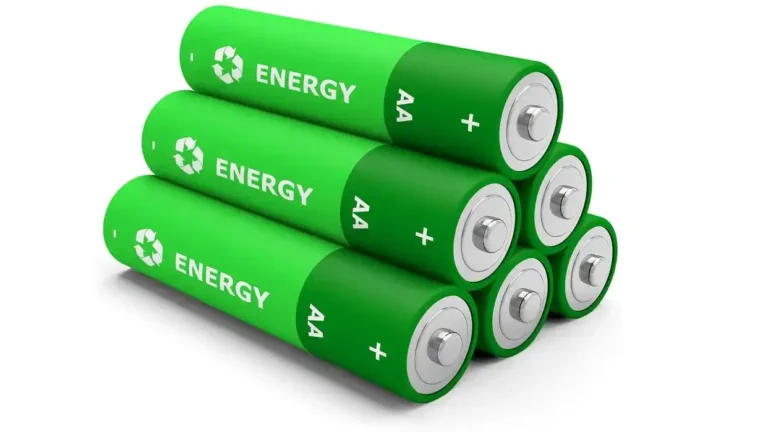
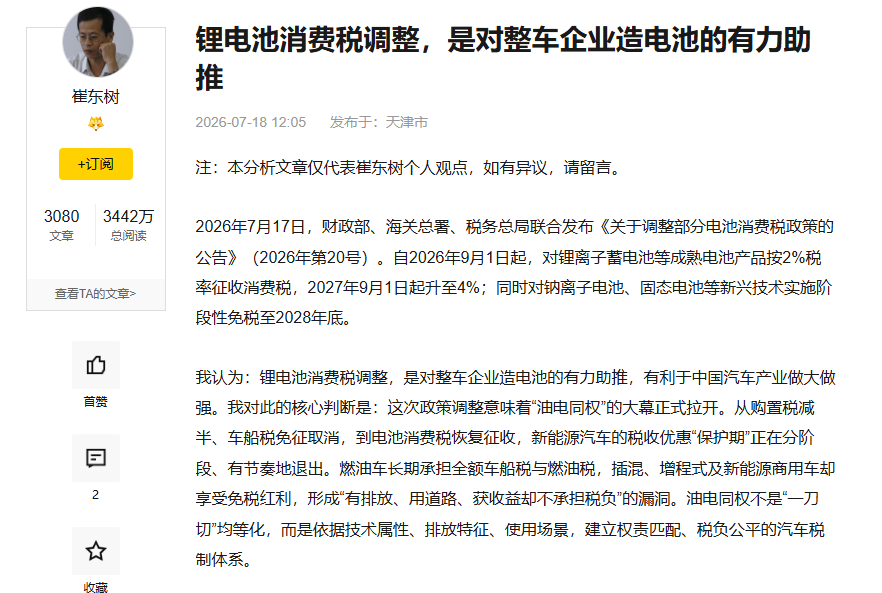
- CPCA’s Cui Dongshu: the new battery consumption tax will strongly push automakers toward in-house cell production. Self-produced batteries are tax-exempt or deductible; purchased batteries carry the full 2-4% cost.
- CATL’s 2025 net profit: $10.7 billion — more than 13 A-share automakers combined. China’s auto industry sales profit margin: just 3.4%. Cui called the situation “too dire to look at.”
- “Automakers that do not make power batteries can never become world-class carmakers.” Cui’s conclusion is not a suggestion. It’s a diagnosis.
1. The Tax That Changes the Economics
Yesterday’s lithium consumption tax was described primarily as a technology-forcing policy — make lithium more expensive, make sodium cheaper. Cui Dongshu’s commentary today reveals a second, arguably more important effect: the tax creates a cost moat between automakers that make batteries and automakers that buy them.
Under the new rules, automakers that produce batteries in-house for their own vehicles are exempt from the consumption tax — or can deduct taxes already paid on purchased cells used in further production. Automakers that buy batteries from external suppliers will pay the full 2-4% tax, passed through by the battery manufacturer. For BYD — which makes its own FinDreams LFP batteries — the tax is invisible. For GAC, BAIC, and others that buy from CATL, it adds roughly 7,000-8,000 yuan ($1,000-$1,200) to the per-vehicle cost. Over a million units a year, that’s nearly a billion yuan in additional cost.
2. The Numbers Behind the Argument
Cui’s commentary is backed by data that explains why he’s this blunt. In 2025, Chinese automakers on the Fortune Global 500 posted combined profits of $14.7 billion. CATL alone took $7.1 billion of that — nearly half. Its net profit of 72.2 billion yuan ($10.7 billion) exceeded the combined profits of 13 A-share listed automakers. China’s auto industry posted a sales profit margin of just 3.4% in the first five months of 2026.
The battery is roughly 25% of a vehicle’s cost. When a single supplier captures nearly half the industry’s profit while the carmakers that pay that supplier are scraping by on 3.4% margins, the industrial relationship is broken. Cui is essentially telling automakers: the reason you’re not making money is sitting in your battery pack, and the company that made it is making more money than all of you combined.
3. Who Wins, Who Loses
BYD is the obvious winner. It makes its own LFP batteries through FinDreams and has the scale to absorb the tax if it ever applied. Nio is building a battery factory in Shanghai — the tax gives that investment a direct ROI. Geely and GWM-backed Svolt have in-house battery programs that now look prescient rather than speculative. The losers are the state-owned automakers — GAC, BAIC, JAC — that depend on CATL and other external suppliers for their power cells. The same companies that are already reporting H1 losses or profit collapses.
Author’s TakeCui Dongshu is not an independent commentator. He’s the secretary-general of China’s official passenger car association. When he says “automakers that don’t make batteries can never become world-class” in his original analysis, he’s not giving an opinion. He’s articulating a policy consensus that already exists inside China’s industrial bureaucracy. The lithium tax was the first piece of legislation. Cui’s commentary is the explanation of what the legislation is actually designed to do. It’s not about raising revenue. It’s not about picking sodium over lithium. It’s about restructuring the relationship between automakers and battery suppliers — making it more expensive to buy from CATL and cheaper to build your own. The tax doesn’t ban battery outsourcing. It just makes it a strategic liability.
The Bottom Line
The lithium battery consumption tax was announced yesterday as a technology policy. Cui Dongshu’s commentary today reveals it as an industrial restructuring. The tax makes battery outsourcing 2-4% more expensive. That’s not enough to kill CATL. It’s enough to make every automaker run the numbers on in-house production — especially when CATL’s profits are larger than 13 of them combined. The era of buying batteries off the shelf and calling it a day is ending. Cui just told the industry why.