

BEIJING — China set a 50 GW V2G target for 2030, a 400% jump from 2025’s 10 GW. The “15th Five-Year Plan” was issued August 3.
The plan envisions 40 million chargers supporting 110 million EVs. China now has 49 million NEVs and 23 million charging points.
No new power plants needed. The 50 GW comes from converting EV batteries into grid resources — 5% of a theoretical 1,000 GW ceiling.
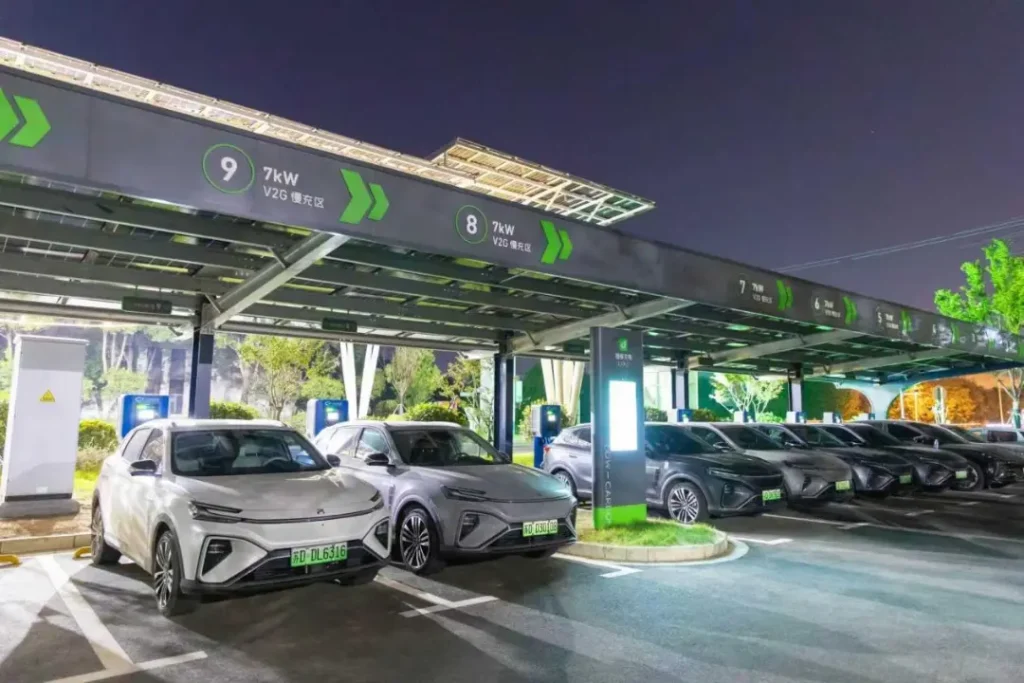
Image source: Changzhou Power Station, China
Owners are already getting paid
In Changzhou, 7,000+ vehicles have fed 300,000 kWh back to the grid across five discharge rounds. The latest runs August 3–5 at 3 yuan ($0.42)/kWh.
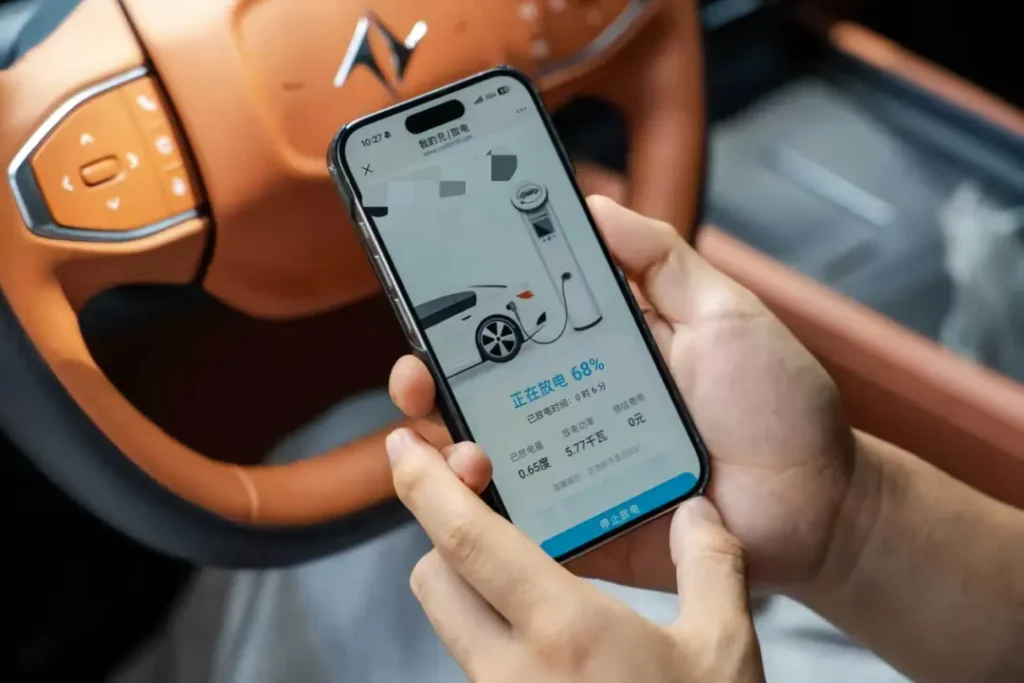
In Chengdu, a driver earned 129 yuan ($18) in one hour discharging 43 kWh at peak pricing. The program covers 10 stations through August 31.
In Dongying, Shandong, 100+ owners joined a V2G program where one 100 kWh discharge yields about 100 yuan ($14). One said commuting costs hit zero.
Yantai, also in Shandong, installed V2G bidirectional poles with similar economics — about 100 yuan per 100 kWh discharge.
Automakers line up
BYD completed V2G compatibility testing and can deploy it across its entire lineup. Chief scientist Lian Yubo calls EVs “intelligent energy units.”
GAC’s V2G microgrid is in testing, projecting 1.5 million kWh of discharge in 2026. Three Hyptec models are V2G-compatible: GT, HT, and HL.
NIO uses its battery swap stations as V2G nodes. Fifth-gen stations in four cities connect to grid peak-shaving.
Wuling partnered with Tsinghua University to launch Guangxi’s first national V2G pilot on July 29.
he battery question
Over 70% of EV owners worry V2G will degrade battery life. The data says otherwise: 80 full cycles caused just 0.13% degradation.
Private cars charge 50–100 times yearly against 2,000–3,000 cycle lifespans. A 10-year ownership leaves ample cycles for V2G.
China Electricity Council’s Liu Yongdong says insurance and warranty systems can further ease concerns.
What 50 GW means
50 GW equals roughly 50 nuclear reactors — from parked cars, not power plants. By 2030, China’s 100 million+ EVs could theoretically provide 1,000 GW.
The plan also targets 300 GW of new energy storage and 160 GW of pumped-hydro. V2G is one piece of a broader flexibility stack.
The commercial model returns 90% of discharge revenue to owners. Operators shift from selling electricity to selling grid services — peak shaving, frequency regulation.
A 600 kWh electric dump truck can earn 249 yuan ($35) daily. One heavy truck battery equals nine passenger EVs in capacity.
Author’s Take
The 50 GW target matters less as engineering than as signal. EVs will be valued for stored energy, not just range. Expect V2G as standard within three years.
Further reading: China Daily’s coverage of the EV-to-energy ecosystem shift provides additional context on how Chinese automakers are repositioning around energy services. ECNS reports on the full 15th Five-Year Plan storage targets, including the 300 GW new energy storage goal.