
BYD has moved from passive investor to active robotics builder. A strategic partnership with tactile-sensing startup PaXini Tech, signed at BYD’s Shenzhen headquarters on August 25 and disclosed this week, hands the world’s largest EV maker something rarer than capital: real factory floors where humanoid robots can fail, learn, and improve.
BYD (HKEX: 1211) and PaXini Tech announced a strategic cooperation agreement on August 25 at BYD’s global headquarters in Shenzhen, with details surfacing across Chinese media on August 31 and September 1. The deal upgrades a relationship that began with equity: BYD took a 7.95% stake in PaXini in April 2025, making it the startup’s second-largest shareholder. Now the two are scaling from “shareholder” to “strategic partner.”
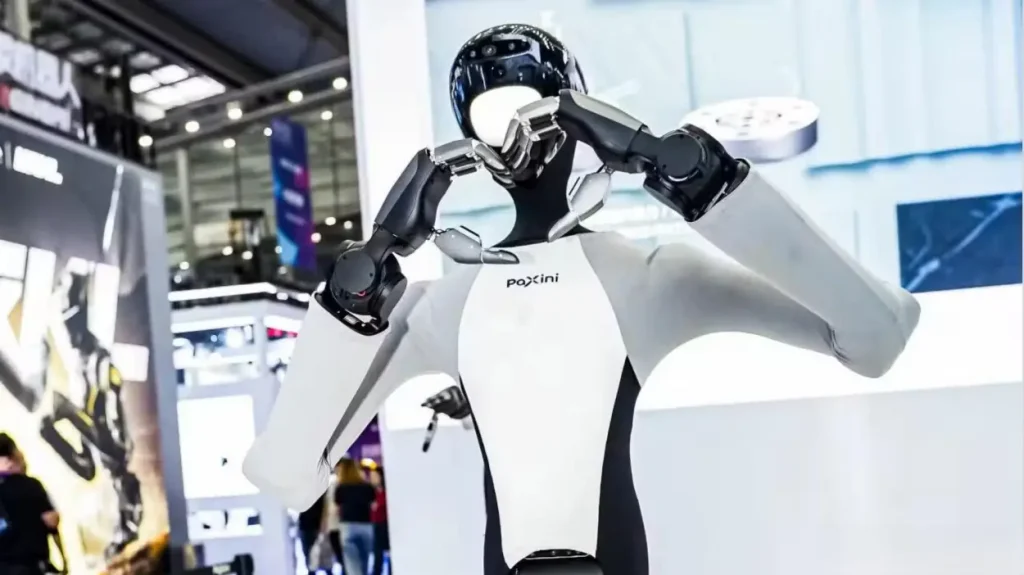
The logic is straightforward. BYD opens its vehicle and component manufacturing pipelines, factory scenarios, and supply-chain resources — giving PaXini’s robots a live industrial proving ground and feeding a flood of real-world operating data back into embodied-AI model training. PaXini contributes the sensing layer: tactile sensors, multi-dimensional perception, and full-modal embodied-data capture that act as the “nerve endings” of a robot trying to work a real line.
BYD PaXini: From Shareholder to Strategic Partner
The capital story matters because it shows intent, not just headlines. BYD’s April 2025 entry at 7.95% was its second robotics bet after AgiBot (UBTech-linked) — a pattern of hedging across China’s humanoid field rather than backing a single horse. PaXini was valued above RMB 10 billion (≈ $1.38 billion at the 7.25 exchange rate EVsays uses) at the time of that investment.
PaXini has kept raising. In March 2026 it closed a round of more than RMB 1 billion (≈ $138 million), with JD.com among the investors, and Chinese outlets have floated a Hong Kong IPO as a next step. For BYD, the math is attractive: a minority position in a sensing specialist now wired directly into its own production system.
PaXini’s Tactile Edge in BYD’s Plants
Where PaXini differentiates is touch. Most humanoid pilots lean on vision and crude force limits; PaXini’s pitch is high-resolution tactile sensing and multi-dimensional perception that lets a gripper feel deformation, slip, and contact pressure the way a line worker’s hands do. On a wiring-harness or gluing task, that feedback is the difference between “placed” and “correctly placed.”
A neighbouring deployment hints at the ceiling. Geely has run PaXini’s Tora-One on a humanoid line for wire-harness assembly and gluing, claiming 8 continuous hours of fault-free operation at a 99.8% success rate. EVsays flags that figure as vendor-reported and not independently verified — a reminder that shop-floor robotics demos travel faster than audited yield data. The point stands regardless: tactile feedback is what moves these tasks from showcase to series production.
What the BYD PaXini Deal Means for Manufacturing
BYD is not starting from zero. Its plants already run UBTech Walker S1 humanoids across sites in Shenzhen and Changsha, and Forbes reported in July 2026 that BYD operates roughly 200 humanoid units — likely the largest single-enterprise humanoid fleet in the world. The PaXini tie-up adds a sensing stack purpose-built for those lines and a data loop BYD controls end to end.
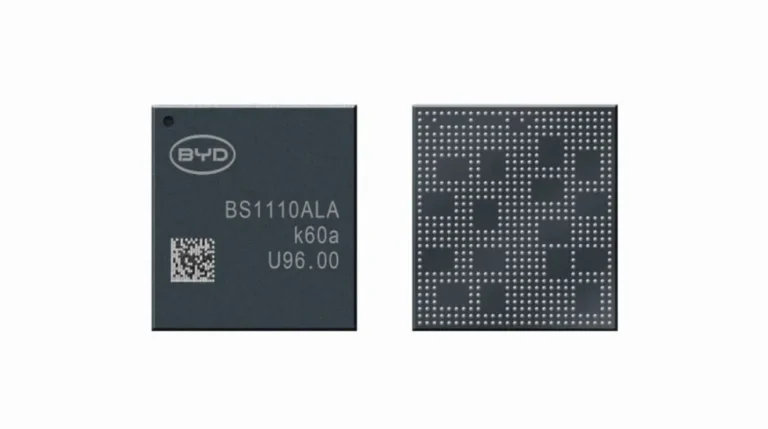
The strategic prize is a factory that trains its own robots. Every shift generates工况 data BYD can use to retrain models, tightening the gap between a demo cell and a line that runs unsupervised. For a company whose in-house 4D radar chip and megawatt charging architecture already show vertical integration, robotics is the same playbook applied to labor.
BYD PaXini and the Global Robotics-in-Auto Convergence
BYD is rowing with the current. BMW and Figure, Hyundai and Boston Dynamics, and Xiaomi’s in-house humanoid program all point the same way: carmakers are becoming the default customers — and trainers — of humanoid robotics in 2026. BYD’s variant is tactile-sensing-led, betting that touch, not just vision, is the bottleneck for real assembly work.
Analyst Take: The headline number is not the 7.95% stake — it is the factory access. Robotics startups live or die on real operating data, and BYD is offering PaXini the one asset competitors cannot buy: millions of square meters of live production line. That turns a minority investment into a structural advantage. The risk is the familiar one in this sector — vendor success rates outrun audited ones, and “strategic cooperation” can stall at the pilot stage. Watch for a named, quantified BYD line deployment in the next two quarters; that, not the signing photo, is the signal that this partnership shipped.
The Bottom Line
BYD just converted a 7.95% stake into a robotics pipeline fed by its own factories. PaXini brings the touch; BYD brings the floors, the data, and the scale. If the tie-up reaches series production, BYD won’t just be buying robots — it will be manufacturing the labor that builds its cars.
Sources & Further Reading
- CnEVPost — “BYD deepens PaXini ties, opens auto factories to robots” — initial English-language report on the BYD–PaXini strategic cooperation (primary English source).
- PaXini Tech official site — tactile sensing, multi-dimensional perception, embodied-data platform.
- BYD official site — company and manufacturing footprint.
- Global Auto Insight / electric-vehicles.com / MotorClaw — secondary English coverage of the August 25 signing.
- Tencent, Phoenix, Securities Times, Xueqiu — Chinese cross-checks on stake, valuation, and March 2026 raise.
- Forbes (July 2026) — estimate of ~200 humanoid robots operating across BYD plants.
Exchange-rate note: EVsays converts RMB at 7.25 (PaXini valuation >RMB 10B ≈ >$1.38B; March 2026 raise >RMB 1B ≈ >$138M). Some English outlets used ≈6.8, reporting ≈$1.48B valuation — difference is FX only. The 99.8% Tora-One success rate is vendor-reported (Geely/PaXini) and not independently verified.