
2027 has become the year every major battery maker promises a solid-state battery. CATL, BYD, Samsung SDI, Toyota and a queue of Chinese challengers have all pointed at the same twelve-month window. But read the fine print and they are promising different things: CATL’s sulfide cells have reached 500 Wh/kg in the lab while its own chairman rates the technology at maturity level 4 out of 9; BYD’s new Chongqing plant will make semi-solid cells before any all-solid-state units roll off the line. The solid-state battery 2027 story is real — it is just a story about pilot production, not the mass-produced solid-state car the marketing implies.
The Chinese announcements came within days of each other in late July and early September. CATL confirmed to investors that it will begin small-scale solid-state production in 2027; BYD filed six solid-state patents with China’s patent office. A global battery summit in Yibin then turned a trickle of disclosures into a flood. Here is what is actually happening, and where the gaps are.
Solid-State Battery 2027: What CATL and BYD Have Actually Done
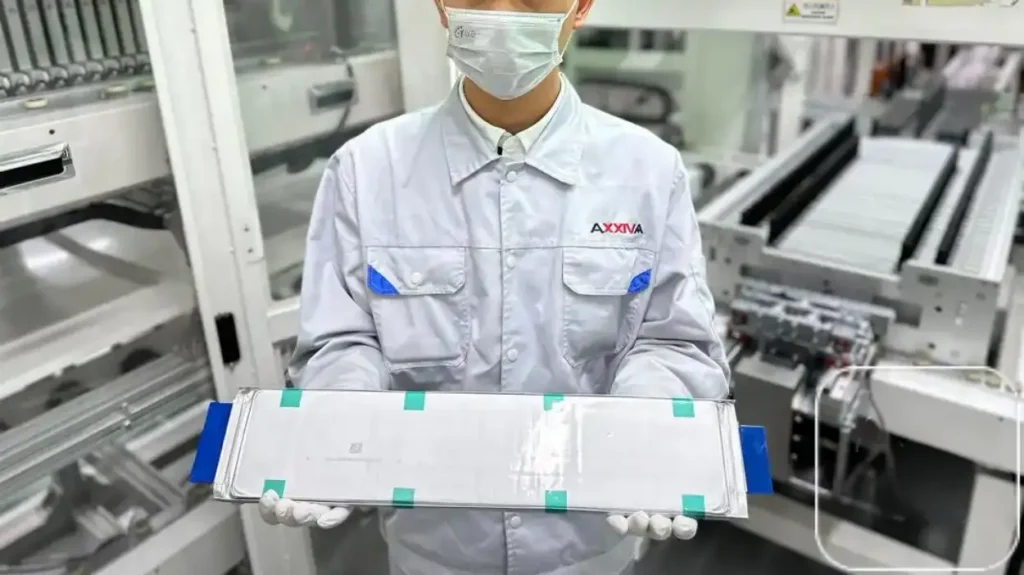
CATL’s sulfide-electrolyte solid-state cells — branded domestically “Ningde Shidai All-Solid-State” — have reached an energy density around 500 Wh/kg at the cell level, roughly double today’s best conventional cells. But the company’s own framing is cautious: CarNewsChina reported that CATL sits at technology-readiness level 4 out of 9 — lab validation — and aims for levels 7–8 only by its 2027 pilot. The real engineering target is scaling from 20 Ah laboratory samples to 60 Ah automotive-grade prototypes, and CATL has said sulfide cells currently cost three to five times more than conventional lithium-ion. It has also publicly denied rumors of 2,000-km solid-state EVs by 2027, pointing early deployment at drones and robotics instead.
BYD’s path is visible in hardware rather than patents alone. Its first sulfur-based all-solid-state pilot line — 2 GWh at the Shenzhen Pingshan base — went into production in February 2026, and a 20 GWh plant at Chongqing Bishan is scheduled to break ground in the third quarter, according to China Energy News (人民日报旗下《中国能源报》). Crucially, the Bishan line starts with semi-solid cells — a transitional chemistry that still carries some liquid electrolyte — with a separate all-solid-state line set for small-batch output in the first quarter of 2027, per Chinese automotive outlet Youjia (有驾). BYD’s claimed third-party test numbers: 400 Wh/kg at cell level (up to 480 Wh/kg at system level), a 1,218-km CLTC range on a Yangwang U9 prototype, 10-minute fast charge to 80%, and a nail-penetration test that left the cell surface at just 32°C with no fire.
Accuracy note: Some Chinese-language social posts describe CATL’s Yibin line as a “15 GWh all-solid-state mass-production line.” That conflicts with CATL’s own TRL-4 framing and its 60 Ah automotive-grade milestone still in progress — a 15 GWh mass-production line is implausible at this stage, and no authoritative source supports it. Likewise, BYD’s 20 GWh Bishan plant makes semi-solid cells first, all-solid-state later, rather than 20 GWh of all-solid-state capacity from day one.
Solid-State Battery 2027 Timelines: China, Japan and Korea
The same 2027 window now shows up across three countries, and the milestones are deliberately different:
- CATL — 500 Wh/kg sulfide cells; TRL 4 today, targeting 7–8 by 2027; small-batch production 2027; mass deployment after 2030.
- BYD — 2 GWh Pingshan pilot line live; 20 GWh Bishan plant (semi-solid first, Q3 2026); all-solid-state small batches in Q1 2027.
- Chery — chairman Yin Tongyue says its “Rhino” cell has hit 400 Wh/kg; the semi-solid version loads onto vehicles in Q4 2026, all-solid-state validation in 2027.
- Gotion High-tech — a 0.2 GWh all-solid-state pilot line with ~90% yield is operational; GAC Group says its all-solid-state pilot line is running with small-batch vehicle trials planned this year.
- Samsung SDI — mass production at Ulsan in H2 2027; it unveiled the “SolidStack” all-solid-state brand at InterBattery 2026 and is co-developing next-gen prismatic cells with GM.
- LG Energy Solution — paused its 2026 polymer route, pivoting to sulfide and bipolar semi-solid transitional designs.
- Toyota — still the patent leader, but its commercialization target has slipped again to 2027–2028, per GreyB’s industry tracker.
China is also moving on standards and incentives. The country led an IEC international standard for solid-state battery application guidelines — the first of its kind globally — and a domestic recommended standard took effect July 1. A tax code effective September 1 levies 2% on lithium-ion batteries but exempts solid-state, sodium-ion and fuel cells through end-2028, a deliberate nudge toward the chemistries Beijing wants to win.
The Solid-State Battery 2027 Caveat: TRL 4 and the Semi-Solid Trap
The reason to be skeptical is arithmetic on maturity, not enthusiasm. CATL’s chairman Robin Zeng puts solid-state at TRL 4 out of 9, and the company said in March that engineering problems remain and commercialization needs more time. The hurdles are well understood: solid-solid interface stability, lithium-dendrite formation, and the environmental volatility of sulfide electrolytes, which degrade on contact with moisture and demand near-airtight manufacturing. The true bottleneck is not chemistry in a lab but automotive-volume yields — scaling brittle, “ceramic tile”-like sulfide stacks from prototype to consistent production.
And then there is the naming problem. The “solid-state” label now attached to premium EVs is frequently not all-solid-state. Semi-solid cells still carry liquid electrolyte — under 20% by China’s definition — while a true all-solid-state cell drops it below 5%. The “solid-state” batteries marketed in models like the Nio ET9 and IM Motors L6 are mostly semi-solid or condensed-matter cells, a genuinely different chemistry from the all-solid-state cells CATL and BYD are piloting. Conflating the two flatters the timeline.
Why the Solid-State Battery 2027 Race Matters
The prize is roughly a doubling of energy density and a step-change in safety. BYD’s claimed figures — 400 Wh/kg cells, a 32°C nail-penetration result with no fire, 1,218 km of range — point at the same order of magnitude as CATL’s 500 Wh/kg lab cells. If the 2027 pilot window holds, the first thousand-kilometre packs could reach vehicles within this decade, which is why every automaker is watching.
For BYD specifically, the solid-state push is one thread in a broader vertical-integration story EVsays has been tracking — from the megawatt flash-charging architecture to the Sealion 08’s second-generation Blade battery. Solid-state is the next cell on that same curve.
The Bottom Line. The solid-state battery 2027 race is real but mislabeled. CATL has 500 Wh/kg cells on a pilot line and openly rates the technology TRL 4; BYD is building a 20 GWh plant that makes semi-solid cells first; Toyota, Samsung and a wave of Chinese challengers are all inside the same 2027 pilot window. What happens in 2027 is trial production, with true mass production parked around 2030. The winners will be decided by sulfide-electrolyte manufacturing yields, not press-release energy densities.
Sources & Further Reading
- China Energy News / People’s Daily (人民日报·中国能源报) — “固态电池迈入产业化攻坚期” (2026-08-24) — BYD Pingshan 2 GWh pilot line and Bishan 20 GWh plant, GAC and Gotion lines, 2027 small-scale production and 2030 electrolyte outlook.
- CarNewsChina — “Solid-state patent: CATL tackles sulfide instability ahead of 2027 pilot” (2026-03-11) — CATL 500 Wh/kg, TRL 4 targeting 7–8 by 2027, 20 Ah-to-60 Ah progression, 3–5× cost, copper-foil supply deal.
- Samsung SDI (official) — “SAMSUNG SDI, General Motors Sign New Battery Development Agreement” (2026-08-11) — co-development of next-gen prismatic cells; SDI acquires GM’s 49.99% SynergyCells stake for its first wholly-owned North America plant (ESS-first).
- GreyB — “10 Solid-State Battery Companies to Watch in 2026” — Samsung SDI SolidStack (robots-first, 2027), Toyota 2027–2028, CATL argyrodite sulfide electrolyte strategy.
- Youjia (有驾) — “探秘比亚迪全球首条车规级硫化物固态电池量产线” (2026) — BYD Bishan semi-solid-first and Q1-2027 all-solid-state plan, 400 Wh/kg, 32°C nail test, 1,218 km range, 10C fast charge.
- Sina Auto (新浪汽车) — “欧阳明高发布八项动力电池重大标志性成果” (2026-09-06) — eight flagship battery achievements at the Yibin summit; Chery Rhino 400 Wh/kg; FAW 5 MPa low-pressure breakthrough.
Sourcing note: This piece synthesizes English-language industry reporting (CarNewsChina, GreyB, Samsung SDI’s official disclosure, Toyota’s disclosures) with authoritative Chinese-language coverage — People’s Daily-affiliated China Energy News for plant figures and the September 3–4 Yibin World Power Battery Conference reporting for Chinese makers’ data. Energy-density and plant figures are manufacturer statements or conference disclosures, not independently verified. The “15 GWh” figure appearing in some Chinese social posts conflicts with CATL’s own TRL-4 assessment and is treated as unsupported; this article does not cite a specific GWh figure for CATL’s pilot line because published estimates vary. BYD’s Bishan plant is reported to begin with semi-solid production before all-solid-state small batches in early 2027. The distinction between semi-solid and all-solid-state chemistry is maintained throughout. Analysis and interpretation are original to EVsays.