

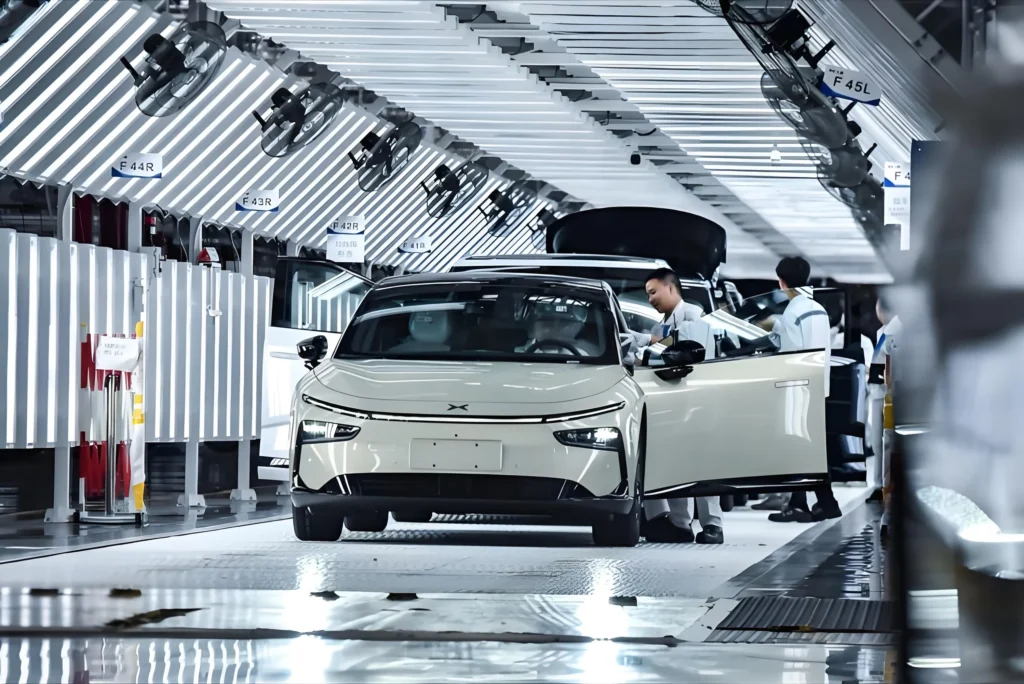
On May 31, XPeng Motors’ acquisition of a 90.1% stake in EIDO, an electric vehicle manufacturing entity under Indonesian listed company PT Sinar Eka Selaras Tbk, officially took effect. The core asset of this acquisition is an electric vehicle production and assembly plant located in Purwakarta, West Java, Indonesia. This means XPeng Motors now has its first overseas factory.
And it’s not just XPeng. Since the beginning of this year, Chinese automakers have been making waves with a series of moves to “buy the dip” on overseas factories, becoming the most striking phenomenon in the global automotive industry. The “script” of the global automotive industry has changed!
01 “Buying the Dip” on Overseas Factories
As early as 2004, SAIC Motor spent approximately $500 million to acquire a 48.92% stake in South Korea’s SsangYong Motor, and increased its holdings in 2005 to achieve absolute control, gaining access to the company’s complete vehicle factories and R&D facilities. This marked the first cross-border acquisition by a Chinese automaker.
A purer case of factory acquisition may be the 2017 purchase of AM General’s civilian plant in Indiana, USA, by Chongqing Sokon (Seres). At the time, Sokon’s subsidiary SF Motors acquired the AM General civilian plant for $110 million, retaining approximately 430 employees and planning to invest hundreds of millions of dollars to transform it into an intelligent electric vehicle base, producing the premium electric SUVs SF5 and SF7, with deliveries in North America targeted for 2019. Regrettably, due to changes in market conditions, Sokon suspended its new vehicle plans in the U.S. and ultimately sold the plant in 2024.
In 2020, Great Wall Motor spent 4.72 billion yuan (22.6 billion Thai baht) to acquire General Motors’ manufacturing plant in Rayong, Thailand, including complete vehicle and powertrain manufacturing facilities. After the handover, Great Wall invested an additional 5 billion yuan (12 billion Thai baht) for the plant’s intelligent transformation and upgrade. On January 12, 2024, the Great Wall Ora Good Cat officially rolled off the production line at the Rayong plant.
In 2023, BYD acquired the former Ford Motor Brazil production base located in Camaçari, Bahia. The plant produced its first vehicle in July 2025, and by May 2026 had cumulatively produced over 50,000 vehicles.
Since the beginning of this year, news of Chinese automakers acquiring overseas factories has become even more frequent:
- May 6: Geely Automobile reached an agreement with Ford Motor to acquire the “Body 3” body assembly line at Ford’s Almussafes plant in Valencia, Spain.
- May 13: BYD Executive Vice President Stella Li confirmed externally that the company is in discussions with European automakers such as Stellantis Group, planning to take over idle or underutilized plants in Europe.
- May 14: Media reported that XPeng Motors is in talks with its shareholder Volkswagen Group about potentially acquiring a plant in Europe to expand its sales there.
- May 20: Stellantis Group issued a statement saying it is exploring with Dongfeng Group the possibility of localized production of Dongfeng’s new energy vehicle models at its Rennes plant in France. Dongfeng Motor and Stellantis Group signed a memorandum of understanding, with both parties planning to establish a joint venture in Europe and intending to produce Dongfeng’s premium new energy brand Voyah’s electric vehicles directly at Stellantis’ Rennes plant in France. This is, in effect, a form of indirect overseas factory acquisition.
02 A High-Cost-Effectiveness Choice
Chinese automakers’ acquisitions of overseas factories exhibit two distinct characteristics: first, precisely targeted layout, focusing on three major markets — Europe, South America, and Southeast Asia; second, an accelerating pace, with a marked acceleration in recent years, demonstrating strong expansion momentum.
Why are Chinese automakers so keen on acquiring overseas factories? The broader context is the rise of global trade protectionism. The European Union, Brazil, India, and other countries and regions impose high tariffs on imported automobiles. Local production can exempt these tariffs, saving costs and significantly enhancing product competitiveness.
There are three common paths for Chinese automakers to achieve local production overseas. One is KD (Knock-Down) assembly, where complete vehicles are disassembled into parts and components for export and assembled in the target market — an entry-level option for localization. Another is contract manufacturing, where overseas mature factories are commissioned to produce vehicles under the company’s own brand without direct investment in the plant. The third is in-house factory production. Considering factors such as trade barriers, cost structures, and market responsiveness, establishing self-owned factories has become an inevitable choice.
Within this broader logic, compared with building new factories, acquiring existing ones offers several advantages:
Significant cost advantage. To put it in perspective, the price of acquiring an overseas factory is far lower than the cost of building a new one. Taking the Ford Brazil plant acquired by BYD as an example, the acquisition price was only one-quarter of the cost of building a new plant of the same scale, greatly reducing BYD’s capacity expansion costs in Latin America. This cost advantage allows Chinese automakers to rapidly acquire global production capacity with lower investment, improving capital efficiency.
Time cost should not be underestimated. Building a new overseas factory, from approval, infrastructure construction, and production line setup to commissioning, takes at least 3-5 years. In contrast, after acquiring an existing plant, the retrofitting cycle is only 6-16 months, enabling production to start 2-3 years earlier, seizing market windows and gaining first-mover advantages. For instance, Great Wall Motor’s Thailand plant was handed over in November 2020 and officially began production in June 2021, taking only about 7 months from handover to commissioning.
Access to ready-made resources. Furthermore, acquiring a factory provides access to existing production qualifications, supply chains, and skilled workers, eliminating the cumbersome processes of qualification applications, personnel recruitment and training, and supply chain setup — enabling a “move-in ready” style of global expansion.
From the local perspective, Chinese automakers’ acquisitions of overseas factories both revitalize old production capacity and safeguard local livelihoods. This approach, balancing industrial development with employment and welfare, achieves mutual benefit and lays a solid foundation for enterprises to establish long-term roots in overseas markets.
Of course, Chinese automakers’ overseas “bargain-hunting” for factories is not without risks. Some factories carry hidden costs such as legacy debts and production line retrofitting cost overruns, while others require addressing localization adaptation, union coordination, and other issues. Overall, acquiring overseas factories remains a high-cost-effectiveness choice in the globalization journey of Chinese automakers.
The “Script” Has Changed
In 2025, China’s automobile export volume reached 7.098 million units, a year-on-year increase of 21.1%, topping the global charts for the third consecutive year. Among these, new energy vehicle exports reached 2.615 million units, a surge of 100% year-on-year, becoming the core engine driving growth. Entering 2026, this momentum has grown even stronger, with cumulative exports in the first four months reaching 3.127 million units, a year-on-year surge of 61.5%.
The explosive growth of China’s automobile exports is by no means accidental. China surpassed Japan for the first time in 2023 to become the world’s largest automobile exporter, consolidated this advantage in 2024, reached new heights in 2025, and in 2026 is well positioned to potentially break the 10-million-unit mark. The core engine underpinning this growth is precisely the global production network that Chinese automakers are rapidly building.
In the past, Chinese automakers’ overseas expansion primarily relied on complete vehicle exports, facing the triple pressures of high tariffs, logistics costs, and trade barriers. Today, achieving localized production through overseas factory acquisitions has become the key to breaking through.
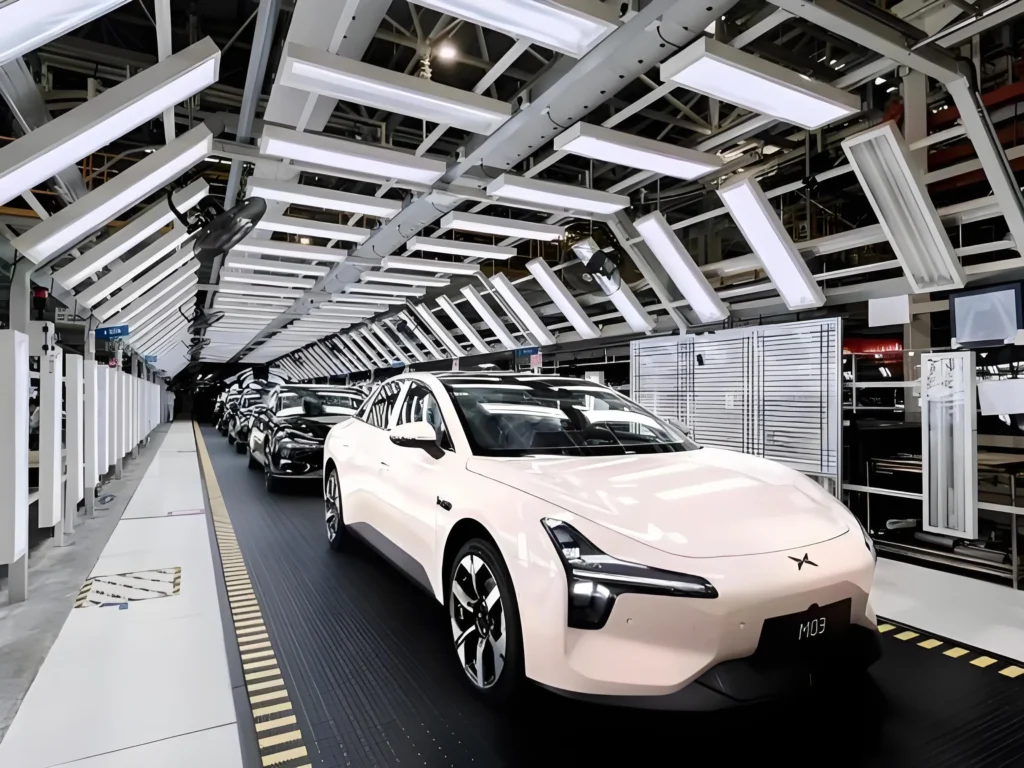
In April of this year, BYD sold 14,911 vehicles in Brazil, achieving a market share of 12.8% and successfully surpassing brands such as Volkswagen and Fiat to top Brazil’s automotive retail sales charts. BYD’s rise to number one in Brazil owes much to the factory it acquired three years ago. The plant’s production plan for 2026 is 150,000 units, with a long-term total capacity target of 600,000 units per year. BYD has already established six such overseas factories as the one in Camaçari, Bahia, Brazil, covering four major markets: Southeast Asia, South America, Central Asia, and Europe.
Decades ago, the world’s automotive giants brought their factories into China. Today, Chinese automakers are bringing their factories to the world. The “script” of the global automotive industry has changed!