
The Big Picture
- Unitree IPO: China’s largest humanoid robot maker goes public. Pricing Aug 5, subscription Aug 10, listing late August. 5,500+ units shipped in 2025, profitable. First A-share humanoid robot stock.
- Tesla Optimus: Capacity target revised from 1 million to 10 million units per year. Fremont factory car line cleared, semi-auto line in trial production, supplier orders scaling to 1,000/week.
- Google Gemini Robotics 2: 22-DoF whole-body control. Under 200 examples to transfer skills across different robot hardware. Software-hardware decoupling breakthrough.
Unitree IPO: The First A-Share Humanoid Robot Stock
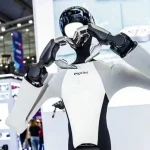
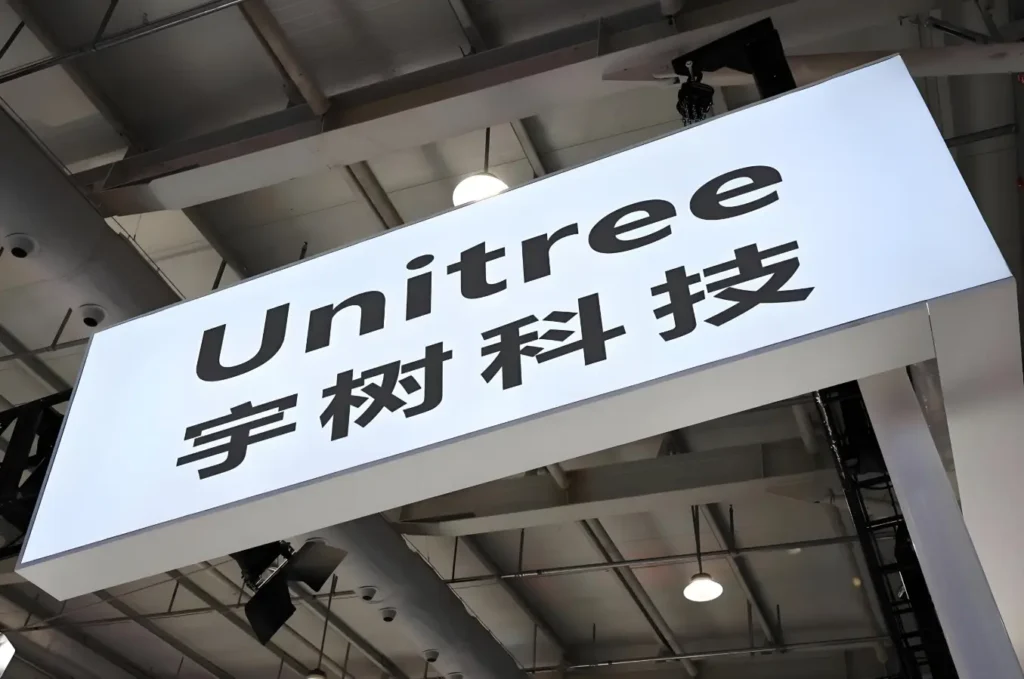
Unitree Technology (宇树科技) — China’s largest humanoid robot manufacturer — confirmed its STAR Market IPO timeline on August 3: August 5 pricing, August 10 public subscription, late August listing. This makes it the first pure-play humanoid robot company to list on China’s A-share market, per National Business Daily.
The numbers that justify the moment: Unitree shipped over 5,500 humanoid robots in 2025 and is already profitable — a rare status in an industry where most companies are still burning cash on R&D. Its robots are deployed across industrial inspection, logistics, and research. The company’s H1 robot, priced at ¥99,000 (~$13,650), brought bipedal robotics into the five-figure range for the first time, forcing competitors to either match the price or differentiate on capability.
Chinese robot ETFs surged 2–3% on the news, with net inflows across multiple funds. The IPO gives the entire humanoid robot supply chain — from harmonic drive manufacturers to sensor suppliers — a valuation anchor. Before Unitree, investors had no pure-play comp for what a humanoid robot company was worth. Now they have a number.
Tesla Optimus: 1 Million → 10 Million
On July 30, Tesla’s Optimus project lead posted on social media that the long-term annual production target had been revised from 1 million to 10 million units, as reported by National Business Daily on August 3. The Fremont factory is now deep into the transition: the original Model S/X production line has been fully cleared, with automated robot production equipment scheduled for installation in mid-August. The second-floor semi-automated trial production line is already operational, and core transmission component orders are scaling from hundreds to thousands of units per week.
The 10-million figure is important not because anyone believes Tesla will hit it soon — it won’t — but because it resets the ceiling of what the market considers plausible. When the target was 1 million, Optimus was a niche industrial product. At 10 million, it’s a consumer-electronics-scale business — larger than the global smartphone market in unit terms. The revision signals that Tesla’s internal analysis has concluded that the cost curve and demand curve intersect at a volume that makes Optimus a mass-market product, not a specialty tool.
Google Gemini Robotics 2: The Brain That Works Across Bodies
Google dropped the third catalyst on August 3: Gemini Robotics 2, a model that controls 22 degrees of freedom across an entire humanoid body and can transfer learned skills to different robot hardware with fewer than 200 demonstration examples, per Chinese financial media. The previous generation required thousands of examples per skill per body. The breakthrough eliminates the “stop-think-act” latency that made earlier robot AI systems feel jerky and reactive rather than fluid and proactive.
The industry implication is profound. Until now, every humanoid robot company — Tesla, Unitree, XPeng, Figure — had to build its own AI stack from scratch, training models on its own hardware, with its own data. That fragmentation was the single biggest barrier to scaling. If Gemini Robotics 2 delivers on its promise of hardware-agnostic, low-data skill transfer, the economics of the entire industry change. A small hardware startup can use Google’s brain instead of building its own. A large manufacturer can train once and deploy across multiple robot models. The “software moat” that companies have been building — proprietary AI trained on proprietary data — becomes a commodity.
The architecture mirrors what Tesla is building with Grok + FSD + AI5 — a unified AI stack that handles perception, planning, and control — which validates that the industry is converging on a common technical solution, not diverging into proprietary dead ends.
Capital × Capacity × Code: Why August 3 Matters
The three catalysts reinforce each other in a way that single announcements rarely do. Unitree’s IPO provides the capital markets with a pricing mechanism for humanoid robotics — suddenly every component supplier in the supply chain has a benchmark. Tesla’s 10-million target provides the demand signal — the largest and best-funded player in the space is telling its suppliers to build for scale that didn’t exist in anyone’s forecast six months ago. Gemini Robotics 2 provides the technical unlock — the software problem that has kept humanoid robots laboratory-bound may be solved faster than the hardware problem.
Morgan Stanley’s latest forecast, cited by multiple Chinese outlets today, projects 50,000 humanoid robot shipments in China in 2026, growing to 446,000 by 2030 — a market expanding from $2 billion to $15 billion. Those numbers looked aggressive in January. After August 3, they look conservative.
The CRAIC competition in Beijing over the weekend — where 350 robots ran industrial tasks with zero remote control — showed the hardware is ready. The triple catalyst today showed the capital, the scale ambition, and the software are catching up.
Author’s Take
The humanoid robot industry has spent the last three years accumulating what looked like hype: demo videos, prototype unveilings, factory pilot programs. August 3, 2026 is the day three of the four pillars of a real industry clicked into place simultaneously. Capital: Unitree’s IPO gives the supply chain a valuation framework. Scale: Tesla’s 10-million target forces suppliers to build for volume. Software: Gemini Robotics 2 solves the fragmentation problem that was strangling deployment. The only pillar still missing is demand — actual, sustained, paid demand from customers who aren’t the robot makers themselves. The CRAIC competition showed the robots can work. Today showed the industry can fund itself, scale itself, and program itself. The next milestone is an earnings report — not Unitree’s, but a customer’s — that shows a robot paid for itself.
The Bottom Line
August 3, 2026 delivered three simultaneous breakthroughs for the humanoid robot industry. Unitree’s IPO (Aug 10 subscription, late Aug listing) — the first A-share humanoid robot stock, backed by 5,500+ units shipped and actual profitability. Tesla’s Optimus target raised to 10 million units/year, with Fremont’s car line cleared for robot production. Google’s Gemini Robotics 2 — a hardware-agnostic AI brain that transfers skills across robot bodies with fewer than 200 examples, breaking the software fragmentation that has held the industry back.
Capital, capacity, and code all broke through on the same day. The only pillar still building is demand — but after today, the supply side no longer looks like the bottleneck.
Sources & Further Reading
- National Business Daily — “A-Share First Humanoid Robot Stock: Unitree IPO Aug 10” (August 3, 2026)
- National Business Daily / Tencent — “Unitree IPO, Tesla 10M Optimus, Robot ETF Surges” (August 3, 2026)
- Securities Times — “Humanoid Robot Bullish Catalysts: Capital Inflows” (August 3, 2026)
- Jiemian News — “Soft and Hard Breakthroughs: Robot ETF Analysis” (August 3, 2026)