
The Big Picture
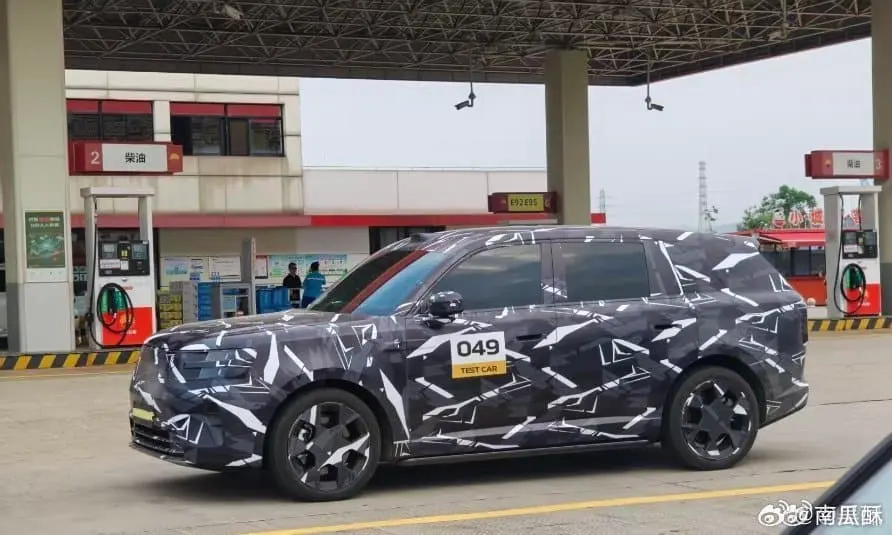
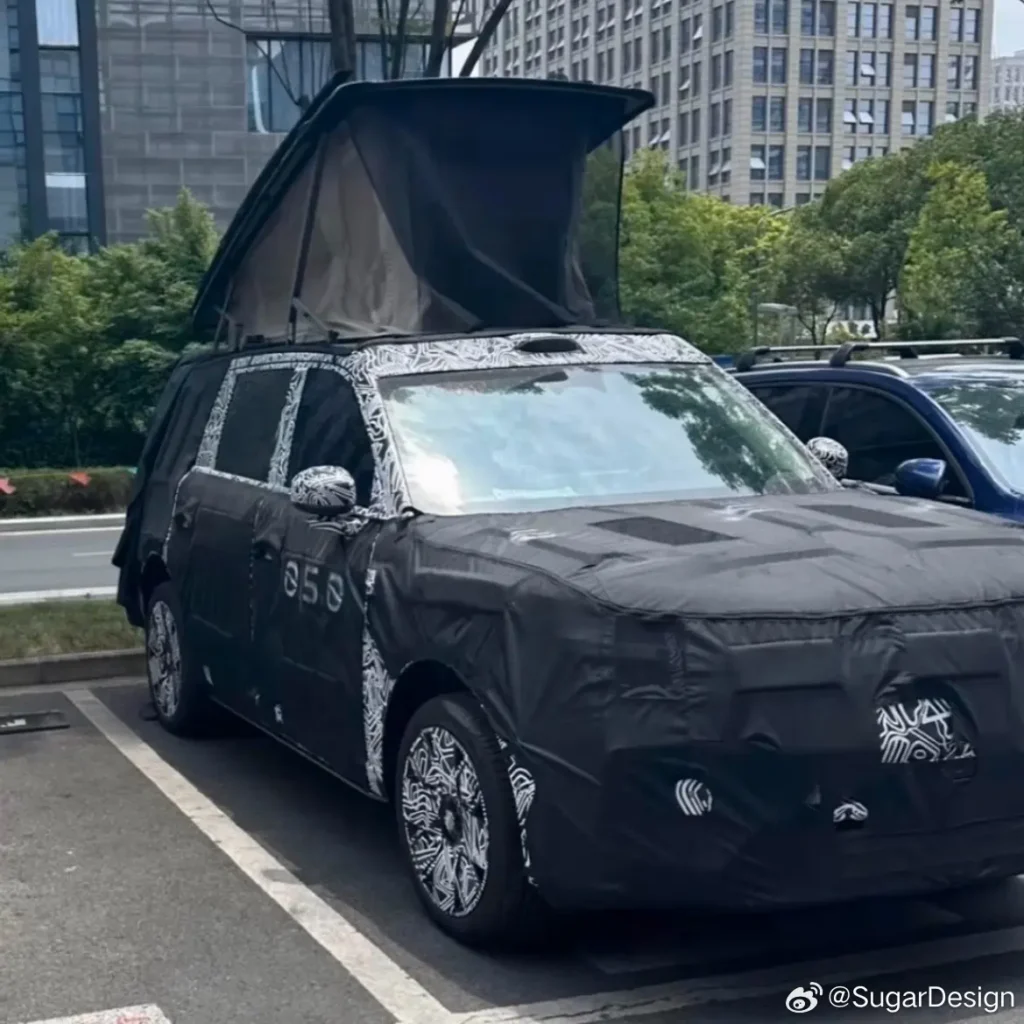
Xiaomi’s third automotive brand, “Sky Nomad” (寻天, Xun Tian), will launch with an EREV — not a pure EV. Spy shots posted Friday on Weibo by SugarDesign, Dou Dou Che, and DSP-Charles, and corroborated by CarNewsChina, reveal the N90: a full-size SUV over 5,300 mm long with a built-in rooftop tent and a 1.5-liter turbo range extender. The move is a strategic admission that pure electric cannot win China’s full-size SUV segment — a lesson Li Auto learned three years ago.
Follow-up: This piece builds on our June 11 analysis, “Xiaomi EV Range-Extender License: A Strategic Shift To Scale.” Ten days after the MIIT approval, the first spy shots offer a concrete look at the product.
1. The Spy Shots
The Weibo images show a heavily camouflaged prototype with semi-flush door handles, 19-inch tires, and a roof-mounted LiDAR unit. The standout feature is a factory-integrated rooftop tent — beige with black mosquito netting — that positions the N90 for the “glamping” outdoor market, directly evoking BYD’s Fang Cheng Bao. Close-ups confirm “Xiao Mi Xun Tian N90” badging, following the “9-series” flagship SUV convention (Li Auto L9, Denza N9, AITO M9).
2. Confirmed Specifications
| Specification | Detail |
|---|---|
| Powertrain | EREV (1.5L turbo range extender + dual motor AWD) |
| Battery | 70+ kWh |
| Pure electric range | 400-500 km |
| Comprehensive range | 1,500 km+ |
| Length / Wheelbase | 5,300+ mm / 3,100 mm |
| Seating | 5-seat and 7-seat |
| Price range | 200,000 – 450,000 yuan (29,500−66,500) |
| Official reveal | Q4 2026 |
3. Why EREV, Not Pure EV
China’s full-size SUV segment is dominated by EREV. Li Auto reached 1.4 million cumulative EREV deliveries by November 2025. AITO M9 and Denza N9 are both EREV. Pure-electric full-size SUVs — BYD’s Yangwang U8, Nio’s ES8 — have struggled. Chinese consumers buying 300,000+ yuan family SUVs want gas-tank security for highway trips, even if they charge daily in the city.
Analyst Take: Xiaomi entering EREV is not a retreat from pure electric. It is a recognition that powertrain choice must follow use case. The SU7 and YU7 are urban vehicles where pure EV works. A full-size family SUV for long-distance travel is a different product with different physics.
4. The Sales Pressure Behind the Pivot
According to CPCA data cited by CnEVPost:
| Model | May 2026 | YoY | Jan-May 2026 | YoY |
|---|---|---|---|---|
| SU7 | 24,023 | -14.24% (8th monthly YoY decline) | 60,082 | -54.64% |
| YU7 | 8,736 | -11.54% MoM (5th consecutive decline) | 90,235 | — |
Xiaomi’s automotive division posted an operating loss of 3.1 billion yuan ($457 million) in Q1 2026. The 550,000-unit annual target requires +34% over 2025 — increasingly ambitious. The N90, arriving Q4 2026, is Xiaomi’s hedge: a new brand in a new segment with a powertrain that has proven market fit.
5. The 9-Series SUV Wars
| Model | Powertrain | Price (yuan) | Differentiator |
|---|---|---|---|
| Li Auto L9 | EREV | 409,800 – 509,800 | Family-first, proven track record |
| Denza N9 | EREV | 389,800 – 469,800 | BYD e³ platform |
| AITO M9 | EREV | 469,800 – 569,800 | Huawei ADS, HarmonyOS |
| Sky Nomad N90 | EREV | 200,000 – 450,000 | Lowest entry price, Xiaomi ecosystem |
The N90’s 200,000-yuan starting price is the disruptive element — half the entry price of the L9. If Xiaomi delivers a credible full-size EREV at that price, it replicates the SU7’s strategy: undercutting established players while leveraging the Xiaomi brand halo.
The Bottom Line
The N90 is not just a new model. It is Xiaomi’s shift from pure-EV challenger to multi-powertrain automaker. The EREV choice is correct for the segment. The price positioning is aggressive. The outdoor lifestyle angle differentiates from Li Auto’s family-minivan and AITO’s tech-luxury positioning. But Xiaomi is entering a crowded field where Li Auto, BYD, and Huawei have years of head start. The N90’s success will depend not on the rooftop tent, but on whether Xiaomi can deliver Li Auto-level reliability at half the price. The answer comes in Q4 2026.