

SAIC Audi’s first SUV under the new letter-only AUDI sub-brand ships with fridge, big screen, 900V platform, air suspension and rear-wheel steering. After 20 minutes behind the wheel, I found it walks a very different road from Wenjie (AITO) and Li Auto.
SAIC Audi put the E7X on sale on May 29, 2026 at the Guangdong-Hong Kong-Macao Auto Show, starting at ¥269,800 (~$37,200) — ¥20,000 below the pre-sale price. It is the second production car and the first SUV under the AUDI sub-brand — the letter-only sister marque to Audi’s four-ring badge.
I had a Pioneer quattro (AWD) test car. I went over the static details inch by inch, then drove it myself for roughly 20 minutes, focusing on the chassis and ADAS. On top of that, I cross-checked official specifications and pulled together three months of post-launch market data. Worth saying and shouldn’t-have, I’ll cover in one place.
- First Impressions: My Seven Takeaways
- Static Review: Rear Seat Is Genuinely Good, Details Are Genuinely Rough
- Dynamic Drive: Chassis and ADAS Are Bonus Points
- Specs & Pricing
- Trim Differences Worth Knowing
- Same-Price Rivals: How It Stacks Up
- Market Performance: Three Months After Launch
- My Verdict: Who’s It For
- FAQ
First Impressions: My Seven Takeaways
Here are the most direct impressions from the moment I got in. I’ll expand on each one below.
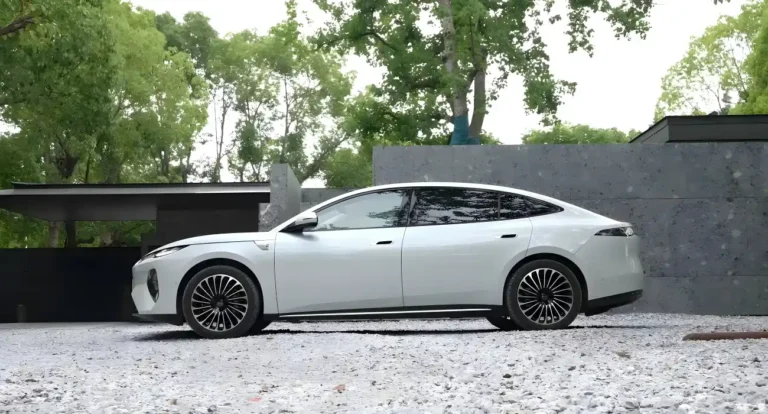
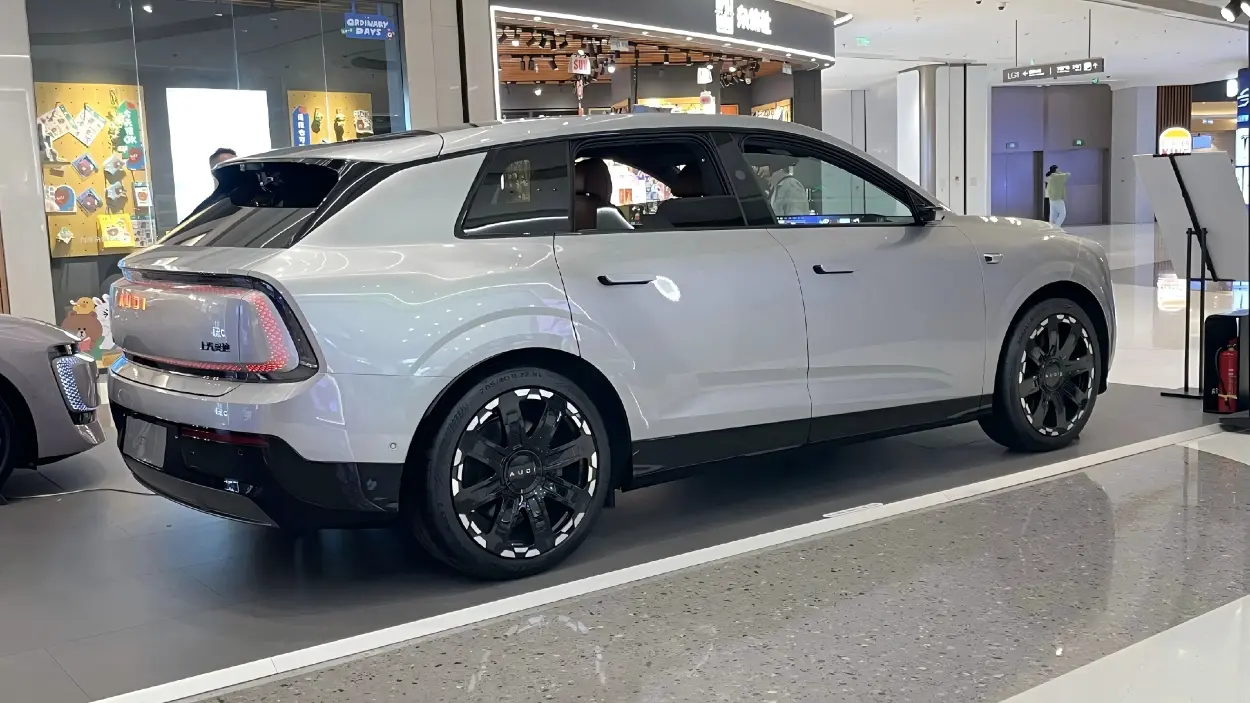
- It looks like a blown-up E5 Sportback. I can’t say it’s a one-to-one copy, but the family resemblance is obvious to my eyes.
1 / 4
 2 / 43 / 44 / 4Image source: EVsays, photographed on-site by author Sheng He
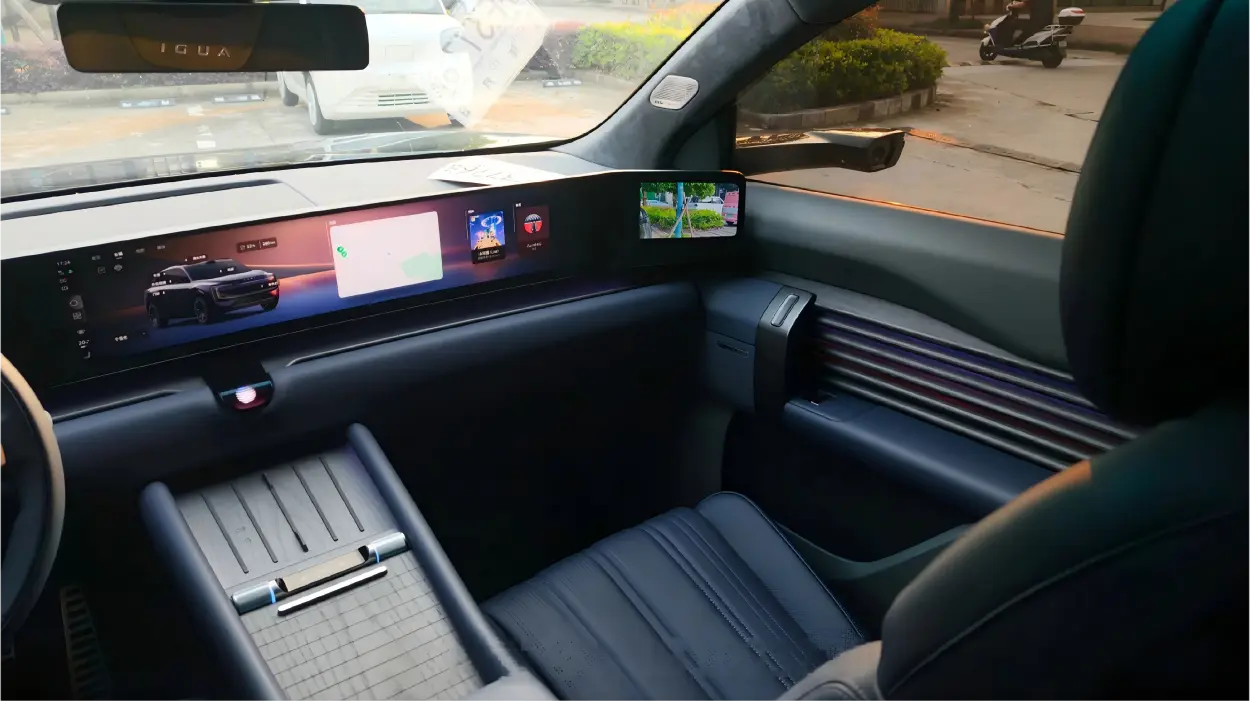
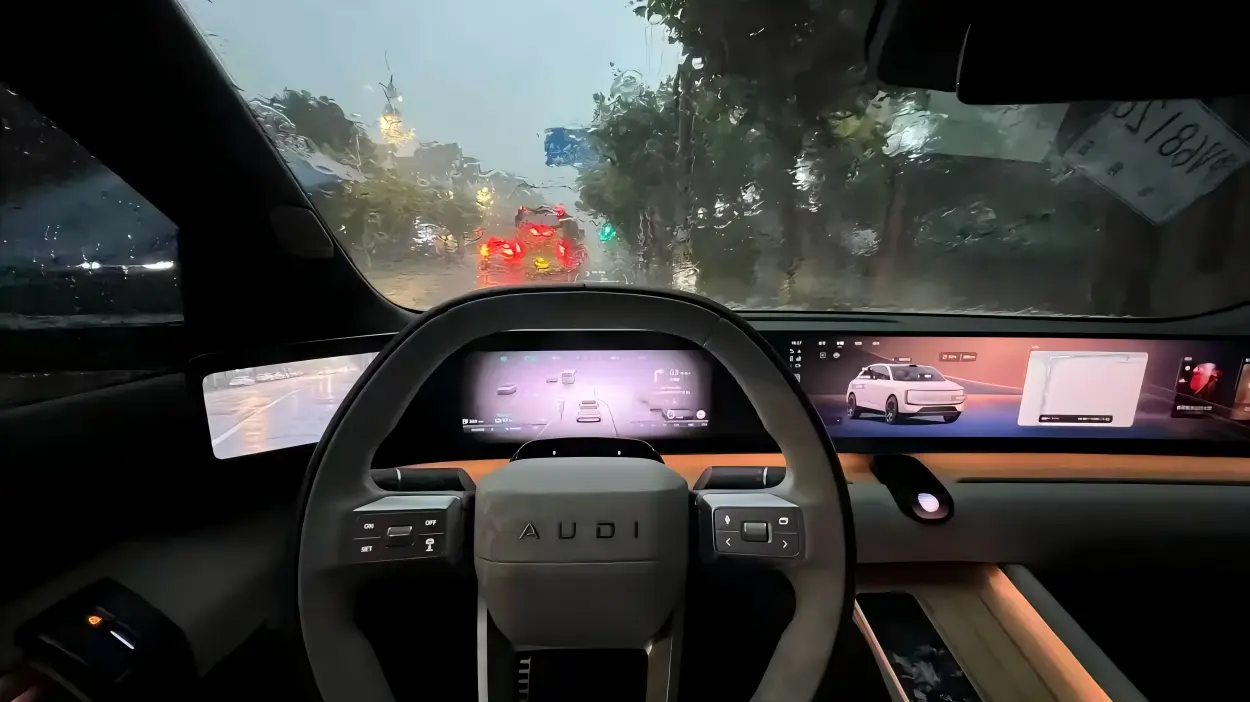
 - The centre console basically follows the E5’s playbook. It’s still one single integrated screen — the “emotional value” angle, I’d say, is well delivered.
Image source: EVsays, photographed on-site by author Sheng He
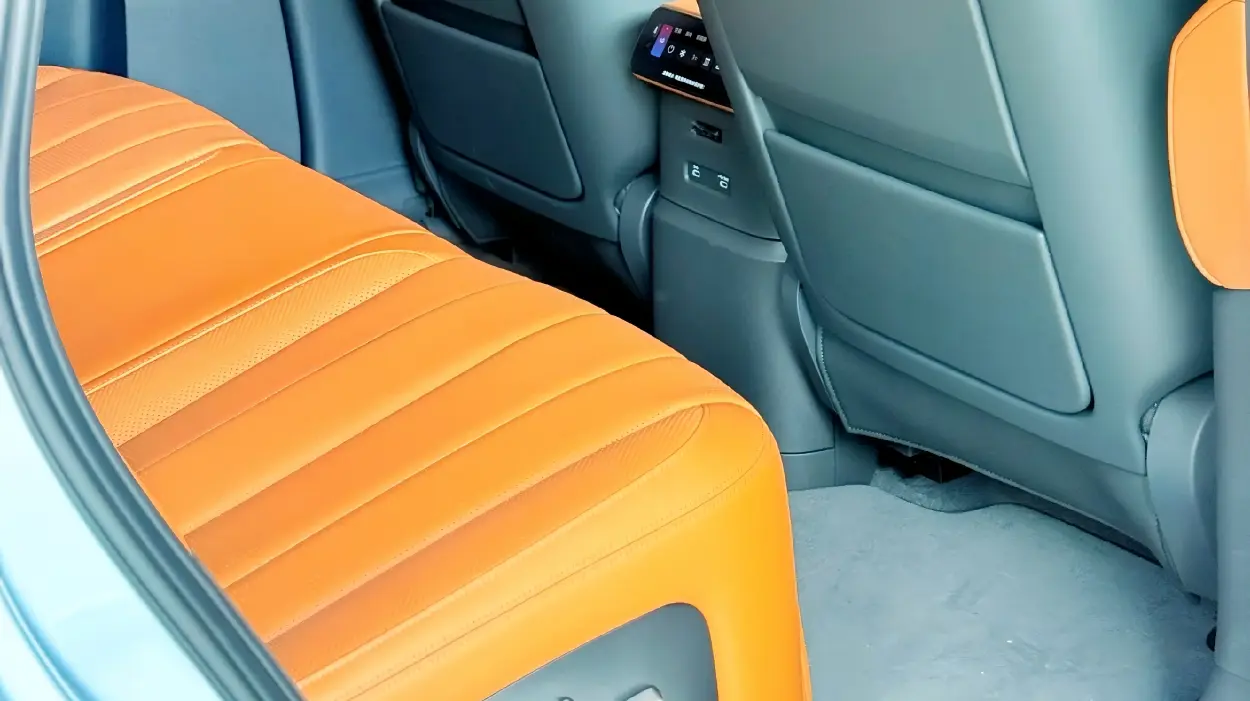
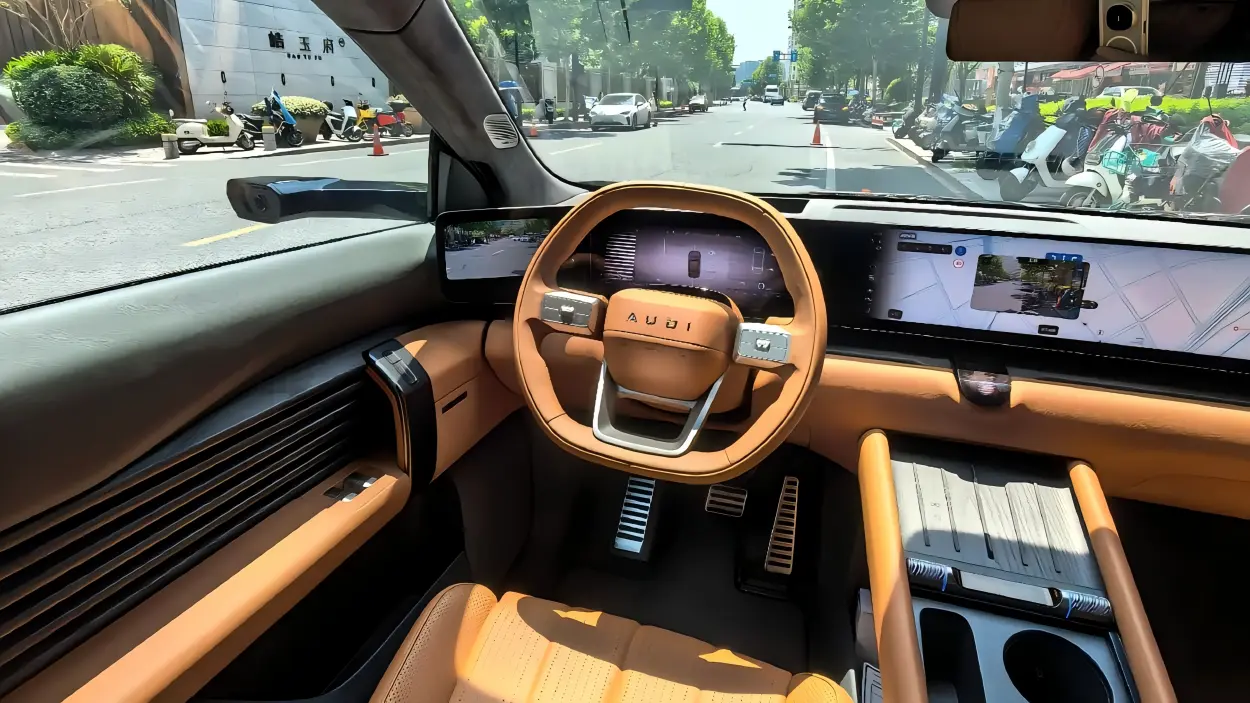
- The rear seat exceeded my expectations. Legroom is plenty, the floor is fully flat — none of that annoying centre hump you get in German ICE cars. The backrest is power-adjustable, the recline feels right, and under-thigh support is genuinely good. The only miss is the leg rest — I’ll come back to that. The seats throughout the cabin are wide, but the front row’s wrapping is just okay: the foam runs firm and the support is fine, but overall comfort trails what I felt in the Wenjie (AITO) and Li Auto models I’ve sat in.
Image source: EVsays, photographed on-site by author Sheng He
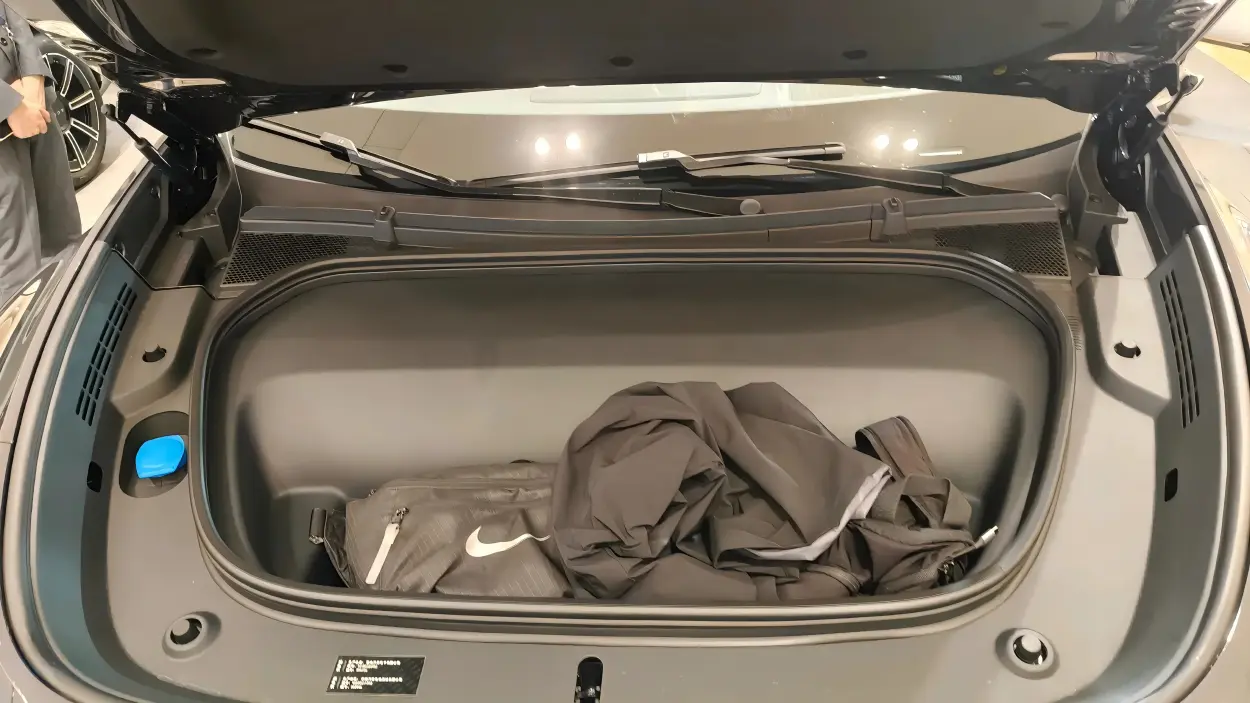
- The frunk exists, but barely registers. It still opens manually — no ceremony, no sense of occasion — and I genuinely can’t think of anything you’d regularly put in it; at best, some rarely-used items. The boot itself is fine, but you only get a 12V outlet; no 220V, which I count as a real miss.
Image source: EVsays, photographed on-site by author Sheng He
- The chassis, suspension and NVH all felt solid, and the Momenta ADAS drove smoothly overall. The logic isn’t far from Li Auto or AITO, but in the way it handles edge cases, I could feel the difference.
- The HUD is a clear weak point. The image is on the small side, not intuitive to read at a glance, and my eyes got tired after staring at it. The electronic side mirrors feel good on first contact, but you do need to adapt.
Image source: EVsays, photographed on-site by author Sheng He
- Acceleration is genuinely fast. Light throttle barely moves the needle, but the moment I went deep, the speed just shot up — even a touch of g-force dizziness. Power delivery is honestly the highlight of the dynamic package.
Image source: EVsays, photographed on-site by author Sheng He
Static Review: Rear Seat Is Genuinely Good, Details Are Genuinely Rough
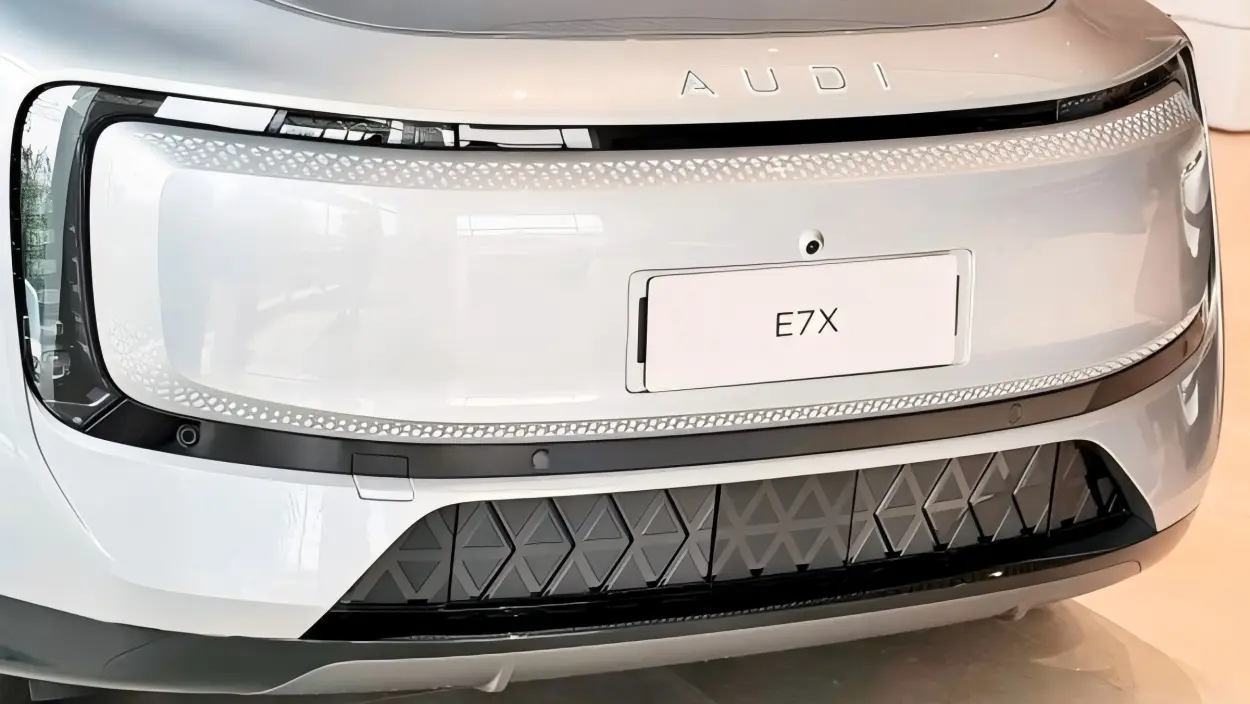
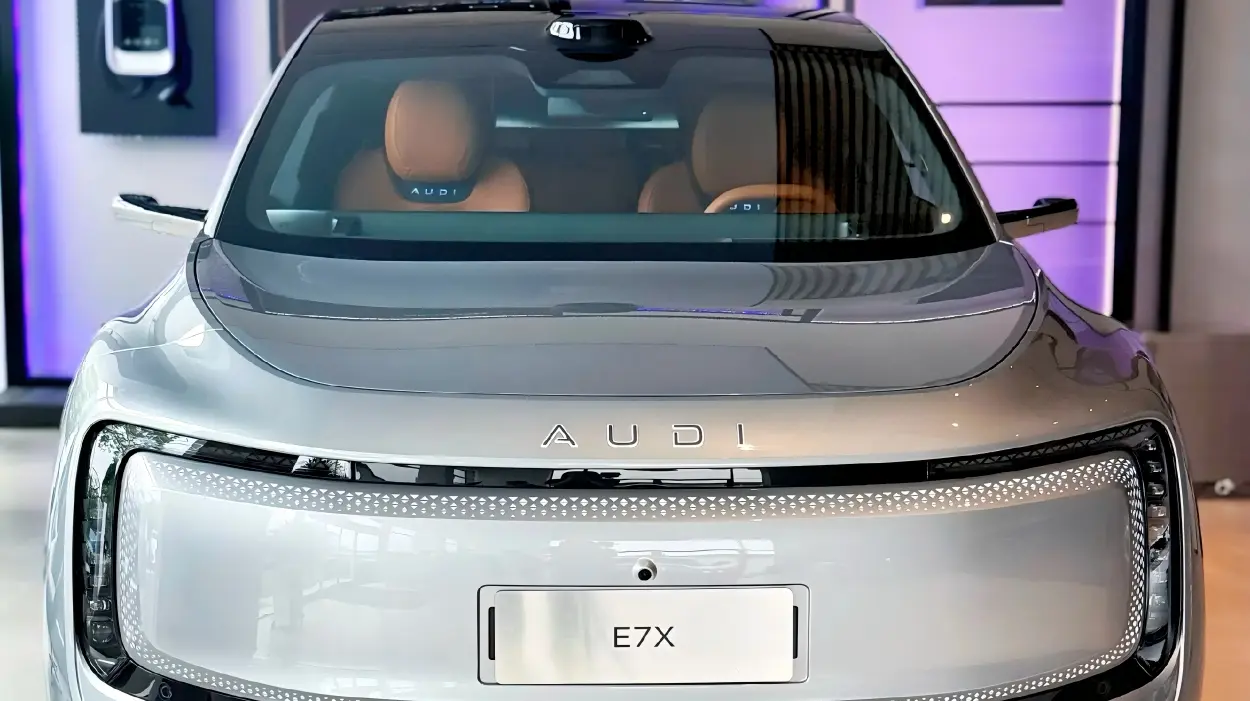
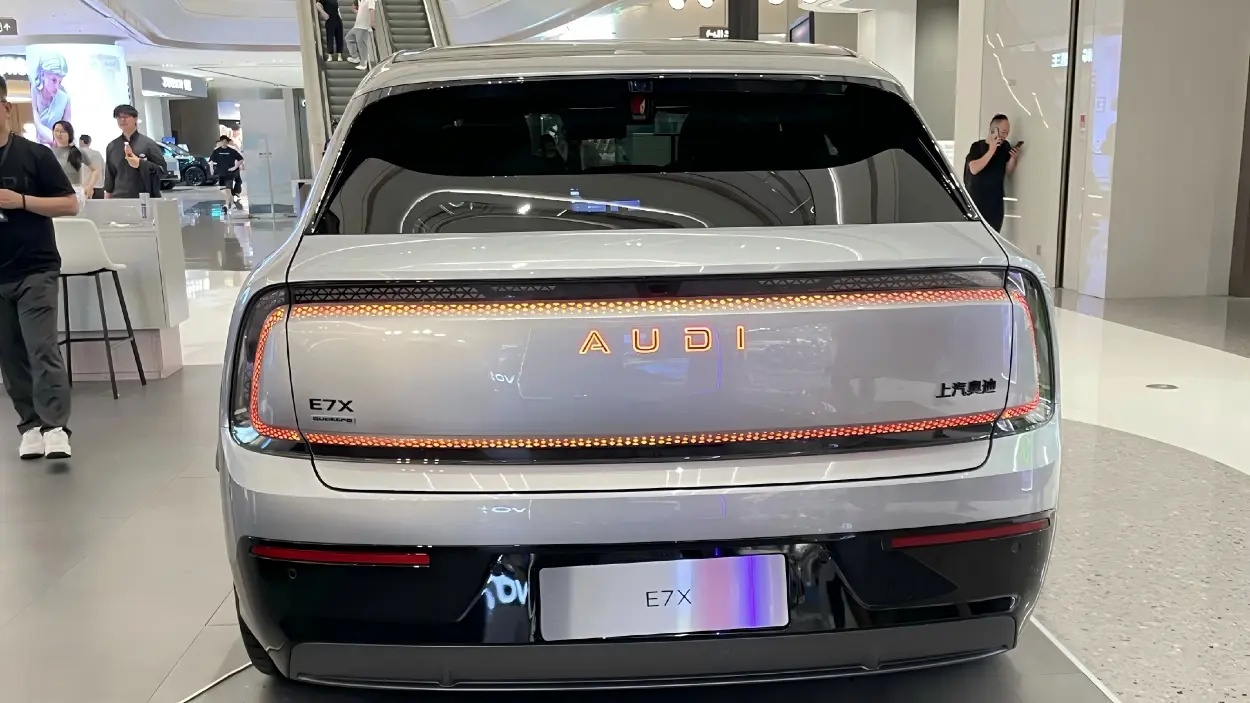
Let me start with the exterior. The bit of the E7X that catches my eye is the ring-shaped light signature front and rear — it gets noticed in traffic. The full-width light bars that Li Auto and others have made common on the streets are starting to feel visually tired to me; right now, the E7X still gives me a fresh hit of novelty.
The test car had power doors all round — the ceremony is there. Tyres are staggered: 255/45 R22 front, 285/40 R22 rear. Looking at that rear tyre width, I thought it looked properly aggressive — same logic as the wide rears on a BMW X5 M, and a lot of EVs are going this route now.
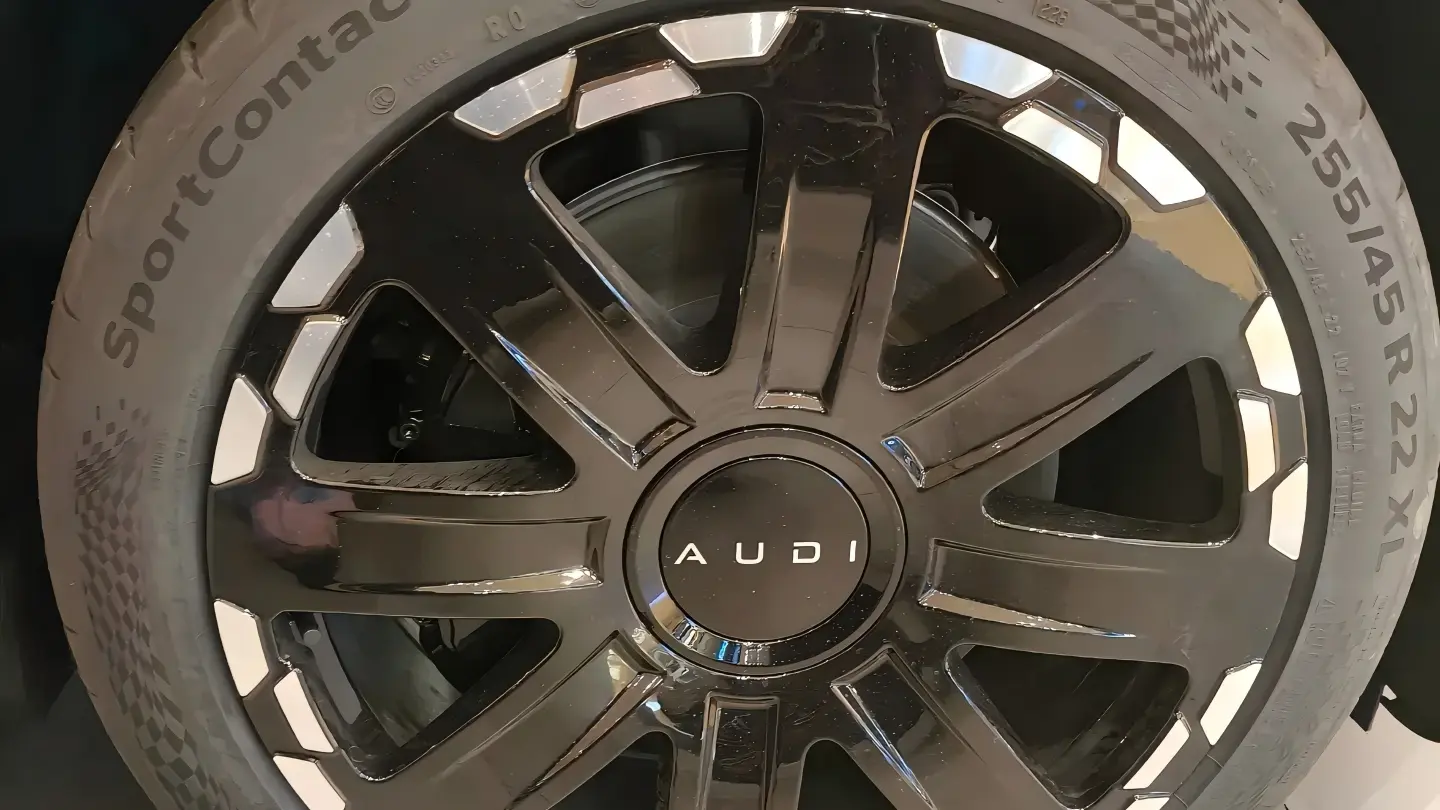
Rear-wheel steering is standard across the range. In practice, I felt the turning radius was well-controlled when pulling U-turns and cornering. On size, the E7X feels bigger in the metal than in photos — over 5 metres long, close to 2 metres wide, over 3 metres wheelbase. It’s a full-size SUV, roughly the same footprint as the Wenjie M8. If you’re shopping for a large five-seat SUV, I’d say this should absolutely be on your shortlist.
The frunk isn’t power-operated — the ceremony isn’t there — but I’d rather have it than not. The boot itself is well-shaped, the rear seats fold electrically, and the air-suspension height switch is mounted on the side. What I don’t love: no 220V outlet, and no under-floor storage cubby beneath the boot floor. Against the new-energy pack that has gotten very clever with cabin storage, I’d say the E7X is unremarkable here.
That big screen up front plays the “emotional value” card well. The AC vents sit below the screen, blowing air upwards rather than at your face — I actually like that. The Audi voice assistant in the middle supports handwriting input, but I tested that on the E5 already; nothing especially new.
Electronic side mirrors: I genuinely think you need to adapt. Angle and brightness are both adjusted through the screen; the default view fits most drivers. I didn’t touch them during my drive and it still felt intuitive — it’s just something you have to get used to. When I changed lanes, my first reflex was still to glance at the actual mirrors outside; this is one of those features that’s down to personal preference.
I also need to flag the volume knob on the car: the texture and damping are both poorly done, and the small screen beside it is easy to brush by accident. Not a great experience. Most of the remaining physical buttons are concentrated on the steering wheel.
Rear Seat: The Place You Should Actually Sit In
The rear seat is properly spacious. At my 170cm seating reference: legroom is well over four fists, headroom is a touch over two fists — easily enough for family use. The backrest is electrically adjustable, and the rear entertainment screen is standard across the range. That level of kit, I’d say, is genuinely generous.
But I have to single out the rear leg rest for criticism. You have to long-press it to raise it, and once your calves are up, the front seats don’t auto-slide forward — your feet get jammed. The scene is honestly awkward. What I found out later: to sit comfortably in the back, you have to manually push the front seats all the way forward first. This is a logic bug I’d like to see resolved by OTA or a facelift.
Dynamic Drive: Chassis and ADAS Are Bonus Points
I did the whole drive myself, around 20 minutes, with my main focus on the chassis and ADAS.
From the moment I took the wheel, the steering damping clearly reads as German — that traditional Audi feel, very distinctive.
Coming out of the underground carpark, I caught one detail: the headlights can project a light path on the ground that follows my steering input — a first for me on this car; I didn’t have this on the Wenjie M8 I tested previously. When I parked and walked away, there was also a light-pattern farewell that you can customise. The “emotional value” here is properly delivered.
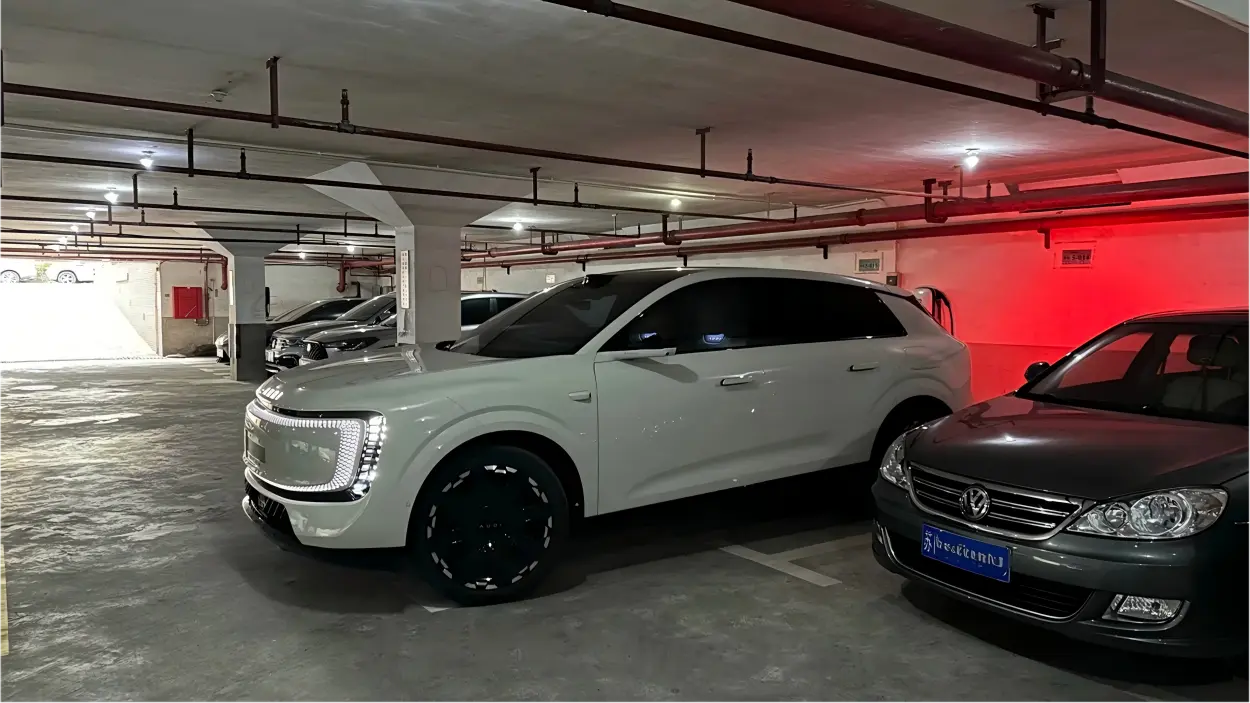
I went around the carpark several times and the rear-wheel steering advantage was obvious — U-turns and direction changes stayed agile. I told the dealer on the spot: thank goodness this car has rear-wheel steering; without it, a 5-metre-plus SUV would be a real handful.
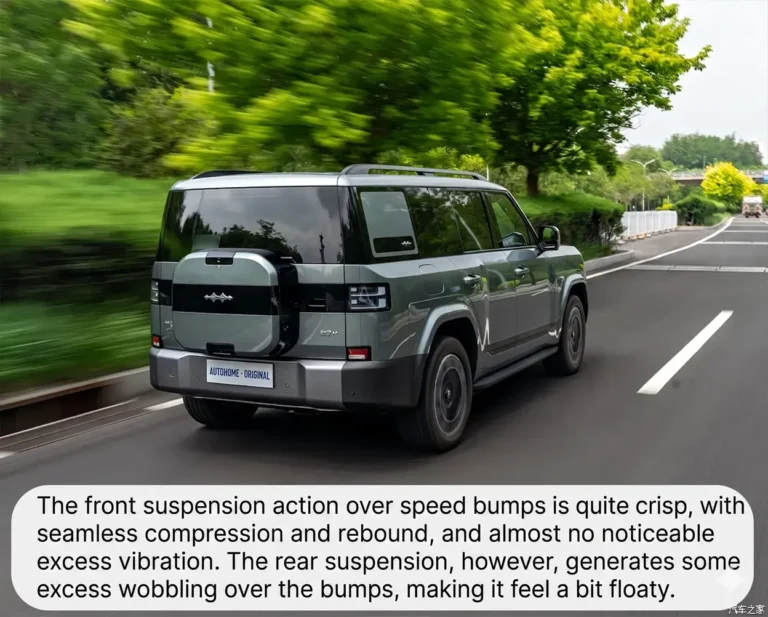
First time driving an electric Audi — the air suspension is striking. The chassis filters cleanly, and over speed bumps in the carpark, the impact inside the cabin was small; the oscillation was largely soaked up by the damper. The dealer also told me this air suspension plus the ZF CDC continuously-adjustable damper can adapt ride height to road conditions, holding maximum comfort inside.
On NVH, at 60 km/h around town, cabin quietness was solid; I specifically compared window-open vs window-shut and the difference was clear. That said, my drive was entirely urban — no expressway stretch — so I couldn’t get a highway NVH reading.
I switched into Dynamic mode and tried acceleration — it is genuinely fast. The instant I floored the throttle, speed climbed and the g-force dizziness hit right away. Fun to feel once in a while, but heads-up: if you have passengers in the back, drive sanely. With hard acceleration, the ones who suffer most are always in the back seat. I sat there myself, and I felt it.
I have to come back to the HUD. The numbers shown are too small, not intuitive to read at a glance, and clearly behind what I experienced in Wenjie, Li Auto and NIO. Driving long, my eyes would definitely tire. The instrument cluster also felt a bit messy — the UI isn’t clean enough. The good news: these are the kind of issues that can likely be solved by OTA. They’re not big problems, but I’d say the experience would land properly after a software tune.
Momenta ADAS: My Take — Steady, Not Aggressive
On the way back, I switched on ADAS and ran it all the way to the carpark entrance before taking over. My impression of this Momenta setup: it’s well-behaved. When the car ahead slows, it automatically signals and changes lane — the whole process feels steady. Pulling away at traffic lights is smooth too.
To stress-test it, I specifically signalled to drop in behind a coach bus on the right, then immediately cut back into the left lane — there was a car coming from behind. The system spotted it, let that car pass, and only then completed the lane change. That handling is steady, not aggressive, basically the same as the way I drive — and that made me comfortable.
Another scenario: a car ahead needed to turn left. The system recognised it early and shifted to the right lane to route around. Overall, the ADAS felt solid to me; I’d call it a very mature solution.
Once I took over at the carpark entrance, I engaged memory parking; the car ran the route I set, and aside from being slow, I couldn’t fault it. When parking into a slot, you can also choose left or right offset — I found that very human. When the adjacent car parks too close to open the door, you’ll see how practical that is.
For broader context on where Momenta’s stack sits among joint-venture EVs, our earlier Buick Electra L7 launch coverage uses the same supplier and tells a complementary story.
Specs & Pricing
I’ve consolidated the official core specs and pricing below. The E7X went on sale May 29, 2026, with an MSRP range of ¥269,800 – ¥359,800 (~$37,200 – $49,600). There were five trims at launch, and one more was added at the August Chengdu Auto Show, taking the lineup to six.
| Trim | MSRP (¥) | USD Equivalent |
|---|---|---|
| Pioneer | 269,800 | ~$37,200 |
| Pioneer quattro | 329,800 | ~$45,500 |
| Flagship quattro | 359,800 | ~$49,600 |
The remaining trims fill out the price band between these points. To be clear: these are China-market MSRPs, excluding taxes, insurance, registration fees, and any regional subsidies.
For a deeper dive on the launch pricing and a different read of the spec sheet, see our earlier Audi E7X preview article.
Trim Differences Worth Knowing
What I experienced on the test car is not what you get on the entry trim. Two places where it’s easy to be misled:
- Air suspension is not standard across the range. The Continental air suspension paired with ZF CDC continuously-variable damping is fitted from the Pioneer Pro upward. The entry Pioneer trim runs a mechanical setup (front double-wishbone, rear five-link). So all my ride-quality comments above are based on the mid- and high-spec trims.
- There are two battery sizes. 100 kWh and 109.3 kWh. The latter is the Smart Long-Range variant, with CLTC range of 751 km. When discussing range, please make sure you know which pack you’re talking about.
Rear-wheel steering, electronic side mirrors and the rear entertainment screen are standard across the range — that I’d genuinely credit as positive.
Same-Price Rivals: How It Stacks Up
I pulled the main same-price competitors into a side-by-side:
| Model | Where it wins | Where the E7X wins |
|---|---|---|
| Tesla Model Y | Brand pull, energy efficiency, residual values, charging network | Driving refinement, interior materials, rear-seat space, cabin quietness |
| AITO Wenjie M8 | HarmonyOS cockpit, Huawei ADS, softer seats | Chassis tuning, steering feel, high-speed stability |
| Li Auto SUV | Family-focused storage cleverness, seat comfort | Driver engagement, 900V charging speed |
| NIO ES8 / ES9 | Battery-swap ecosystem, service and community | Price, charging speed, mechanical refinement |
Market Performance: Three Months After Launch
I pulled the post-launch sales data. The E7X is the most successful launch so far under the AUDI sub-brand: in the first full month after launch, retail hit 4,017 units; July came in at 3,007 units; cumulative deliveries crossed 10,000 within 100 days. The transaction-price band sits above ¥300,000, with the quattro AWD variants making up more than 60% of orders — and the Pioneer quattro alone accounts for roughly 55% of total orders.
On customer mix, more than 90% are trade-up or replacement buyers, and 57% come from German-brand owners. That figure basically confirms the positioning — they’re targeting people who already drive a BBA, want an EV, but don’t want to give up the driving feel.
But in the broader market, the gap is still clearly visible, in my view: in the ¥300,000-class pure-EV SUV segment, the Tesla Model Y sold 25,158 units in July alone. The E7X has carved out a niche, not yet a mainstream position.
My Verdict: Who’s It For
FAQ
- How much does the Audi E7X cost in China?
- The MSRP range is ¥269,800 – ¥359,800 (roughly $37,200 – $49,600). Three trims anchor the band: Pioneer at ¥269,800, Pioneer quattro at ¥329,800, and Flagship quattro at ¥359,800. Other trims fill the price gaps.
- What is the real-world range of the Audi E7X?
- Two packs are offered: 100 kWh and 109.3 kWh (CATL NMC). The official CLTC figures are 705 km and 751 km respectively. On the highway expect closer to 550–600 km in real conditions; CLTC numbers are typically optimistic.
- Does the Audi E7X have air suspension?
- Only from the Pioneer Pro upward — it pairs a Continental air suspension with a ZF CDC continuously-adjustable damper. The entry Pioneer runs a mechanical setup (front double-wishbone, rear five-link). Rear-wheel steering, electronic side mirrors and the rear entertainment screen are standard across the range.
- How fast does the Audi E7X charge?
- The 900V platform supports peak charging at 456 kW, with SAIC Audi claiming roughly 429 km of range recovered in 10 minutes. Real-world charging speed depends on station capability and battery temperature.
- Who supplies the ADAS on the Audi E7X?
- Momenta. The hardware stack is 28 sensors plus an Nvidia Orin-X chip at 254 TOPS. In my drive the system drove steadily and conservatively — letting faster cars pass before completing lane changes, for example.
- Is the Audi E7X the same as a four-ring Audi?
- No. The E7X is sold under the letter-only AUDI sub-brand — a separate marque without the four rings. The badge difference is meaningful: in Chinese parking lots, the letter-only AUDI badge requires explanation.
About this review. Tested car was a Pioneer quattro (AWD) loaner provided by a SAIC Audi dealer. Static walkaround and ~20-minute urban test drive, conducted independently. No compensation was received from SAIC Audi or its dealers. Manufacturer specifications and three-month sales data are sourced from SAIC Audi’s official site, industry trade press, and CPCA filings. Where this article expresses a view, it’s the author’s; EVsays was not invited to or involved in the launch event. Images are by the author.