

The Big Picture
- The standard: GB 47955-2026 — China’s first mandatory national standard for L2 driver assistance systems. Published July 2, effective January 1, 2027.
- BYD’s role: Co-authored the standard. First automaker to pass certification. All “God’s Eye” (天神之眼) models exceed the requirements.
- The moat: Every vehicle sold in China with L2 features must comply by 2027. BYD is already certified. Competitors are still adapting their systems.
The Standard That Changes the Game
On July 29, BYD Automotive made an announcement that sounded like a routine regulatory update — and it was, technically — but the competitive implications are anything but routine.
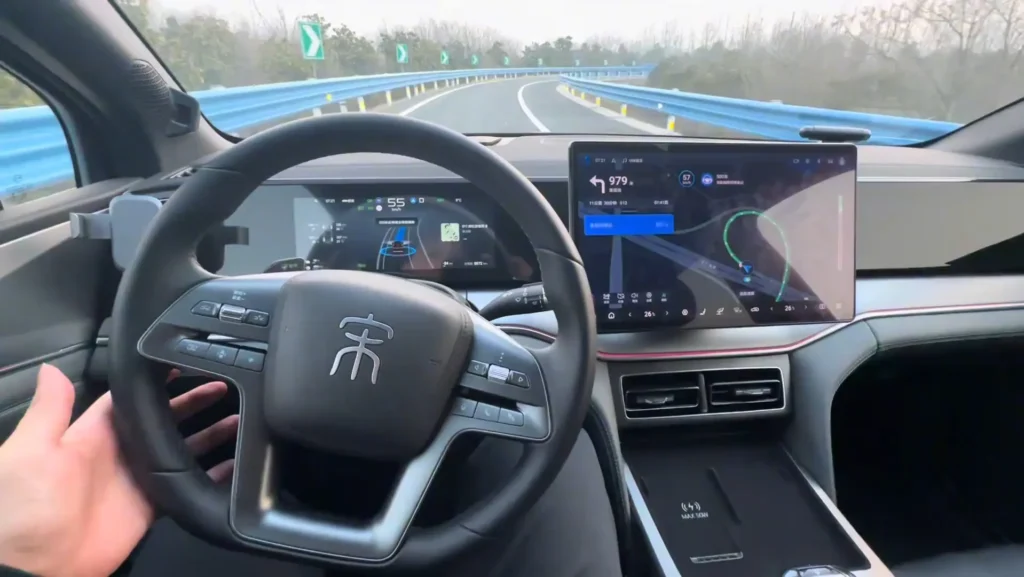
BYD confirmed it co-authored GB 47955-2026, China’s first mandatory national standard for Level 2 combination driver assistance systems, published by the Ministry of Industry and Information Technology on July 2. More importantly, BYD announced it is the first automaker to pass certification under the new standard, receiving its compliance certificate on July 28. All BYD models equipped with the “God’s Eye” system exceed the standard’s requirements.
According to Phoenix Technology, the standard covers system design operating range, functional requirements, driver status detection, user notification — and, critically, adds China-specific test scenarios and pass/fail criteria that go beyond the international UN R171 framework. It’s not a copy of a European regulation with a Chinese cover. It’s a ground-up standard tailored to China’s complex road environment.
Why a 17-Month Head Start Matters
The standard takes effect January 1, 2027. That’s 17 months from now. Every automaker selling vehicles with L2 features in China must be certified by that date. For most, 17 months is barely enough time to design new test protocols, validate their systems against the Chinese-specific scenarios, and go through the certification process. For BYD, which helped write the standard and has already passed, those 17 months are a competitive moat.
L2 penetration in China hit 70.5% in the first half of 2026, according to MIIT data released earlier this week. That’s not a niche feature — it’s table stakes. A vehicle that can’t be certified under GB 47955-2026 by January 2027 can’t legally be sold in China with L2 features enabled. For brands that rely on third-party ADAS suppliers — Mobileye, Bosch, Continental — adapting to a China-specific standard means coordinating with suppliers who may not have prioritized Chinese regulatory compliance.
BYD’s “God’s Eye” system has three structural advantages that made early certification possible, as analyzed by Paopao Tech:
- Full-stack integration: ADAS isn’t a bolt-on sensor package — it’s integrated with chassis, powertrain, and body control through BYD’s vehicle-wide intelligent architecture.
- In-house control: Chips, sensors, and algorithms are all developed internally. No supplier dependencies to negotiate.
- China’s largest vehicle-cloud database: Real-world driving data from millions of BYD vehicles on Chinese roads continuously trains the system against the exact scenarios the standard tests for.
The first two points are about speed. The third is about accuracy — and it’s the one that competitors can’t replicate with money alone. No other automaker has as many L2-equipped vehicles collecting data on Chinese roads as BYD. This same data advantage runs through BYD’s broader strategy — from training humanoid robots in 30,000 dealerships to refining its God’s Eye algorithms against millions of real-world miles.
The Regulatory Arc Is Bending Toward Safety
GB 47955-2026 doesn’t exist in isolation. It follows GB 38031-2025 — China’s “strictest battery safety standard in history,” effective July 1 — which requires zero fire and zero explosion for two hours after thermal runaway. It follows MIIT’s March 2026 “four bans” on OTA updates that degrade vehicle functions without disclosure. It follows the unannounced factory inspections at GAC Aion and XPeng on July 24. And it follows the XPeng X9 recall of 33,473 vehicles for air spring defects — the moment China’s regulator stopped asking nicely.
The pattern is unmistakable: China’s regulators are building a regulatory architecture that raises the floor for every automaker — and the ceiling for the ones who get there first.
BYD’s L2 certification is part of this pattern. The company didn’t just pass the test; it wrote the questions. That’s a position of influence that goes beyond any single model launch or quarterly earnings report.
Author’s Take
Regulatory certifications are usually the least interesting stories in the automotive industry. This one is different, because it’s not about compliance — it’s about time. BYD has 17 months where its L2 systems are certified and its competitors’ aren’t. In a market where L2 is on 70% of new vehicles, that’s not a paperwork advantage. It’s a competitive weapon.
The deeper story is about regulatory influence. BYD didn’t just adapt to GB 47955-2026 — it helped write it. When you write the standard, your systems are designed to pass it from day one. When you don’t, you spend 17 months scrambling to comply. This is how industrial policy advantages compound in China’s auto sector: not through subsidies, but through standards.
The Bottom Line
BYD co-authored China’s first mandatory L2 ADAS standard and became the first automaker to certify against it. The standard — GB 47955-2026 — becomes law on January 1, 2027. BYD’s “God’s Eye” system already exceeds the requirements. Competitors have 17 months to catch up — but BYD also has China’s largest real-world driving dataset, which no competitor can replicate on that timeline.
This isn’t a story about a certification. It’s a story about regulatory moats — and BYD just built one.
Sources & Further Reading
- Phoenix Technology — “BYD Co-Authors L2 ADAS National Standard, First to Certify” (July 29, 2026)
- Paopao Tech — “L2 ADAS National Standard: BYD Co-Authored, First to Pass” (July 29, 2026)
- Wangtong News / ifeng — “BYD God’s Eye Exceeds GB 47955-2026” (July 29, 2026)
- Guandian / 观点网 — “BYD Deeply Involved in L2 Standard Drafting, First Certified” (July 29, 2026)