

The BYD recall covers 183,211 cars in China over a small pad in the brake pedal assembly. It is worth being precise about what that does and does not mean: the cars still stop. The brake lights may not.
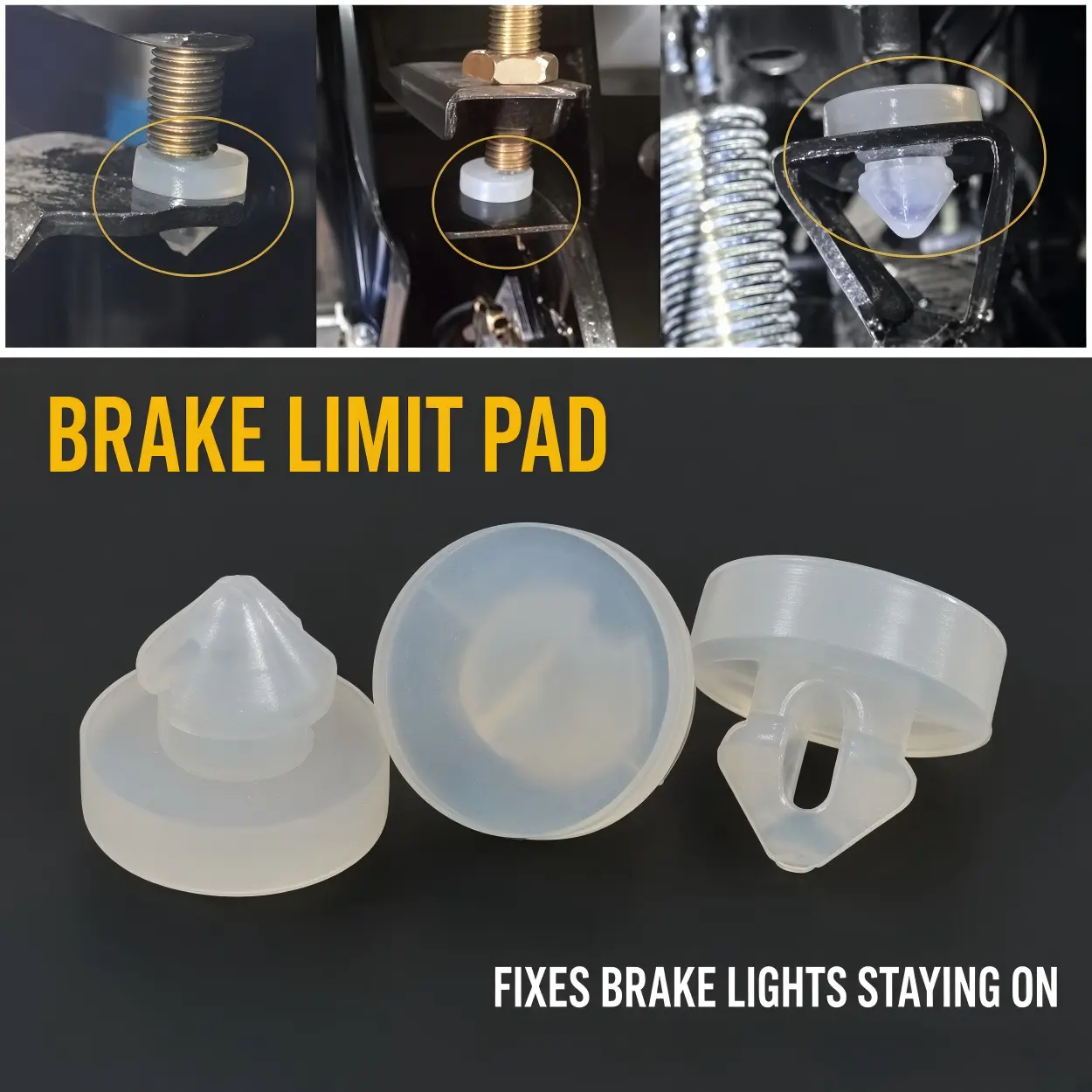
BYD filed two recall plans with China’s State Administration for Market Regulation (SAMR) on September 18, covering the Tang and Qin families built between 2014 and 2022. According to the regulator’s notice, a manufacturing problem produced a batch abnormality in the material used for the brake pedal limit pad; after long use the pad can crack or break, and in extreme cases detach. When that happens, the brake lights can stay illuminated while the pedal is not pressed, sending a false braking signal to vehicles behind.
What the BYD Recall Covers
The filing is split between two legal entities and two recall numbers, both effective immediately:
| Recall number | Model and production window | Units |
|---|---|---|
| S2026M0116V | Tang series, built 28 Mar 2015 – 21 Dec 2018 | 58,026 |
| S2026M0116V | New-generation Tang DM, built 19 May 2018 – 14 Jan 2022 | 77,846 |
| S2026M0116V | New-generation Tang EV, built 27 Dec 2018 – 25 Oct 2021 | 7,023 |
| S2026M0117V | Qin series, built 27 Jun 2014 – 9 Jun 2019 | 40,316 |
The fix is a free replacement of the improved pad, carried out by authorised dealers. BYD will notify owners by registered letter, telephone and text message, and has published a customer hotline for the Dynasty range. Cars that have already had the part replaced do not need it done again — a detail worth noting, because it means the affected population is smaller than the headline number suggests.
Chinese trade coverage notes that both recall numbers end in the letter V, which denotes a manufacturer-initiated filing rather than one forced by the regulator.
What the BYD Recall Is Not
This is the part that will be got wrong elsewhere, so it is worth stating flatly: this is not a brake failure.
The limit pad is a small stopper in the pedal assembly rather than a braking component, and the regulator’s notice describes the consequence entirely in terms of the brake light circuit: the pad fails, and the lights can remain lit with the pedal released. Chinese coverage of the filing states the same thing explicitly — the defect does not directly affect the vehicle’s braking function — and puts the risk where it belongs: a driver behind sees a car that appears to be braking, and may react with an unnecessary emergency stop or lane change.
That distinction matters commercially as much as technically. “BYD recalls 183,000 cars over brakes” and “BYD recalls 183,000 cars over a brake light signal” describe the same filing and imply very different things.
Why a Brake Light Is a Safety Device
A brake light that is always on is not a cosmetic fault. It removes information from the traffic around the car: the one signal a following driver uses to judge whether the vehicle ahead is slowing. On a Chinese urban road, where following distances are often short, a permanently lit brake light invites exactly the wrong response — a sudden lane change or an unnecessary brake application in the car behind, which is how rear-end collisions start.
The other oddity is the age of the affected cars. Every production window in this filing ends by January 2022, and the oldest begins in mid-2014. These are not current-generation vehicles; they are the Tang and Qin that built BYD’s volume base during its growth years, arriving at the point where a small rubber or plastic part degrades with age.
The Regulatory Backdrop to the BYD Recall
The timing is not accidental. On August 27, 2026, four Chinese government departments issued a notice launching a one-year national campaign on production consistency and quality for road vehicles. The scope covers production consistency, reliability, durability and validation of new technology — broader than previous automotive quality campaigns — and the enforcement language has been upgraded: manufacturers that cannot maintain production approval conditions or whose products fail requirements face measures including public naming and joint penalties, with a longer-term supervision mechanism and publicity for typical cases. Standards work is moving in the same direction across the battery supply chain, including new technical standards for solid-state cells.
Against that backdrop, a voluntary recall filed promptly over a cheap part is a defensible compliance move. The same SAMR batch shows the pattern is not BYD-specific: NIO filed a recall of 686 Firefly electric vehicles over a steering column torque sensor wiring interference issue that could, in extreme cases, cause a loss of steering assistance.
The Chinese vehicle market is now in a phase where regulators are pushing harder on quality and consistency after several years of price-driven competition. For a company selling four million vehicles a year and building plants in Europe, the cost of a recall like this one is trivial; the cost of being seen to hide it would not be.
BYD’s Recall Record
This is not BYD’s first filing of the cycle. In October 2025 the company recalled more than 115,000 vehicles — 2015-model-year Tang and Yuan Pro — over an active-discharge function fault in the drive motor controller. In November 2025 it recalled roughly 90,000 Qin PLUS DM-i cars over battery pack consistency. Both were larger in engineering scope than the current filing, which involves a single low-cost part. It is a different register from BYD’s more familiar public engineering story, which is usually about things like its second-generation Blade Battery.
Scale context: the Tang and Qin are core volume models of BYD’s Dynasty network, which sold 713,800 vehicles in the first half of 2026, according to Chinese market data.
What the BYD Recall Does Not Say
Four things are not in the notice and should not be inferred.
No injuries or accidents are disclosed. The filing describes a risk, not an incident record. Nothing published with it links the defect to a specific crash.
No cost is given. The notice does not estimate the value of the parts, labour or owner communications involved.
No supplier is named. The notice attributes the problem to a manufacturing issue and a batch material abnormality without identifying who made the pad, so we cannot say whether other carmakers using the same part are affected.
No export-market implications are stated. These are China-market filings covering China-built cars. Whether Tang or Qin units exported under other model names fall inside the affected production windows is not addressed.
Accuracy note: Both recall plans were filed with China’s State Administration for Market Regulation (SAMR) and published on September 18, 2026. The two recall numbers, the model and production windows, the unit counts (58,026 Tang, 77,846 new-generation Tang DM, 7,023 new-generation Tang EV and 40,316 Qin, totalling 183,211), the description of the defect as a batch material abnormality in the brake pedal limit pad, the symptoms, the free replacement of the improved part and the exemption for vehicles already repaired are all as the regulator’s notice states them. The notice and Chinese media coverage state that the defect does not directly affect the braking function itself; the characterisation of the hazard as a false signal to following drivers follows that wording. The reading that the V suffix denotes a manufacturer-initiated recall is as reported in Chinese trade and financial coverage rather than as defined in the notice we cite. The October 2025 and November 2025 recall figures for BYD’s earlier filings, the 713,800 first-half 2026 Dynasty network sales figure and the NIO Firefly recall of 686 vehicles are as reported in Chinese financial media. No injuries, accidents, costs, supplier names or export-market effects were disclosed, and we have not added any. We found no English-language report of this recall in our searches at the time of writing, which does not preclude coverage elsewhere.
Sourcing note: The primary source is the SAMR recall notice itself, published by the regulator’s quality development bureau on September 18, 2026, which contains the recall numbers, affected production windows, unit counts, defect description, remedy and owner-notification process. Chinese financial and regional media reporting on the same notice supplied the clarification that braking function is unaffected, the comparison with BYD’s 2025 recalls, the Dynasty network sales figure and the regulatory context of the August 27, 2026 four-department quality campaign. EVsays has not spoken to BYD or to the regulator, has no access to the affected vehicles, and has not reviewed any incident data; every factual statement here is taken from the notice or from published Chinese reporting, and the interpretation is ours. Our editorial standards are set out in our editorial policy, and corrections are handled under our correction policy. The image of the brake pedal limit pad is a parts-supplier illustration of the component, included to show readers what the part looks like; it is not BYD imagery and is not one of the photos described in the filing.
Sources & Further Reading
- SAMR (国家市场监督管理总局) — “BYD Auto Industry Co. and BYD Auto Co. recall some domestic vehicles” (2026-09-18) — the primary notice: both recall numbers, the production windows and unit counts, the limit pad defect, the free replacement and the owner notification process.
- Sina Finance — “BYD recalls more than 180,000 vehicles” (2026-09-19) — the reading of the V suffix as a voluntary filing and the context of the four-department production consistency and quality campaign launched on August 27, 2026.
- Chinese regional and financial media reports of the same notice — the clarification that braking function is not directly affected, BYD’s October 2025 recall of more than 115,000 vehicles and November 2025 recall of around 90,000 Qin PLUS DM-i cars, the Dynasty network first-half sales figure and the NIO Firefly recall in the same regulatory batch.