
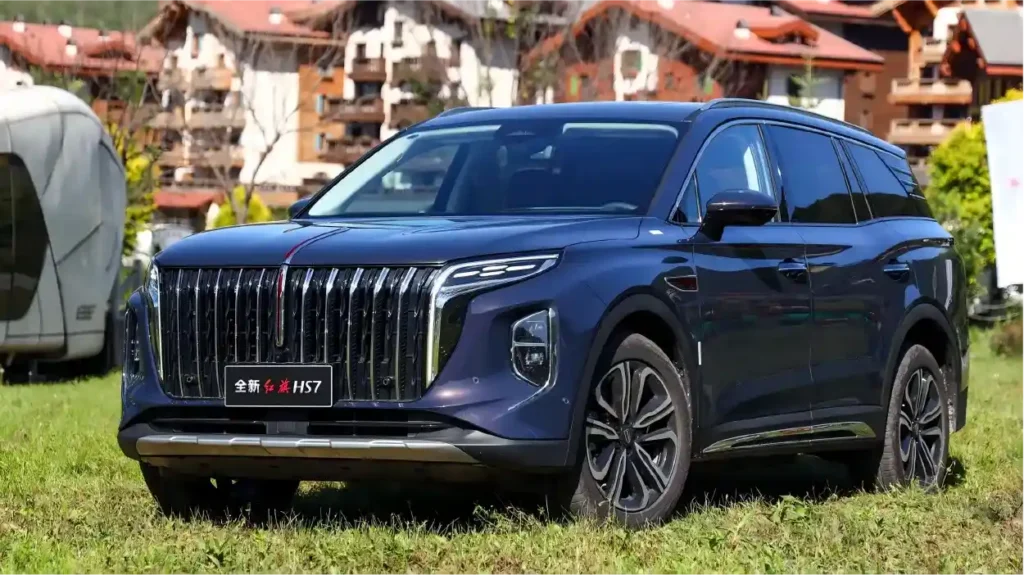
On August 20, Chinese financial media reported that BYD’s second-generation Blade Battery has been officially designated for FAW Hongqi’s next-generation pure-electric platform — a core sourcing win that makes Hongqi the first state-owned Chinese automaker to buy and mass-produce BYD’s latest cell. The confirmation came from Zhang Hongjun, executive deputy general manager of FAW FinDreams, the BYD–FAW battery joint venture.
A partnership that just leveled up
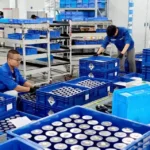
The BYD–FAW relationship is not new. The two groups formed FAW FinDreams in 2022, with BYD holding 51% and FAW Group 49%. The joint venture is based in Changchun’s auto-industry zone, with total planned capacity of 45 GWh; its first 15 GWh phase came online in February 2024 and has since supplied batteries for Hongqi and Bestune EVs. The Hongqi E-QM5, among others, already carries BYD’s first-generation Blade Battery and has, in Zhang’s words, “withstood full market validation.”
What changed this week is the jump from Gen-1 to Gen-2. The designation of the second-generation cell for Hongqi’s next-gen EV platform signals a full upgrade of the cooperation — and, critically, a state-owned automaker choosing BYD’s flagship chemistry over its own or a third-party supplier for a core vehicle program.
What the second-generation Blade Battery actually delivers
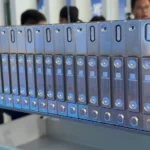
BYD unveiled the cell on March 5, 2026. Technically, it pairs a lithium manganese iron phosphate (LMFP) composite cathode with a silicon-carbon composite anode, lifting the voltage platform from 3.2V to 3.8V and cutting cell internal resistance by roughly 20%. System-level energy density lands at 190–210 Wh/kg — a 35% to 50% improvement over the first generation, close to mainstream mid-nickel ternary packs.
Charging is where it sets records. Going from 10% to 70% takes just 5 minutes; reaching 97% takes 9 minutes — the fastest figure for any production EV battery worldwide. Even at −30°C, the 20%–97% charge adds only about 3 minutes versus room temperature. The cell is designed to pair with BYD’s megawatt flash-charging architecture, whose single-gun peak output reaches 1,500 kW.
Why this matters beyond one supplier win
For BYD, external battery supply has quietly become a strategic pillar. The company already powers Toyota’s bZ3 and Ford EVs sold in some markets with its cells; landing a flagship state-owned Chinese brand is a different order of validation. A Hongqi endorsement tells the wider industry that the Gen-2 Blade Battery has cleared the skepticism threshold that surrounds any supplier’s first external volume program.
It also fits BYD’s defensive playbook. As China’s EV price war compresses vehicle margins, monetizing battery technology — both inside and outside the group — is a direct route to protecting profitability. Turning the battery division into a platform business that competes head-on with CATL for external orders is no longer a side experiment; the Hongqi deal makes that explicit.
Author’s Take
Read this as infrastructure, not anecdote. BYD spent six years and a 45 GWh JV line to get here, and the prize is a recurring, high-margin revenue stream that does not depend on selling another BYD-branded car. The more compelling story than “Hongqi bought a battery” is that a state-owned flag-bearer is now willing to stake a next-generation platform on it — which lowers the barrier for the next state-owned or private OEM to follow.
The Bottom Line
The Hongqi designation marks the inflection point where BYD’s second-generation Blade Battery moves from self-use to external adoption at scale. A state-owned automaker going first is the signal that the technology — and BYD’s ambition to be a battery supplier, not just a carmaker — has cleared the room.
Sources & Further Reading
- Sina Finance — “BYD’s Second-Generation Blade Battery Wins FAW Hongqi Designation” (Aug 20, 2026, Chinese): finance.sina.com.cn/roll/2026-08-20/doc-ininxkry2126601.shtml
- BYD Official — “BYD Unveils 2nd Generation Blade Battery and FLASH Charging Technology” (Mar 5, 2026): byd.com
- China EV Dispatch — BYD Second-Generation Blade Battery Teardown Analysis
- China EV Dispatch — BYD Megawatt Flash-Charging Station Architecture