


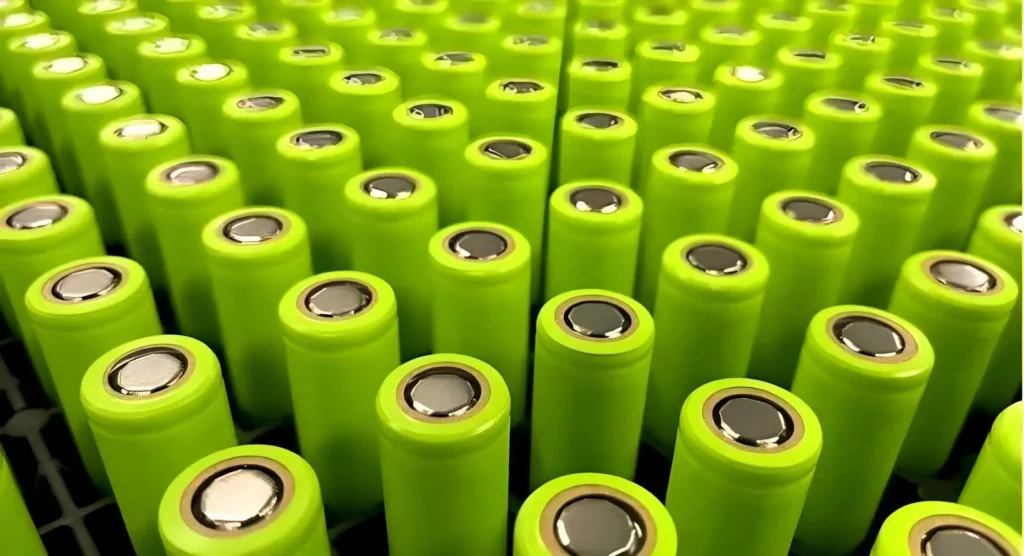
The Big Picture
- Six Chinese automakers released H1 2026 forecasts: four expect losses, two saw profits crash by 60%+. The entire domestic auto industry is under a margin squeeze with no near-term relief in sight.
- Per-vehicle costs up $600-$1,000 from raw material inflation. Storage chips doubled in price in H1 alone, with another 60-70% increase expected in H2. Unlike lithium, chips can’t be hedged with futures.
- Demand is shrinking: H1 domestic retail sales -20.2%. To fight for a smaller pie, automakers are discounting heavily while launching new models at an average rate of 3.6 per day.
1:China Automaker Profits: The H1 Bloodbath
| Automaker | H1 2026 Status | Primary Causes |
|---|---|---|
| GAC Group | Loss $590-660M | Raw materials, sales investment, JV decline |
| Changan Auto | Profit -58% to -68% | Raw material costs, exchange rates |
| Seres | Loss $220-260M | Supply chain cost changes |
| BAIC Bluepark | Loss $260-290M | R&D spending, low scale, upstream costs |
| JAC Motors | Loss $110M | Sales decline, JV losses |
| Great Wall Motor | Profit decline | Tax subsidy delays, forex |
These six forecasts are not outliers. They’re the early warning signals of an industry-wide cost crisis. GWM flagged its H1 profit would drop 58-63% earlier this week, as reported by CnEVPost. Seres swung from a $294M profit to a $260M loss, according to its stock exchange filing. Changan went from a healthy profit to barely breaking even. The pattern is consistent and the causes are shared.
2. The Storage Chip Crisis: A New Cost Driver No One Hedged Against
Lithium carbonate, copper, and aluminium are old problems. Automakers have procurement teams and, in some cases, futures contracts to manage those. Storage chips are the new problem — and they’re worse. According to TrendForce data, contract prices for mature automotive-grade storage chips have more than doubled in the first half of 2026. Analysts expect another 60-70% increase in the second half.
The supply squeeze comes from AI. Data center demand for high-bandwidth memory has caused chipmakers to prioritize server-grade production over automotive-grade — the automotive industry is getting outbid by hyperscalers. Unlike lithium or steel, automotive storage chips have no futures market. You can’t hedge. You can only buy — at whatever price the market demands. Companies including GM, Ford, and Nio have begun signing long-term supply agreements directly with chip manufacturers, but those deals take months to negotiate and years to ramp up supply.
3. The Double Squeeze: Costs Rise, Demand Shrinks
The cost problem would be manageable if demand was growing. It’s not. China’s domestic passenger vehicle retail sales fell 20.2% in H1 2026. The market is contracting while the number of competitors is expanding. In the first five months of 2026, Chinese automakers launched an average of 3.6 new models per day. To support those launches, companies are spending heavily on marketing, subsidizing trade-ins, and offering financing incentives. At the same time, per-vehicle material costs have risen by roughly 4,000-7,000 yuan ($600-$1,000), with luxury models seeing increases of up to 10,000 yuan ($1,500).
S&P Global Ratings told Jiemian News that with domestic demand unlikely to recover sharply in the near term, automakers will continue to face cash flow and margin pressure. Their forecast: profitability will diverge. Companies with high-end product mixes and strong economies of scale — BYD, for example — will absorb the costs. Smaller firms and those reliant on low-margin segments face an “increasingly precarious future.”
The split is already visible. BYD has not issued a profit warning. Its H1 overseas sales surged 70%. Its domestic volumes fell but its average selling price is rising as it pushes into premium segments with Denza, Yangwang, and the Da Han flagship. The pain is concentrated among state-owned automakers with legacy JV dependencies (GAC, BAIC, JAC) and smaller players without export scale (Seres). The same cost wave hits everyone. But not everyone has the same seaworthiness.
Author’s TakeThe H1 2026 earnings forecasts are not a cyclical blip. They’re the sound of China’s auto industry bifurcating into two tiers: the globalized exporters with supply-chain leverage and diversified revenue streams, and the domestic-only players fighting over a shrinking market with rising input costs.
BYD and CATL don’t appear on this list because they’re not in trouble. GAC, BAIC, Seres, and JAC are. The dividing line is not technology or brand — it’s export revenue. Companies that sell overseas are earning in dollars and euros, hedging against the yuan, and amortizing their R&D across global volumes. Companies that sell only in China are trapped in a price war with costs they can’t control. The H1 numbers are a preview of what the next five years look like: consolidation driven not by product competition, but by supply-chain survival.
The Bottom Line
China automaker profits are being crushed by a cost crisis that no one saw coming at this scale. Six companies. Four losses. Two profit collapses of 60%+. Storage chips doubled in price and there’s no futures market to hedge against them. Per-vehicle costs up $1,000. Domestic sales down 20%. The industry is launching 3.6 new models a day to compete for a pie that keeps shrinking. The winners will be the ones with export revenue and supply-chain leverage. The rest are fighting a war of attrition they can’t afford.

[…] are the largest single swing factor in the cost of a cell — the same line that has been eating into Chinese automakers’ margins — and recycled content is one of the few levers that improves the cost base and the supply […]