

The Big Picture
- The problem: China launched 542 new car models in Jan–May 2026 — 3.6 per day. Some brands compressed 36-month dev cycles to 18 months. A few skip either the DV (design validation) or PV (production validation) stage entirely.
- The fix: A proposed national standard would raise mandatory NEV reliability testing from 15,000 km to 30,000 km — matching ICE vehicles for the first time. MIIT is conducting unannounced factory inspections.
- The context: Industry profit margin is 3.8%. 35% of models sell under 2,000 units/month. The speed-car era is a symptom of a prisoner’s dilemma — and regulators are changing the rules of the game.
The Number That Broke the Silence: 542 Cars in 150 Days
At the 2026 China Auto Forum, Beijing Hyundai’s general manager Li Fenggang did something that rarely happens in an industry forum: he called out his competitors by name — not individuals, but the entire class of automakers that have made “ship first, test later” a business model.
“Some brands, in order to accelerate their launch schedule, cut essential testing procedures and turn consumers into de facto test drivers,” Li said, in remarks reported by People’s Daily Online. He was specific: vehicle development has two critical validation phases — DV (design verification, which tests whether the design works) and PV (production verification, which tests whether the factory can build it consistently). “Some brands only do one phase. Having only one means there’s a gap — that’s why some brands have poor production consistency and large quality fluctuations.”
The data backs him up. Industry figures released at the forum: 542 new models launched in the first five months of 2026 — an average of 3.6 per day. In the internal combustion era, a new car’s development cycle was universally 36 months or longer. Today, some brands have compressed it to 18 months, with internal project timelines reportedly ranging from six-month startup to six-month delivery.
BYD’s executive vice president He Zhiqi, whose company has its own breakneck launch cadence, reportedly said of the numbers: “This is insane. This is a car!”
DV and PV: The Two Tests Some Brands Skip
For non-engineers: DV (design verification) tests whether the engineering concept works — does the suspension design handle the loads, does the battery thermal management keep the cells in range, does the air spring survive 500,000 fatigue cycles. PV (production verification) tests whether the factory’s tooling, molds, and assembly line can build the same car the same way, thousands of times in a row.
The two phases serve different purposes. DV catches design flaws. PV catches manufacturing flaws. Skipping either is like testing a bridge by driving a single truck over the prototype and calling it done. Li Fenggang’s point — and the point the industry forum was designed to surface — is that some brands are doing exactly that.
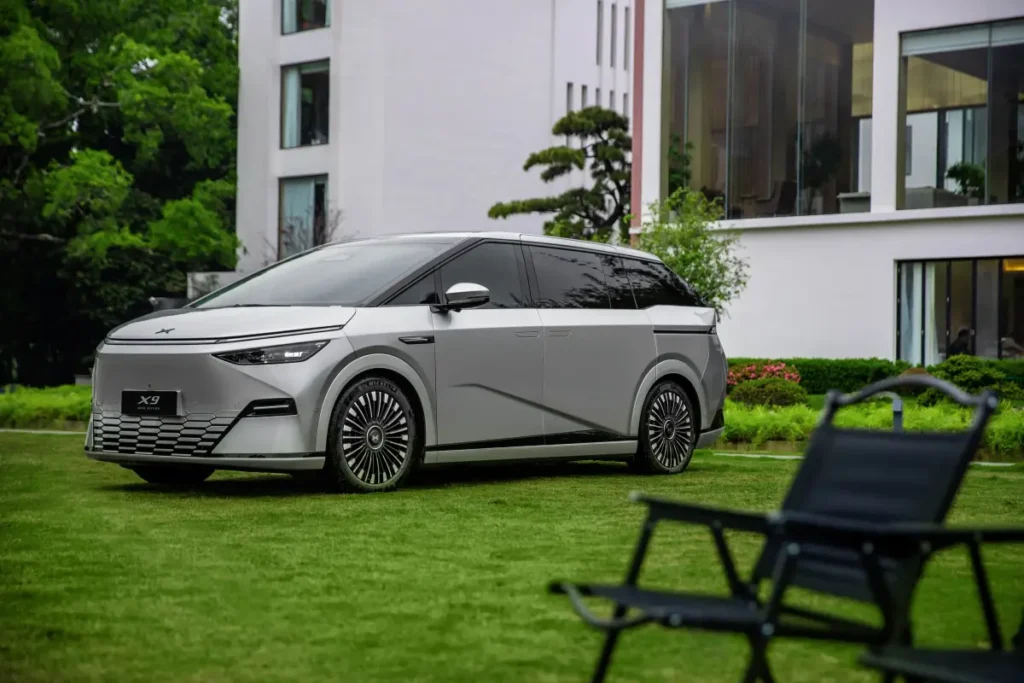
The consequences are no longer theoretical. The XPeng X9 recall of 33,473 vehicles for air spring failures, triggered by high-temperature conditions that should have been caught in validation. The CALB battery defect crisis affecting GAC Aion’s commercial fleet — cells swelling, leaking, failing — in vehicles that critics say were “hurriedly assembled with compressed verification.” A supply-chain executive at a major tier-one supplier told National Business Daily: “Host manufacturers and suppliers used to test, certify, then find a vehicle to install on. Now it’s the opposite — pre-negotiate, pre-research, pre-install, and validate while the customer drives.”
The Fix: 30,000 Kilometers, No More Half-Measures
On the same day Li Fenggang spoke, China’s National Automotive Standardization Technical Committee published three proposed amendments to NEV type-approval test procedures for public comment. The core change: raising mandatory reliability testing from 15,000 km to 30,000 km, eliminating the 50% discount that battery-electric vehicles have enjoyed relative to internal combustion vehicles since the standards were first written.
| Powertrain Type | Current Standard | Proposed Standard |
|---|---|---|
| Battery Electric | 15,000 km | 30,000 km (27,000 km DC charging) |
| Hybrid (HEV) | 15,000 km | 30,000 km |
| Plug-in Hybrid (PHEV) | 15,000 km | 30,000 km + 10,000 km pure EV mode |
| Fuel Cell (FCEV) | 15,000 km | 30,000 km |
| ICE (reference) | 30,000 km | 30,000 km (unchanged) |
The signal is unambiguous: electric cars don’t get a reliability pass just because they’re electric. The same 30,000 km standard that has governed internal combustion vehicles is being extended to the entire vehicle fleet — a principle the industry shorthand calls “fuel-electric parity” (油电同权).
This isn’t an isolated move. In January 2026, MIIT’s 2026 Notice No. 1 revised the Road Motor Vehicle Manufacturer Access Review Requirements to explicitly mandate 30,000 km reliability testing for ICE vehicles, effective January 1, 2027. The new proposal simply extends the same requirement to NEVs. In July, MIIT sent inspection teams to GAC Aion and XPeng factories, randomly pulling vehicles and batteries off the line for third-party testing. And the X9 recall happened on the same day as the MIIT inspection — not a coincidence.
Fu Yuwu, honorary chairman of the China Society of Automotive Engineers, summarized the stakes bluntly in an interview with China Auto News: “Compressing the development cycle cannot have no bottom line. High-cold, high-heat, high-altitude, crash, fatigue, durability — these cannot be omitted. Period.”
The Prisoner’s Dilemma That Created Speed Cars
The 542-model statistic is not a sign of a healthy, innovative market. It’s a symptom of a structural problem. In a market that contracted ~20% in H1 2026, with an industry profit margin of 3.8% (and vehicle manufacturing net margin of just 1.5%), every automaker is playing the same game: launch something — anything — to stay visible, to keep dealers from defecting, to maintain a presence in a market where silence equals death.
The competitive logic is a prisoner’s dilemma. Everyone knows that launching 542 models into a shrinking market will destroy margins and compromise quality. But nobody can afford to stop, because the first brand that pauses its launch cadence becomes invisible overnight. As one Weibo industry analyst noted this week, 35% of models sell fewer than 2,000 units per month — launched, promoted, and forgotten within a quarter.
The regulatory response — 30,000 km testing, factory inspections, mandatory recall compliance — is designed to change the payoff matrix. If the cost of rushing a car to market includes a guaranteed 30,000 km testing window that takes months to complete, the fastest possible development cycle has a floor. And that floor makes “ship first, test later” economically irrational.
Author’s Take
The speed-car crackdown is the most important regulatory story in China’s auto industry right now — more important than any single model launch or quarterly earnings report — because it changes the structural incentives that produced the speed-car era in the first place. For years, the Chinese auto market rewarded speed. The first brand to ship a new feature — air suspension, LiDAR, 800V charging — won the segment narrative, even if the implementation was buggy. The second brand got reviews that said “also has this feature.” The third got ignored.
The 30,000 km rule changes that calculus. A 30,000 km test isn’t something you can fake with a simulator or compress with overtime. It takes physical time — months of road testing across multiple climate zones — and it applies to every new model, not just the ones from brands that can afford it. The brands that have been winning on speed will have to slow down. The brands that have been losing on speed but winning on quality — including joint ventures like Beijing Hyundai, whose GM just called out the entire industry — just got a regulatory tailwind.
The question is whether the rules will be enforced. China has issued standards before and watched automakers find workarounds. But the combination of proposals + inspections + mandatory recalls suggests this time is different. The XPeng X9 recall happened. The MIIT showed up unannounced at factory gates. Beijing Hyundai’s GM felt comfortable enough to name the problem publicly. When a joint-venture executive feels safe criticizing domestic competitors’ quality practices at a national forum, it means the political winds have shifted. Speed cars are no longer something you brag about. They’re something regulators are building a fence around.
The Bottom Line
China launched 542 new car models in five months — 3.6 per day. Some brands compressed 36-month dev cycles to 18 months and skipped entire validation stages. Industry profit margin: 3.8%. 35% of models sell under 2,000 units/month.
The regulatory response: a proposed 30,000 km mandatory reliability test for all NEVs, ending the 50% discount EVs have enjoyed. MIIT factory inspections are now unannounced and ongoing. The speed-car era is being fenced in — not by market forces, but by rules that make it too expensive to ship half-tested cars.
Sources & Further Reading
- People’s Daily Online — “‘Speed Cars’ Are Being Shut Down” (August 3, 2026)
- Qingke News / China Auto News — “30,000 km Red Line: NEV Reliability Standards Proposal” (August 3, 2026)
- Weibo / China Auto News — “542 Models in 5 Months, 3.6 per Day” (August 3, 2026)
- China City News / People’s Daily — “Precision Regulation: Quality Is the Lifeline” (August 3, 2026)