

The Denza Z9S price list landed at $35,300 to $44,900 when the sedan went on sale on September 23 — between $8,800 and $10,200 below the numbers BYD’s premium brand published for itself six weeks earlier in its August pre-sale. The entry trim is 20% cheaper than its own pre-sale price. For a 5,090 mm luxury sedan with a claimed 1,100 km of range and nine-minute charging, that is a statement about where volume is, not about where the brand wants to sit.
What the Denza Z9S Price List Actually Says
Three trims went on sale, all on BYD’s second-generation Blade Battery and its flash-charging system:
| Trim | Drive | CLTC range | Launch price | Pre-sale price | Cut |
|---|---|---|---|---|---|
| Flash Charging Premium | Rear motor | 920 km | $35,300 | $44,100 | −$8,800 |
| Flash Charging Flagship | Rear motor | 1,100 km | $38,000 | $48,200 | −$10,200 |
| E³ Flash Charging Performance | Tri-motor AWD | 780 km | $44,900 | $53,800 | −$8,800 |
Those are the prices CnEVPost reported on launch day, and they match the tables published by Chinese automotive media the following morning. The two largest drops are on the trims buyers are most likely to choose: the entry car, and the one that carries the range record. The performance trim, which is the most expensive and the least efficient in range terms, took the smallest reduction in percentage terms — 16.4%, against 20.0% at the bottom and 21.1% in the middle.
Denza paired the launch with what it calls eleven benefits worth up to about $11,000, valid until October 31: up to $2,800 in optional-equipment credit, a zero-down, zero-monthly-payment, zero-interest finance plan, up to $2,800 in trade-in support, a year of free flash charging and a lifetime warranty on the three electric systems. None of that changes the sticker price, and all of it is aimed at the same problem.
The Trim With the Longest Range Is Not the Flagship
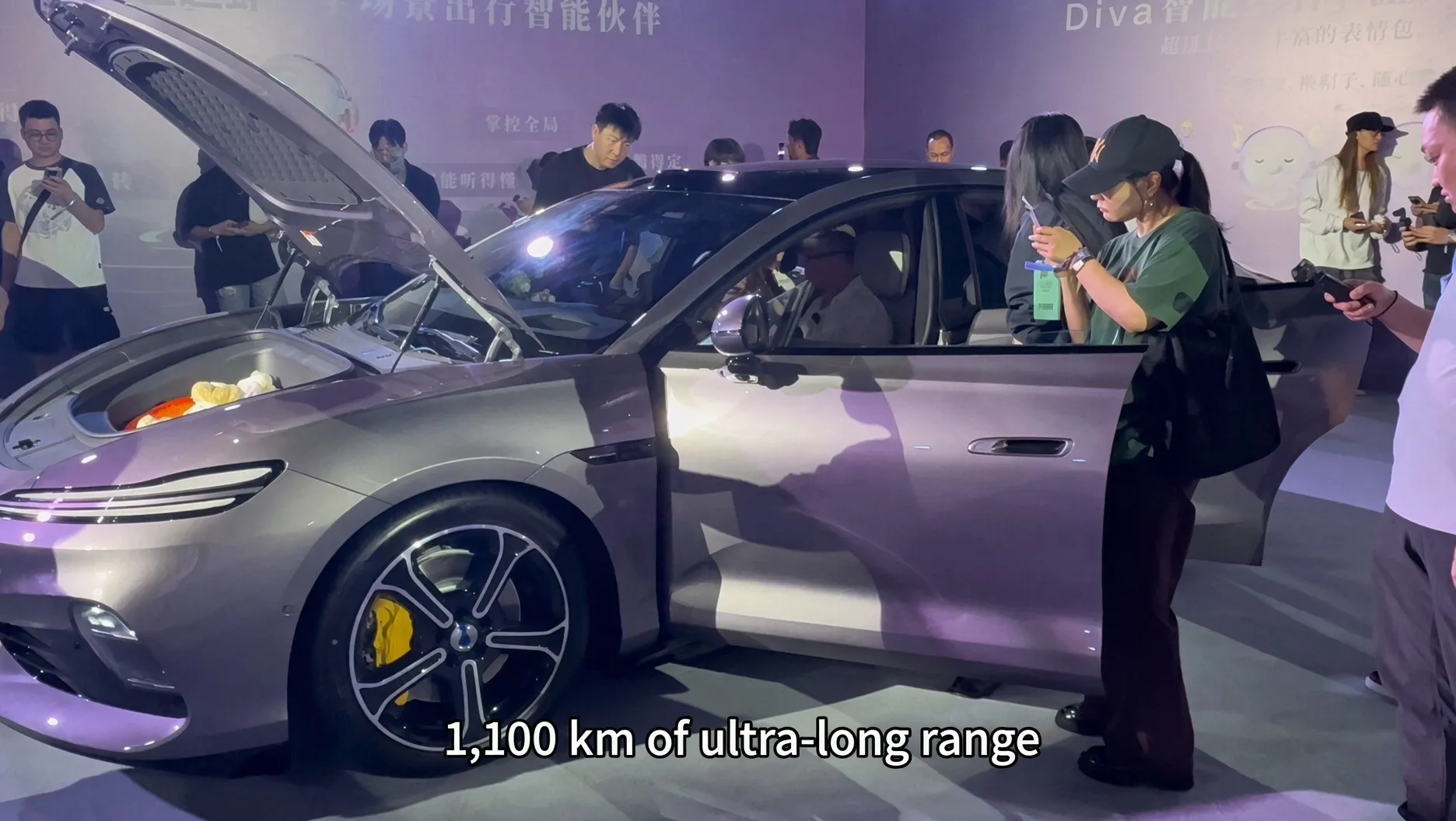
The headline number on every Z9S story is 1,100 km, and it belongs to the middle trim. The flagship is a tri-motor car with 890 kW — about 1,210 PS — and a claimed 0–100 km/h time of 2.68 seconds, and it gives up 320 km of range to get there. A buyer choosing the Z9S therefore chooses between the longest range available on any production electric sedan and the fastest car in the line-up, because Denza has not built a version that is both.
That is not an oversight. Tri-motor drive adds mass, drag and consumption, and the performance trim also carries a larger thermal load for sustained output. What is unusual is the size of the gap at the entry point: even the cheapest Z9S at $35,300 claims 920 km, more than the flagship trims of most of its rivals. Denza has effectively made long range table stakes and reserved performance as the paid upgrade — the reverse of how the segment usually works.
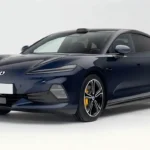
The rest of the mechanical specification is consistent with that framing. The car is 5,090 mm long on a 3,025 mm wheelbase, 90 mm shorter than the Z9GT with which it shares the e³ platform and the battery, and it is quoted at a drag coefficient of 0.22 with a claimed 94%-efficient eight-in-one drive unit and a second-generation wide-temperature heat pump. Charging is quoted at 10% to 70% in five minutes and 10% to 97% in roughly nine, on a 1,000 V architecture, with the −30°C case adding around three minutes. Those figures come from the manufacturer and we have not verified them independently.
Two Price Cuts in One Week
Six days before the Z9S went on sale, BYD’s Fang Cheng Bao brand launched the Formula S sedan at $26,200 — 17.4% below its own pre-sale floor. The Z9S cut is slightly deeper at the entry point. Two premium sub-brands, two launches, two mea culpa price corrections inside a week, both arriving after the company had spent weeks collecting pre-orders at higher numbers.
It is worth being precise about what this is not. Neither cut is a price war in the sense of squeezing a competitor out of a segment; the pre-sale price of a car is a test of demand, not a contract, and the company adjusts before deliveries begin. What the two cuts together do say is that BYD’s premium brands are being managed for volume rather than for margin, and that the numbers published in the pre-sale phase are to be treated as an opening bid.
Why Denza Cut — and Where the Volume Is
Denza sold 16,001 vehicles in China in August. That is growth of about a third year on year, but it is roughly 3.6% of the 440,293 new-energy vehicles BYD sold as a group that month, and it followed a weaker July and a much weaker first quarter. BYD does not publish pre-order intake for the Z9S, so we cannot say whether the cut reflects a weak order book or a decision taken before pre-sales opened. What we can say is that a brand averaging about 12,700 units a month across its whole line-up cannot price its new flagship sedan on brand equity alone.
Competitive context matters too. When the Z9S was filed with the regulator in July, the trade press framed it as a direct answer to Xiaomi’s SU7, which is the reference point in China’s mid-to-high-end electric sedan market. Xiaomi has no heritage in cars and a very large order book; Denza has a joint venture history with Mercedes-Benz and a smaller one. Pricing under $36,000 is how a challenger with less traffic in its showrooms buys attention.
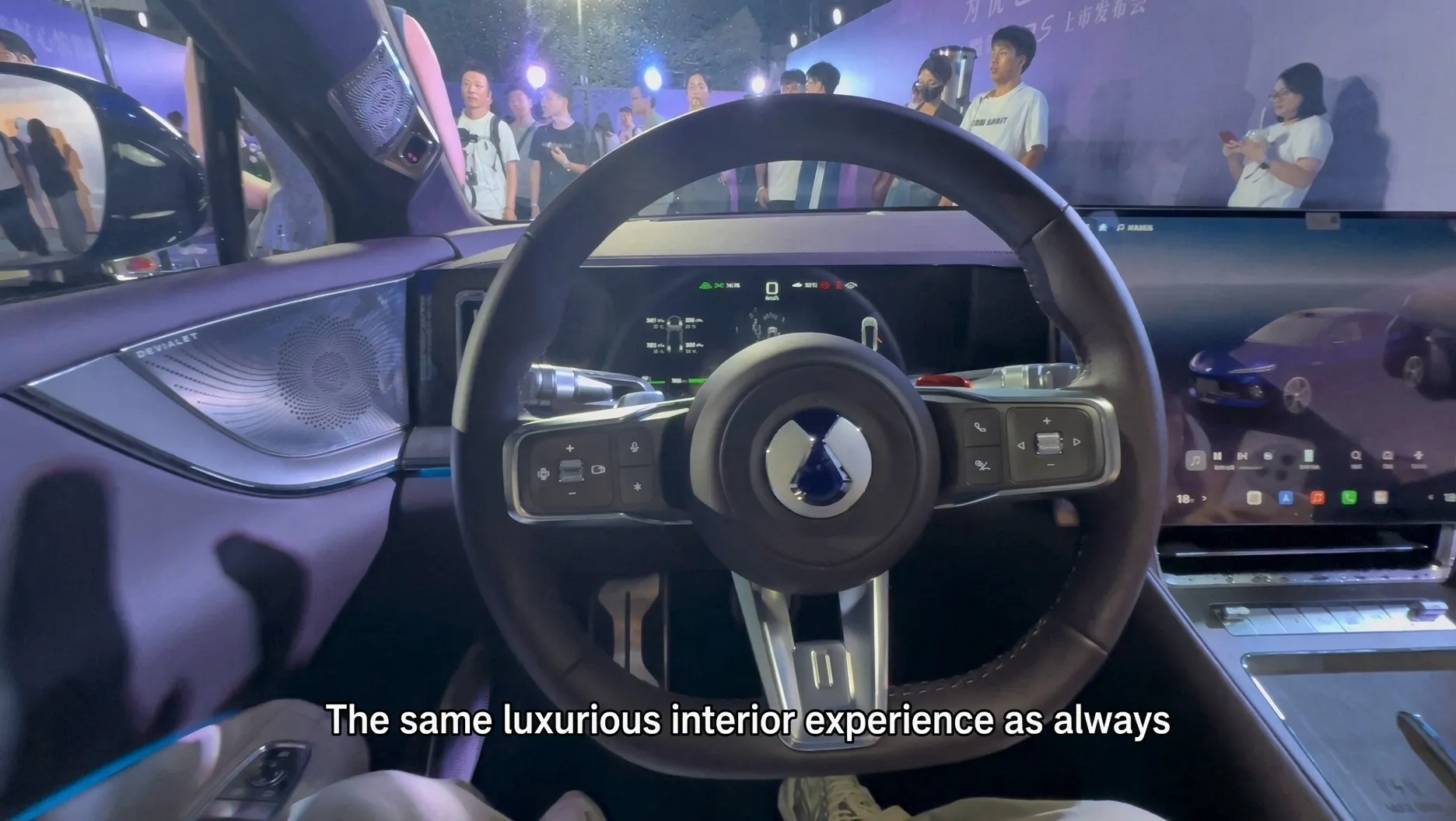
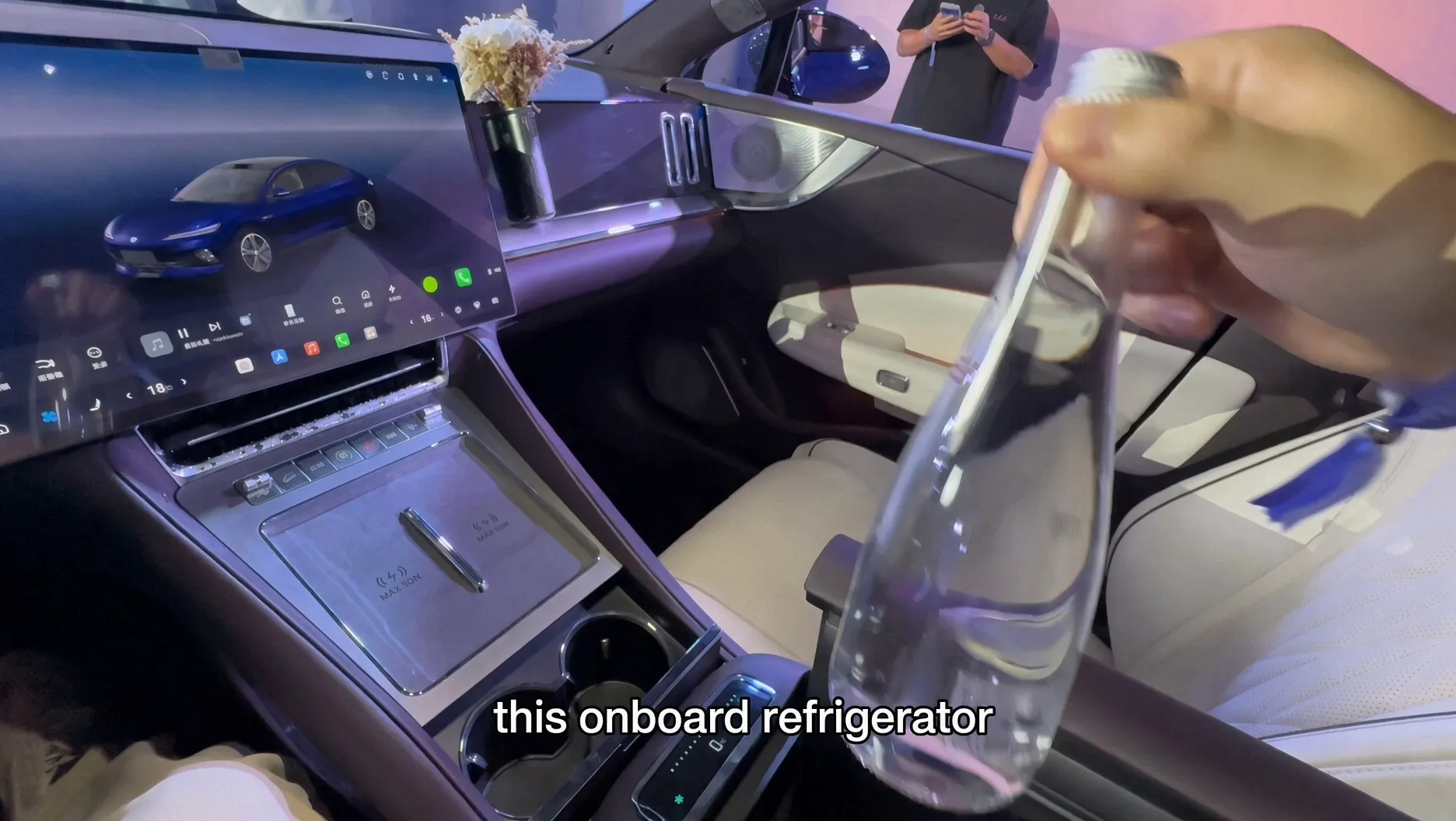
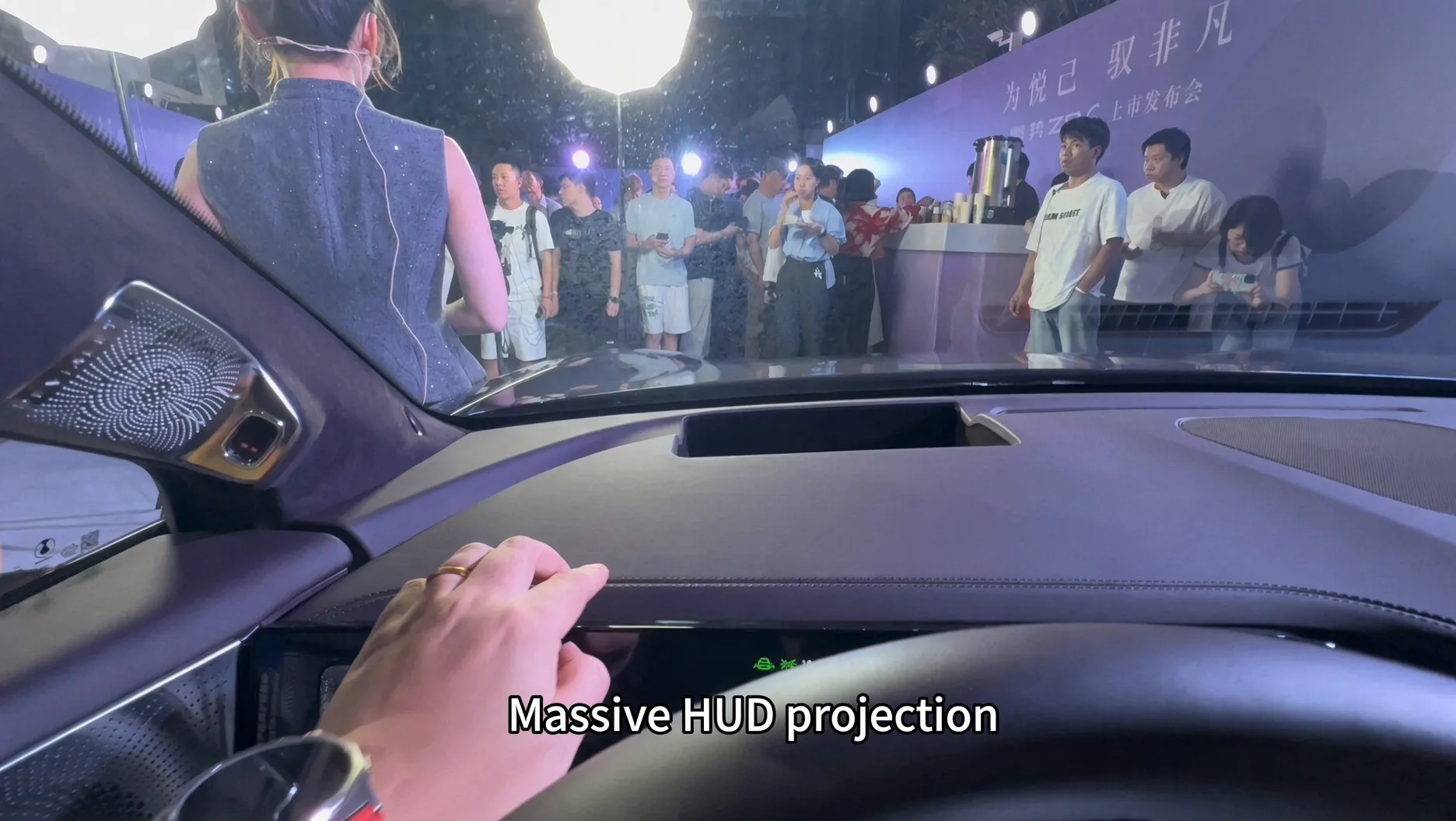
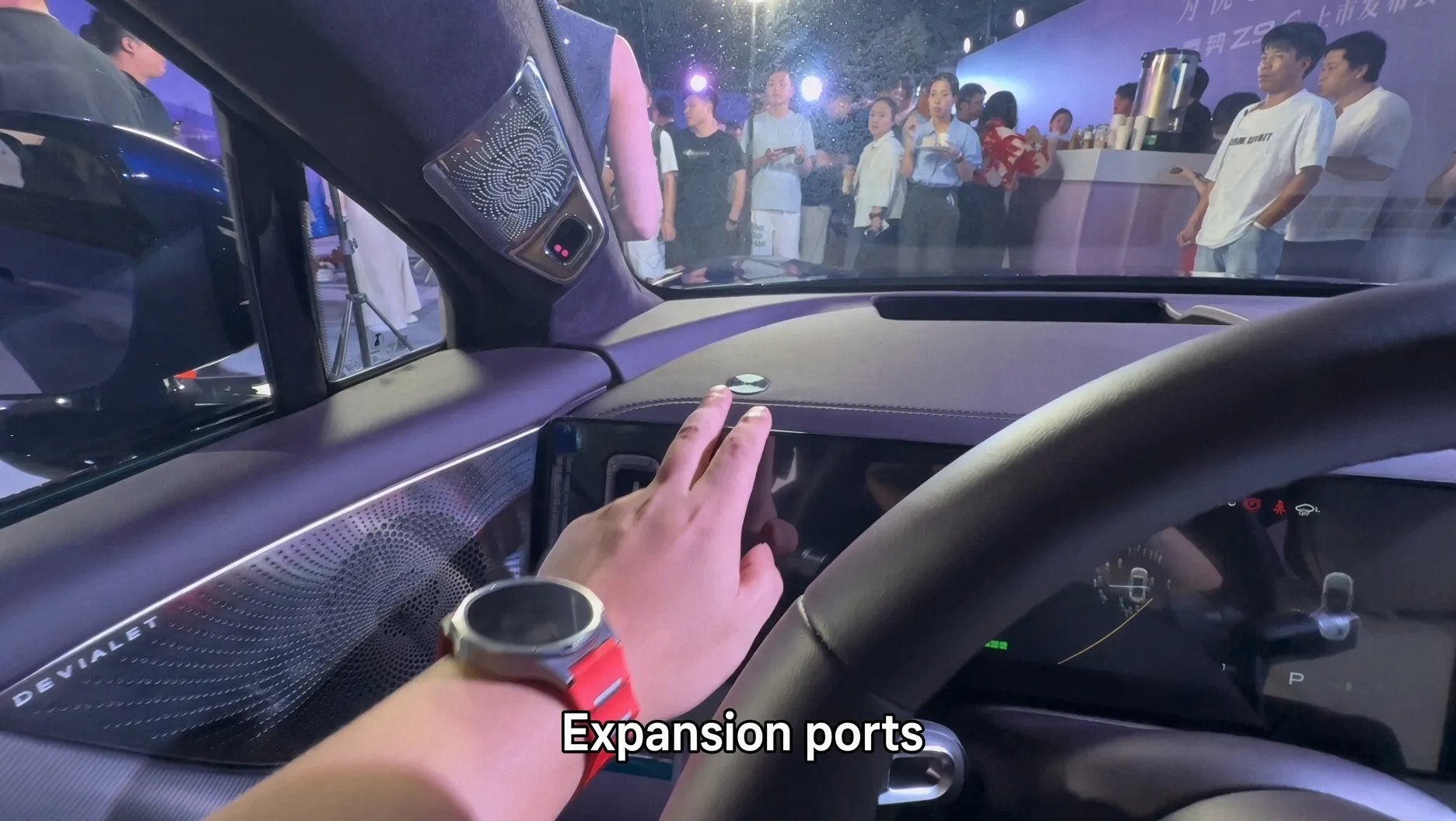
What $35,300 Buys as Standard
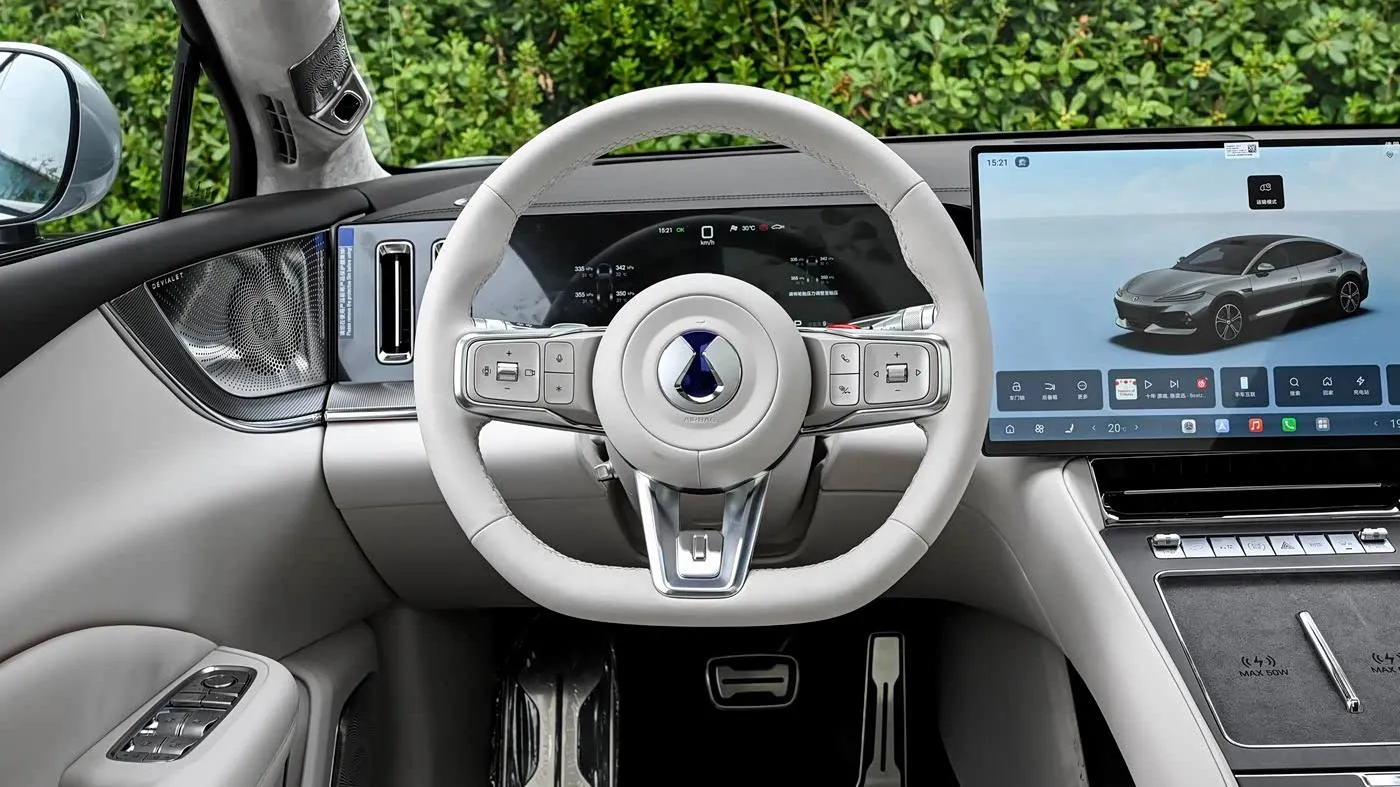
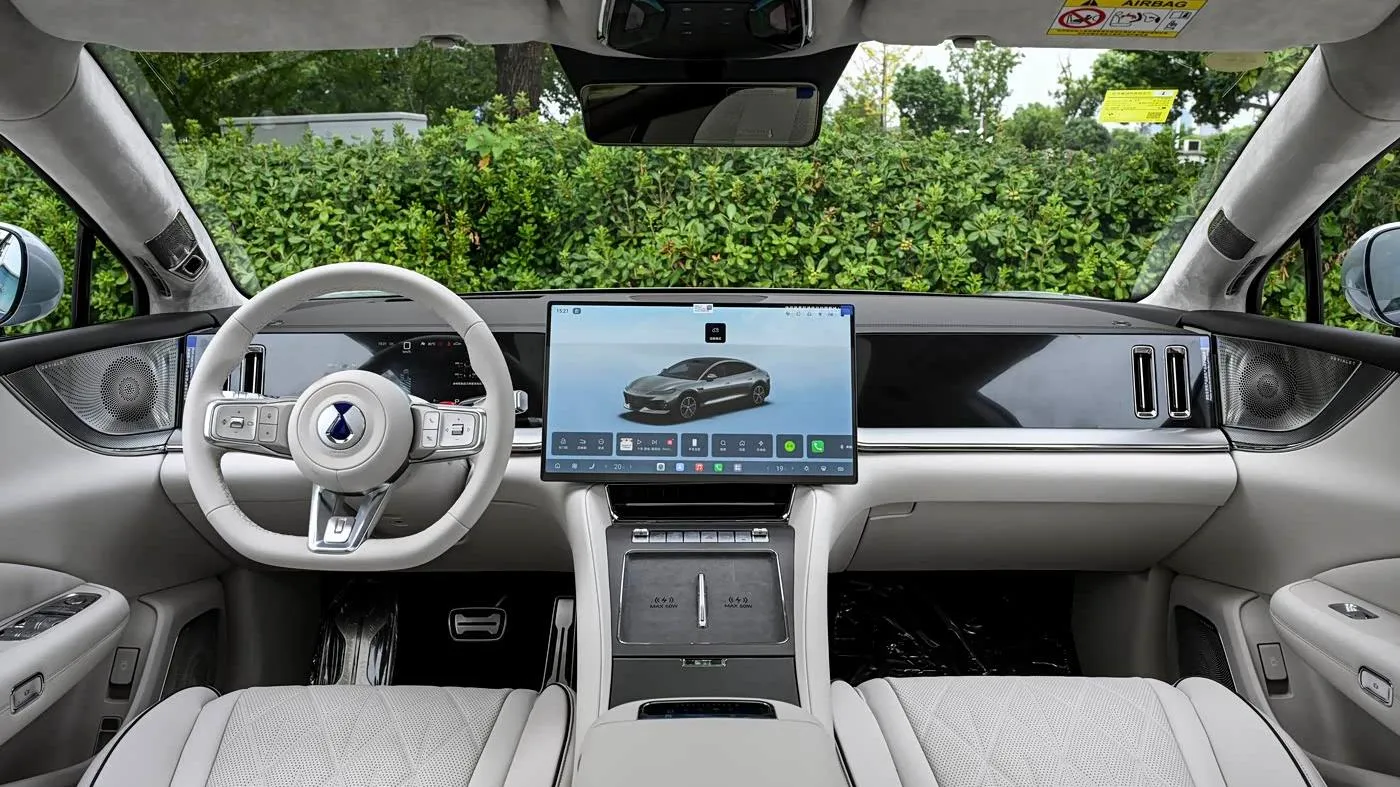
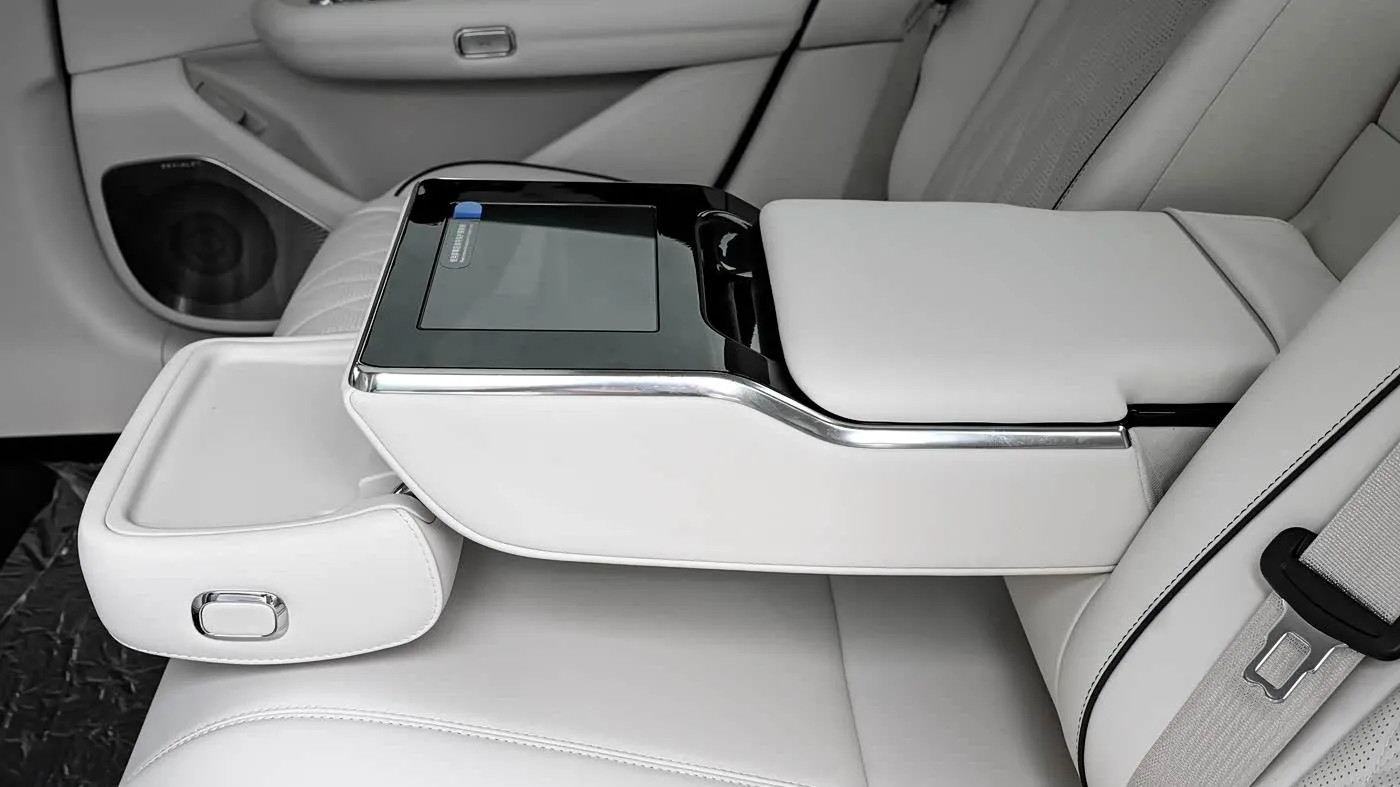
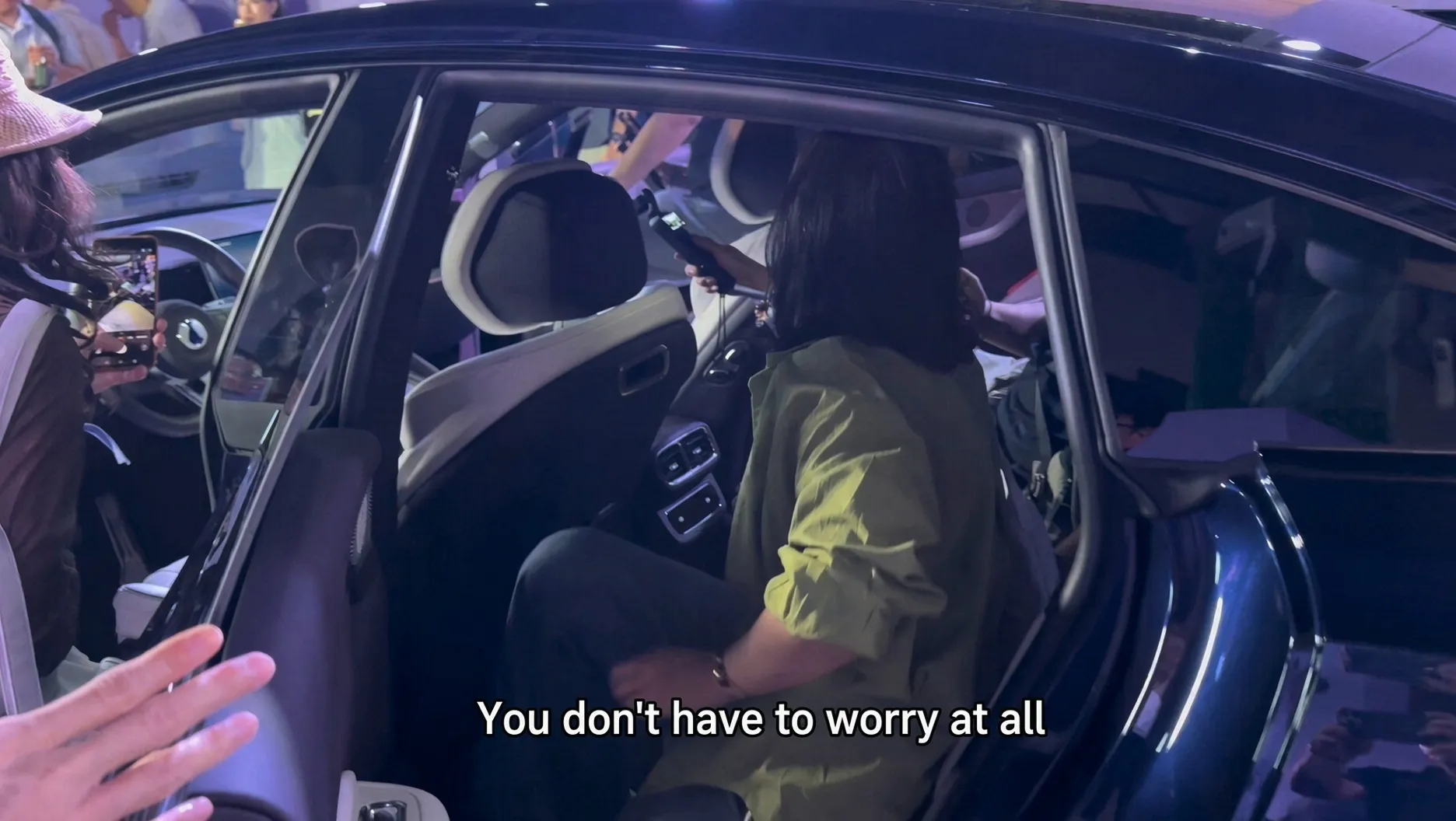
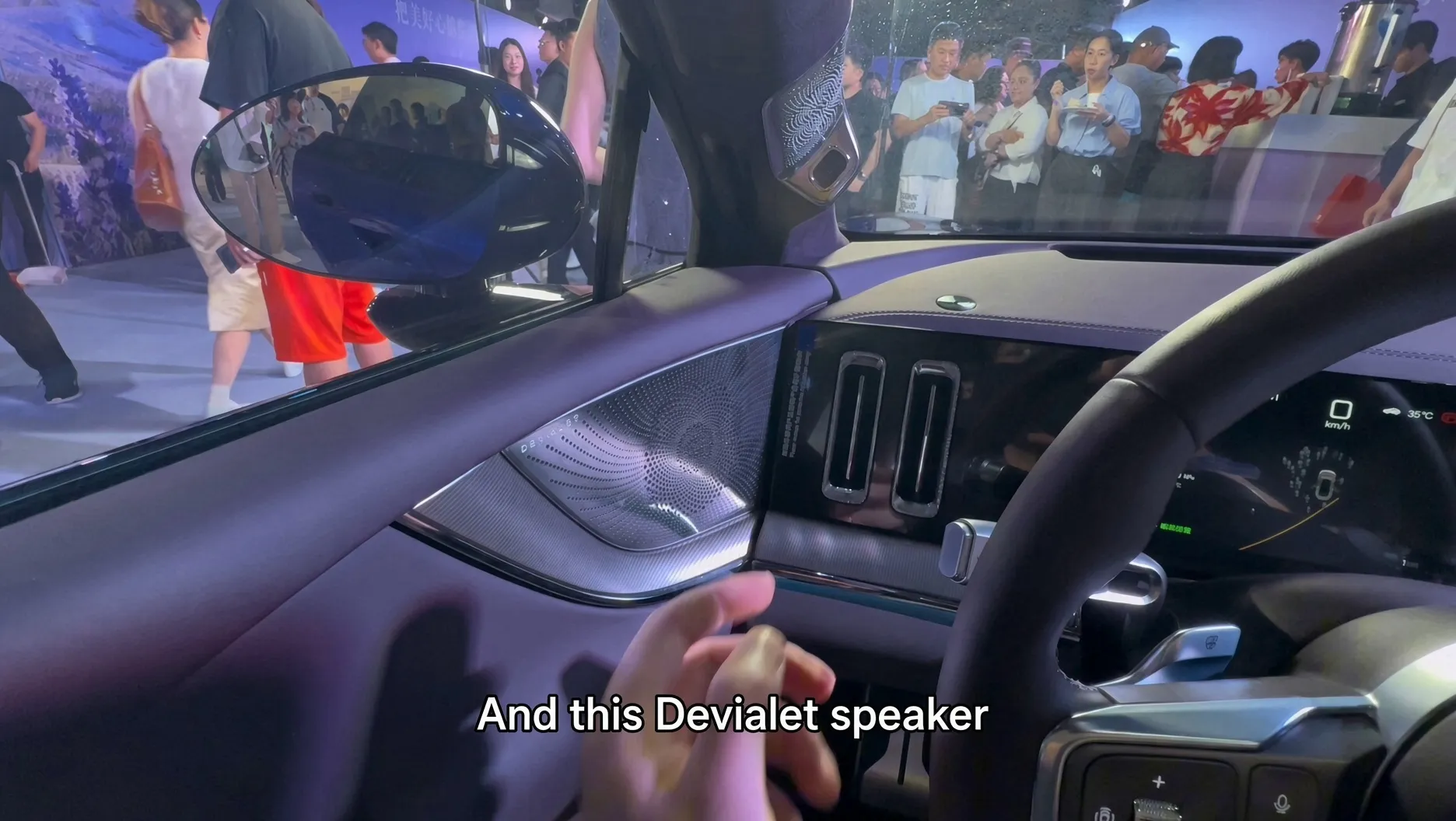
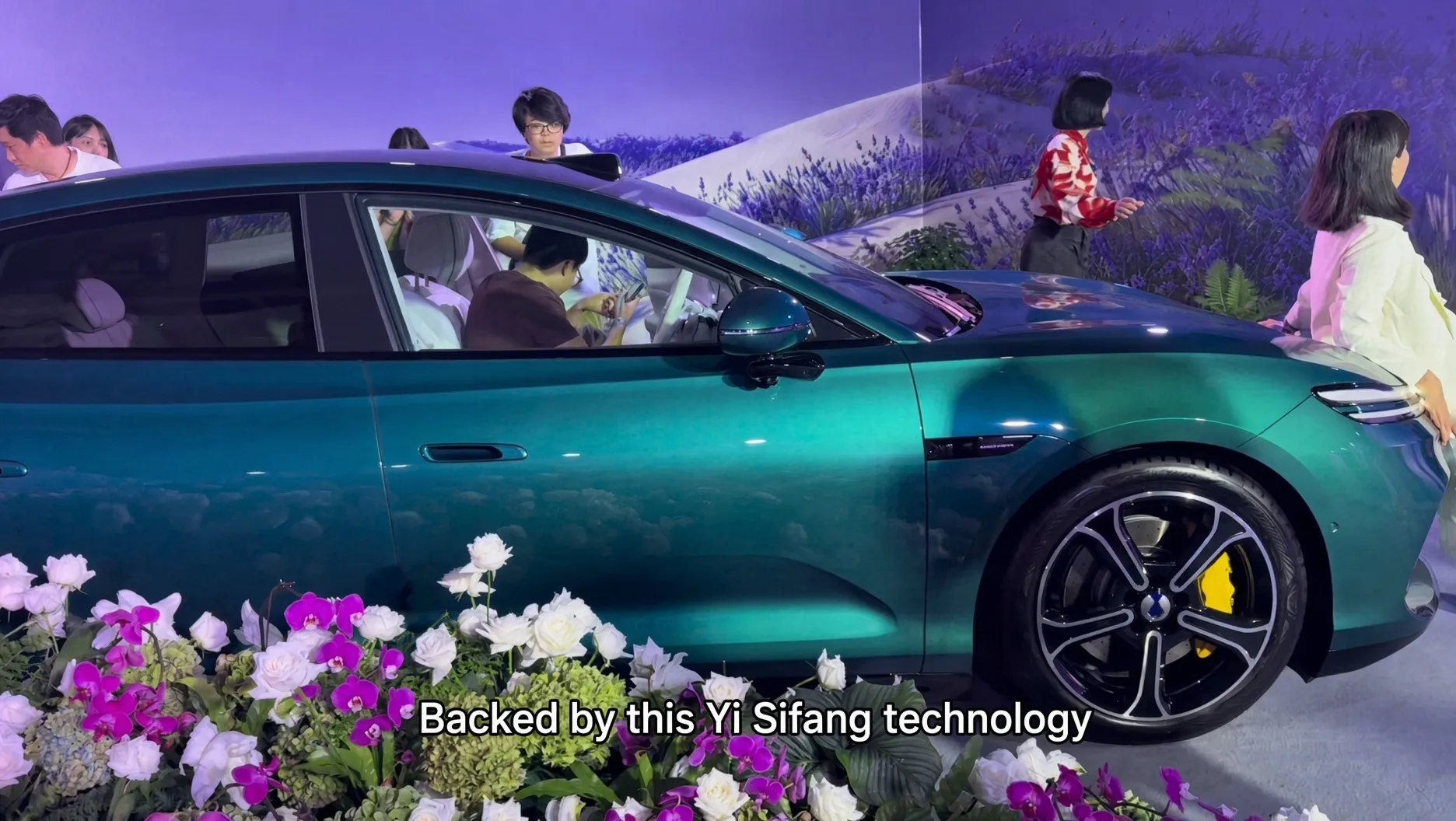
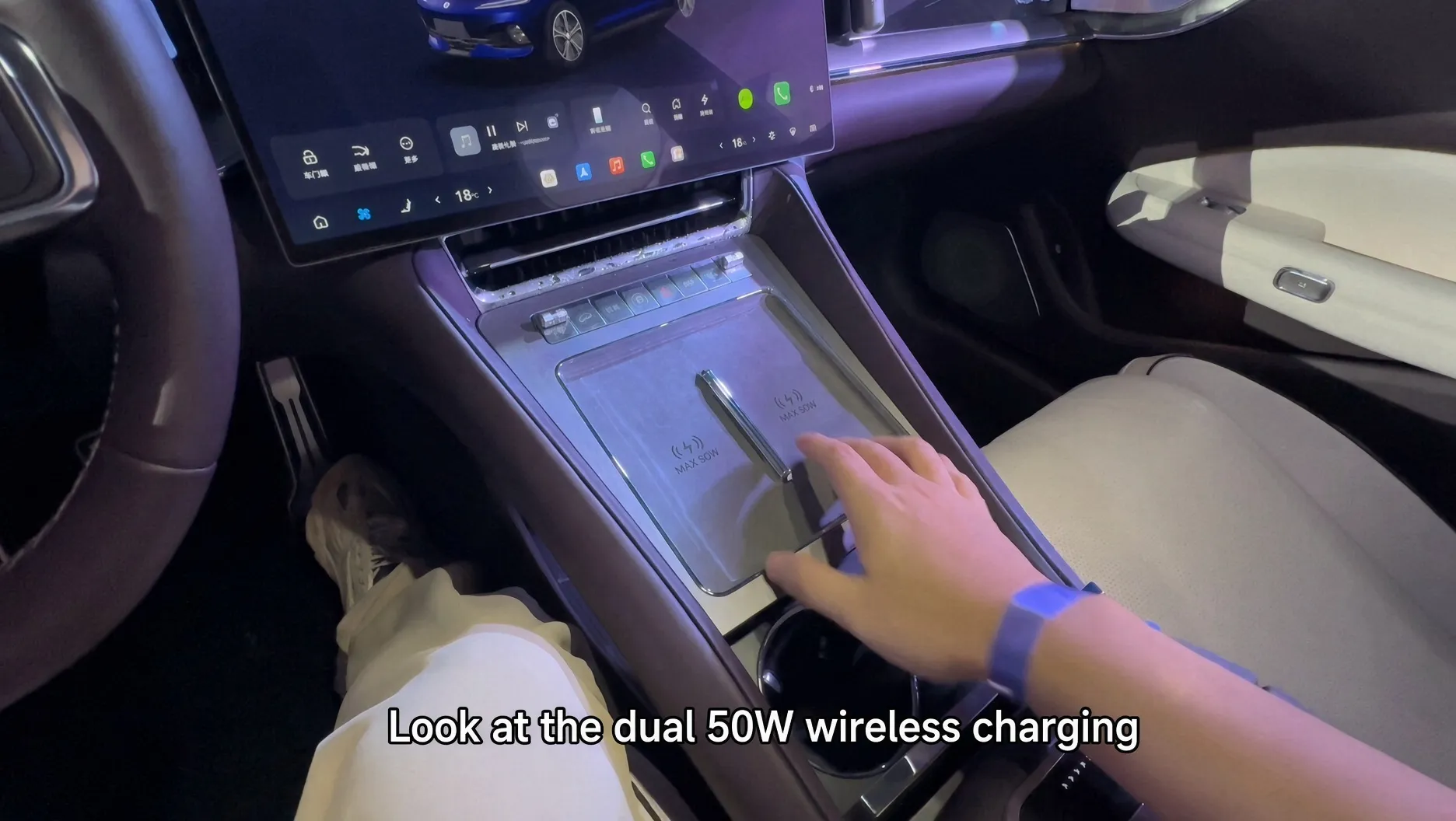
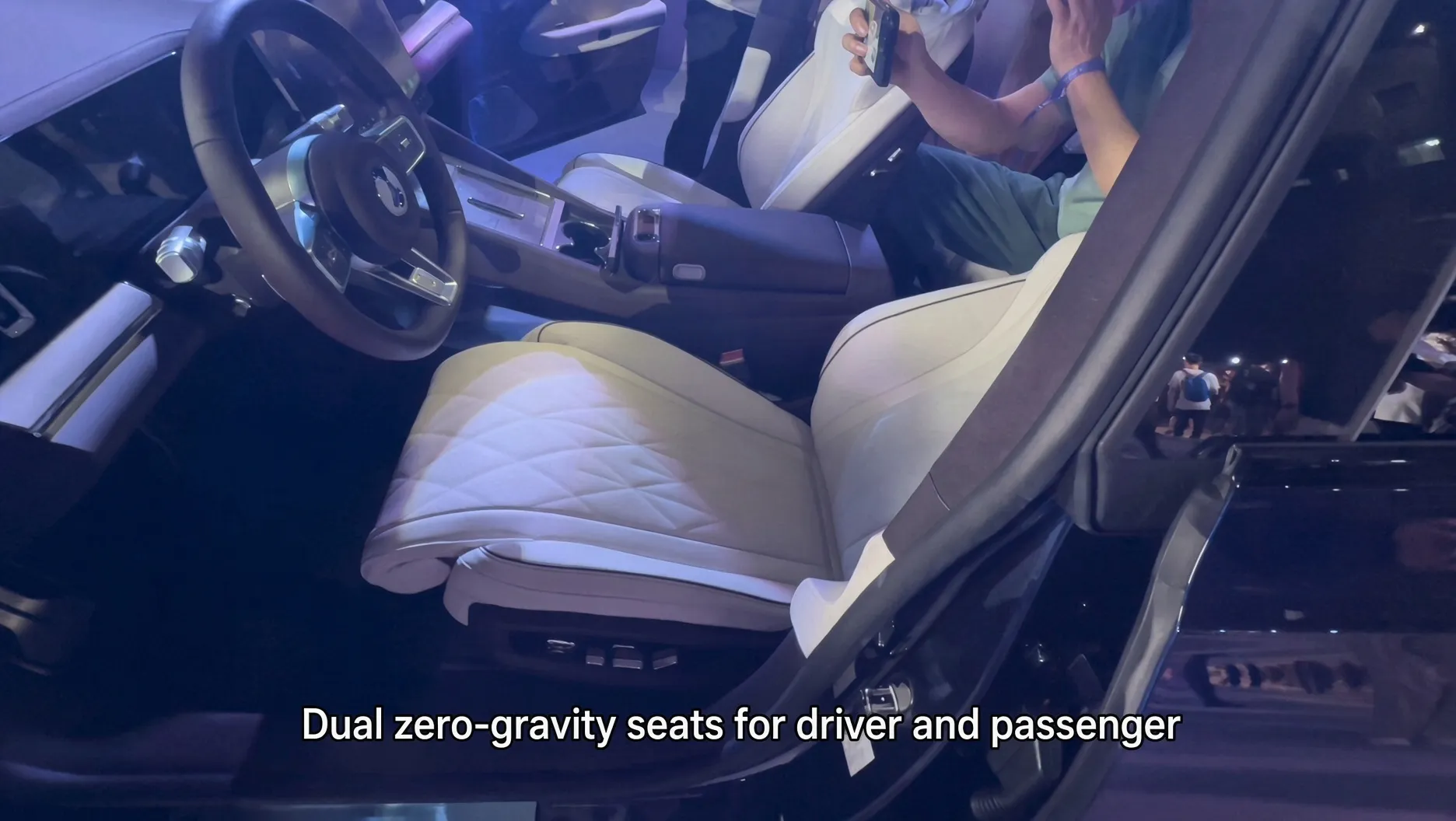
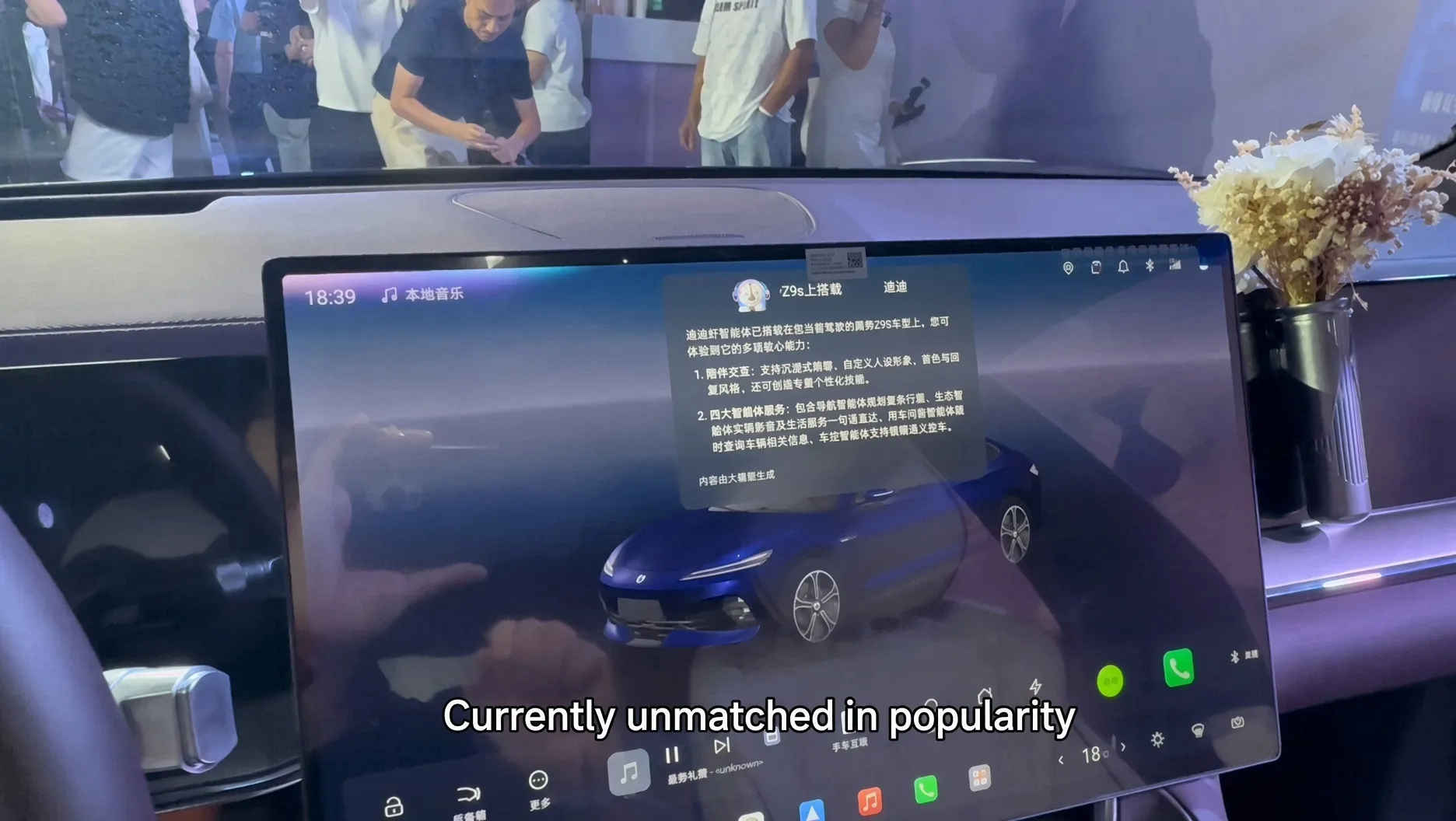
From the floor: The frames above are ours, shot at the launch. What the presenter worked through on the night was the cabin rather than the range claim: the head-up display aperture opening in the dash, the refrigerator in the centre console, the two 50 W charging pads, the Devialet panels and the zero-gravity seats. The 1,100 km figure was on the screen behind; the demonstrations were in the car.
The more interesting part of the Z9S launch for people who watch hardware rather than badges is what Denza made standard at the bottom of the range. Air suspension and rear-wheel steering are fitted to every trim: the car steers its rear wheels up to 10 degrees in either direction, turns in 4.75 m, and offers the tank-turn and crab-walk manoeuvres that have become the signature of the e³ platform.
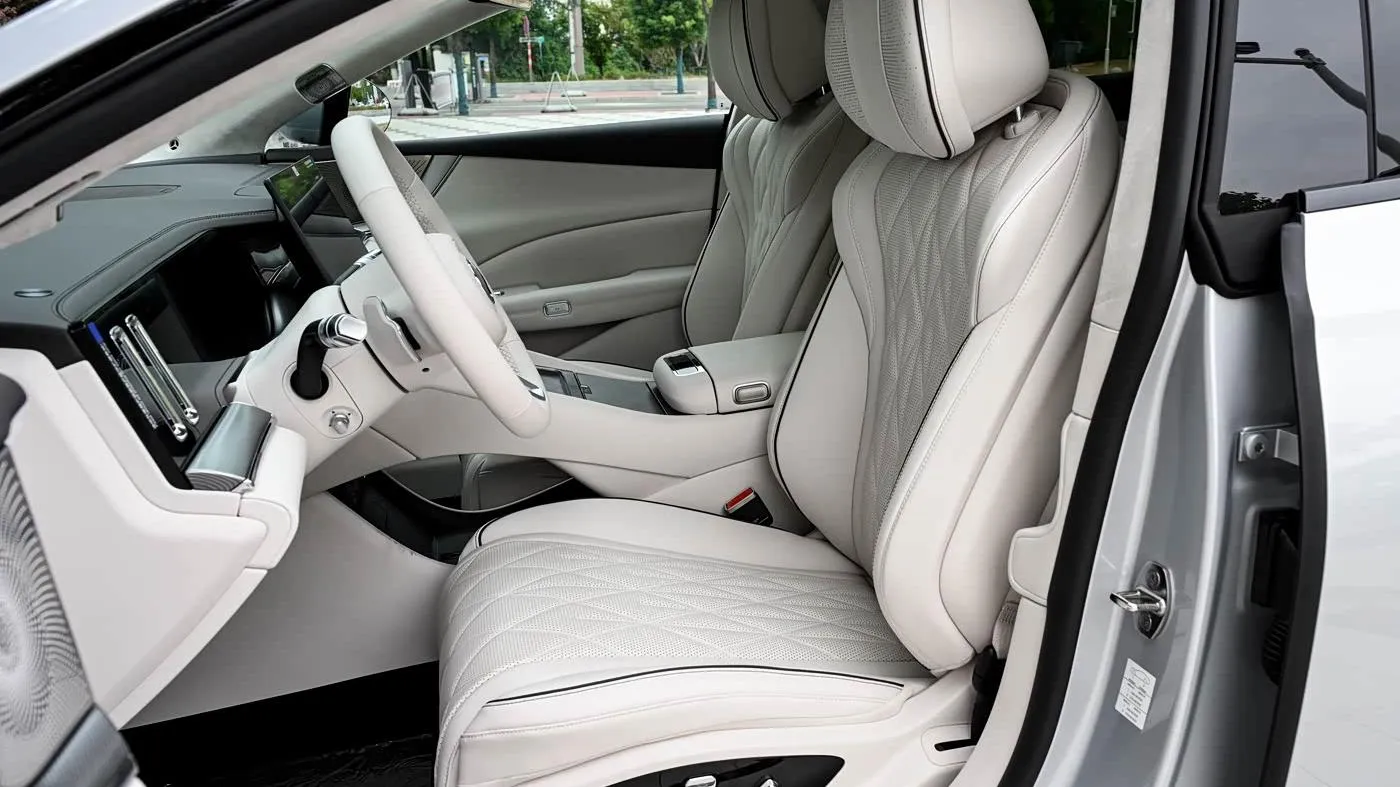
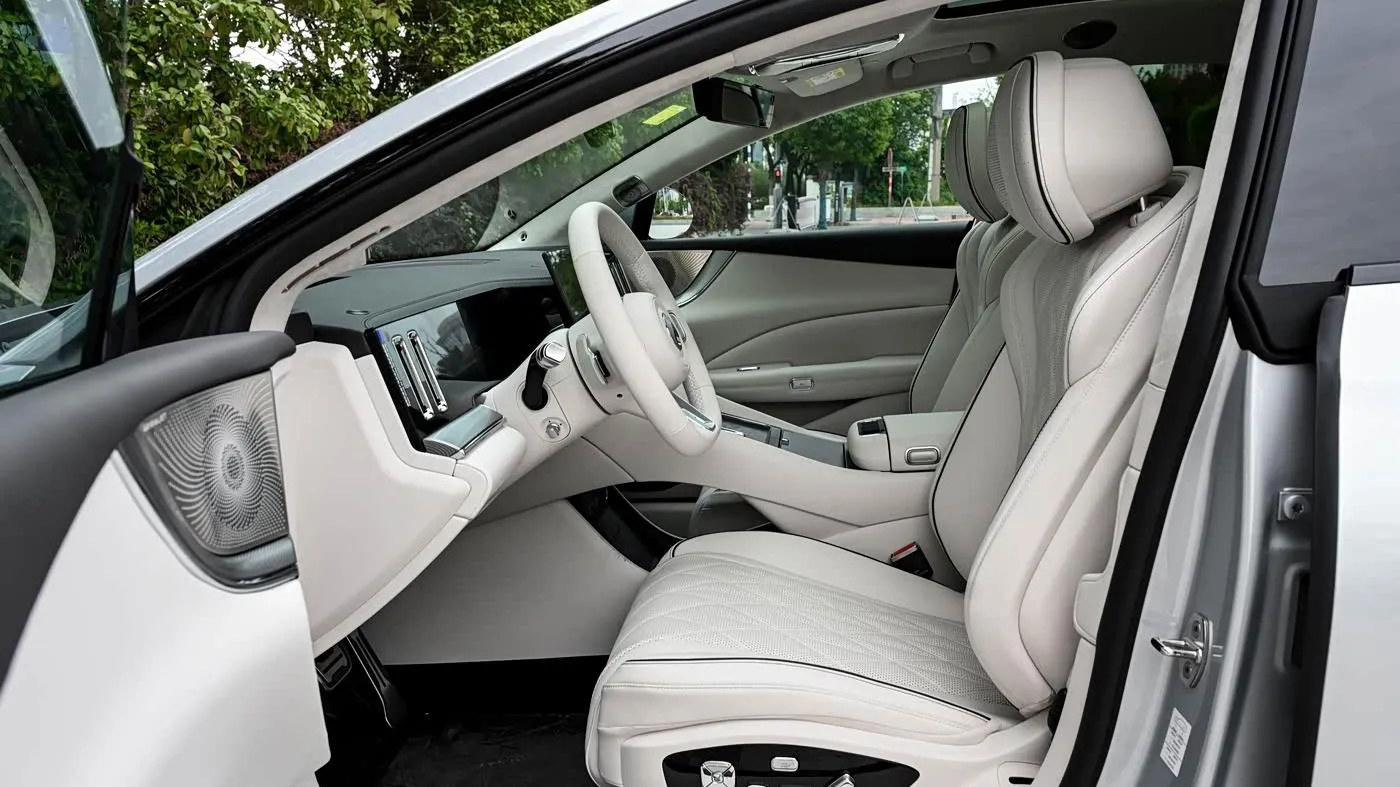
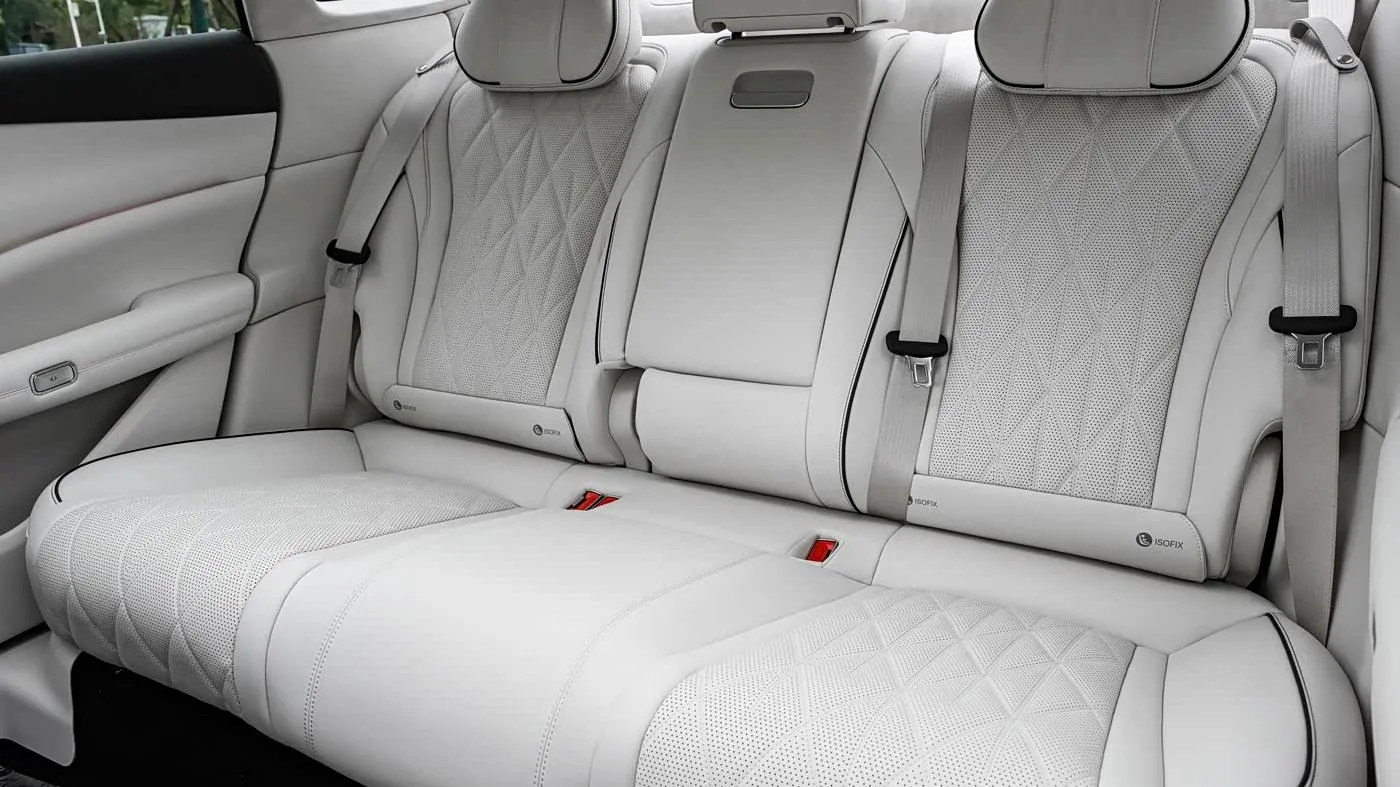
Equipping a $35,300 car with air suspension as standard is unusual in China’s market, where that hardware has typically been a high-trim feature or a line item on the options list at this price. The rest of the standard list is long and mostly cabin-focused: dual zero-gravity front seats trimmed in NAPPA leather, a 15 m² acoustic package, three-zone climate control, Devialet audio, a 795 mm glass roof, a 120-litre powered front boot and 470 litres of expandable rear space.
Two other pieces of the package matter more than the seats. The first is the charging network, which is where the range number becomes usable: Denza says more than 10,000 flash-charging piles are in service, with highway sites approaching 2,000, after BYD installed its 10,000th station in August — hardware whose architecture we have described here. The second is the driver-assistance offer. God’s Eye 5.0 covers urban and highway navigation and automated parking, and BYD has attached a liability guarantee to it: if the system causes a collision while driving in the city or parking, the company covers the damage. That is a commercial commitment rather than a technical one, and for buyers it is arguably worth more than the range figure.
Author’s Take: The interesting question is not whether the Z9S is good value at $35,300 — on paper it is, and the hardware list at that price is hard to argue with. The question is why a premium brand keeps discovering that its own pre-sale prices were too high. A pre-sale is supposed to measure willingness to pay; when two of them in one week come in 17% and 20% below the published numbers, what is being measured is not demand but the company’s own uncertainty about it. There is a real strategic logic here: BYD is converting brand equity into volume faster than its rivals can match on cost, and doing it while the charging network gives it something no competitor has at scale. But it also means the Z9S, a car with a genuine global range record, will be remembered for its price. Denza’s next launch will be read the same way, and buyers will wait for the correction rather than ordering early — which is exactly the behaviour a pre-sale is designed to prevent.
The Bottom Line: The Z9S went on sale at $35,300 to $44,900, up to 21% below Denza’s own pre-sale prices, with the 1,100 km range record sitting on the middle trim rather than the flagship. Buyers get air suspension, rear-wheel steering and access to a 10,000-site charging network as standard at the entry price. What they do not yet know is what the car is worth — because its maker has now revised the answer twice in a week.
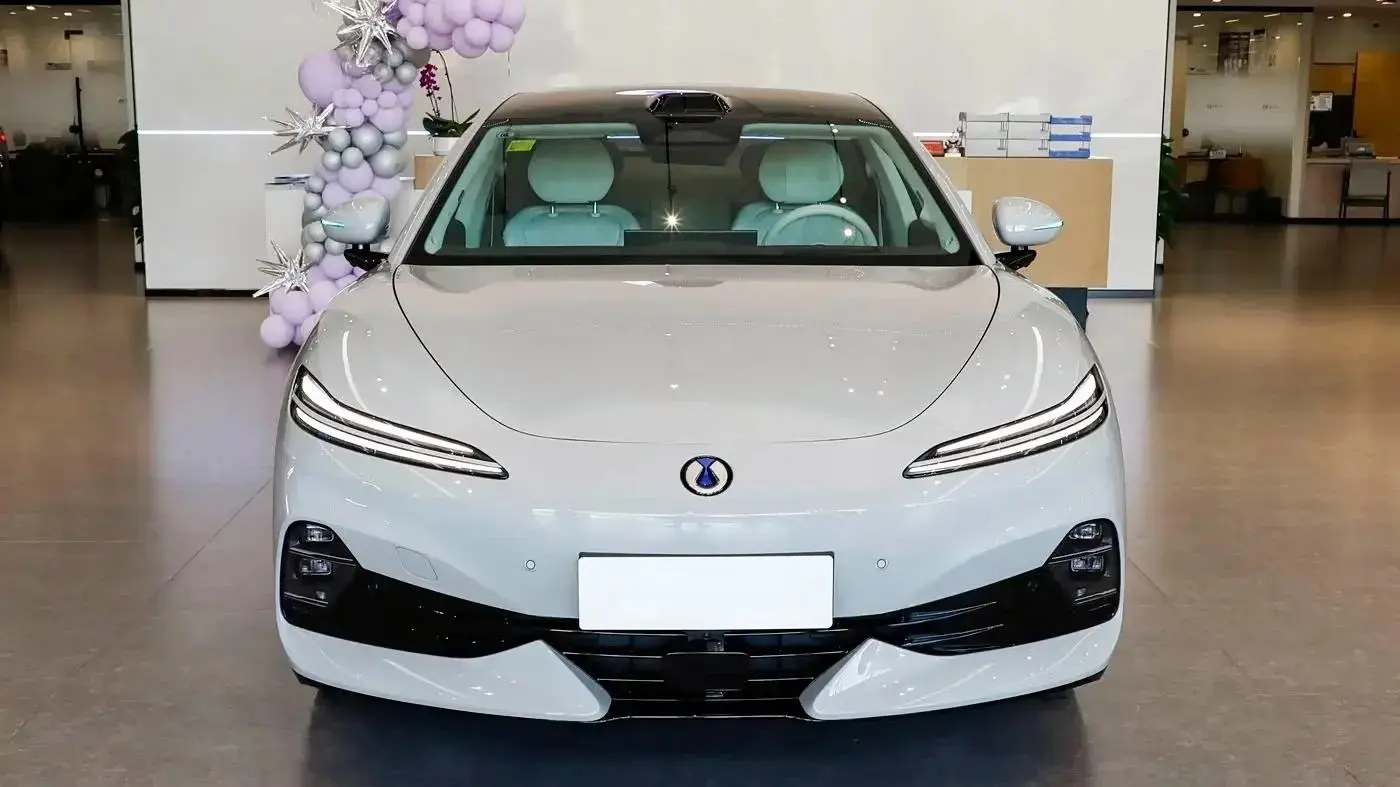
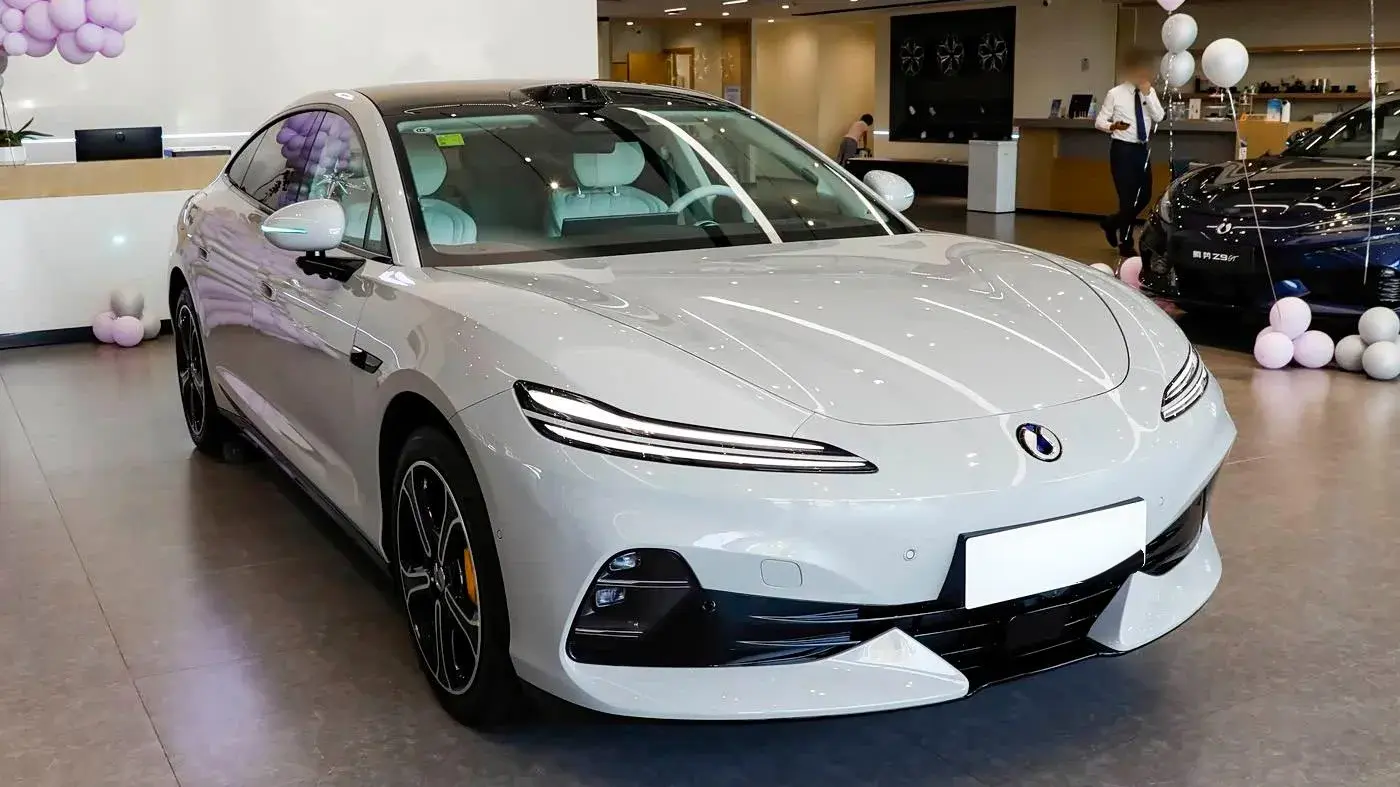
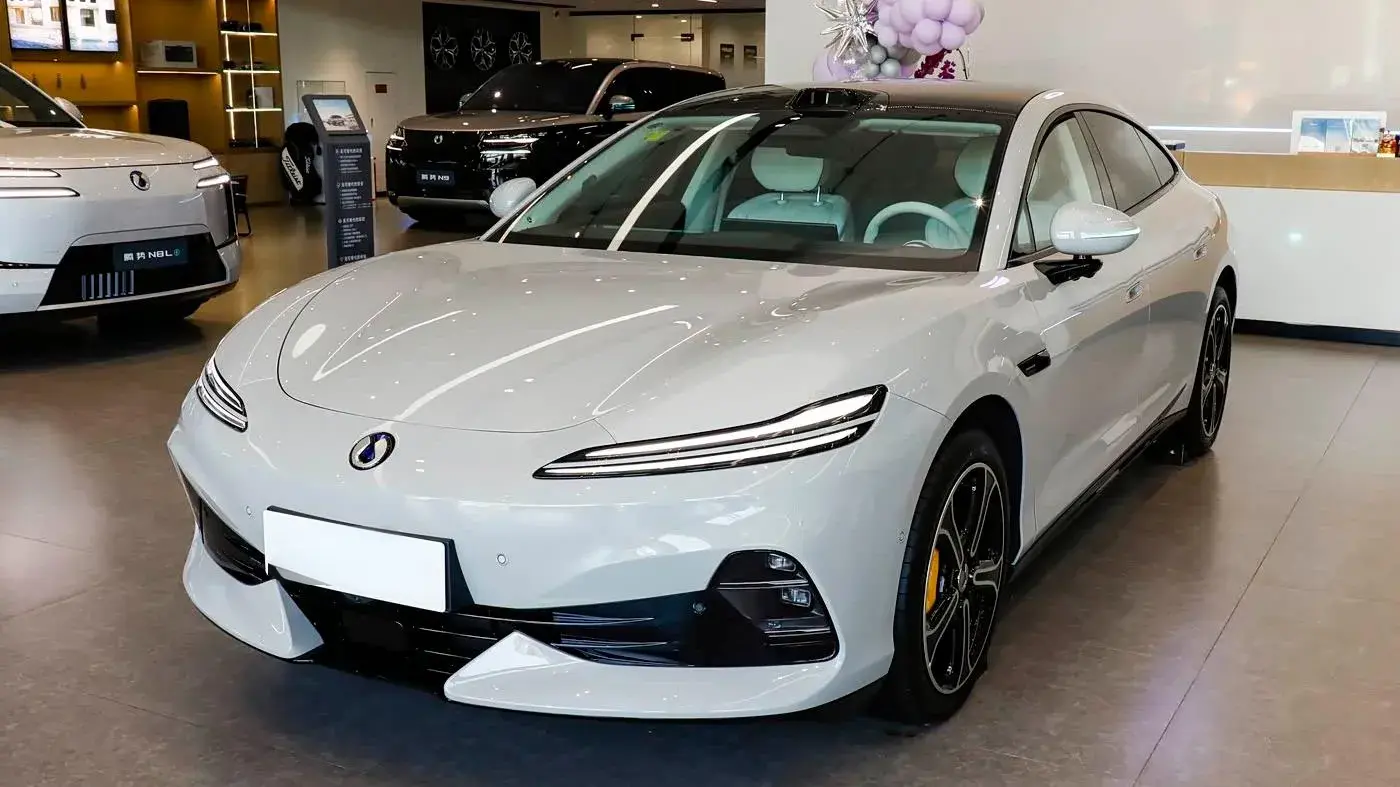
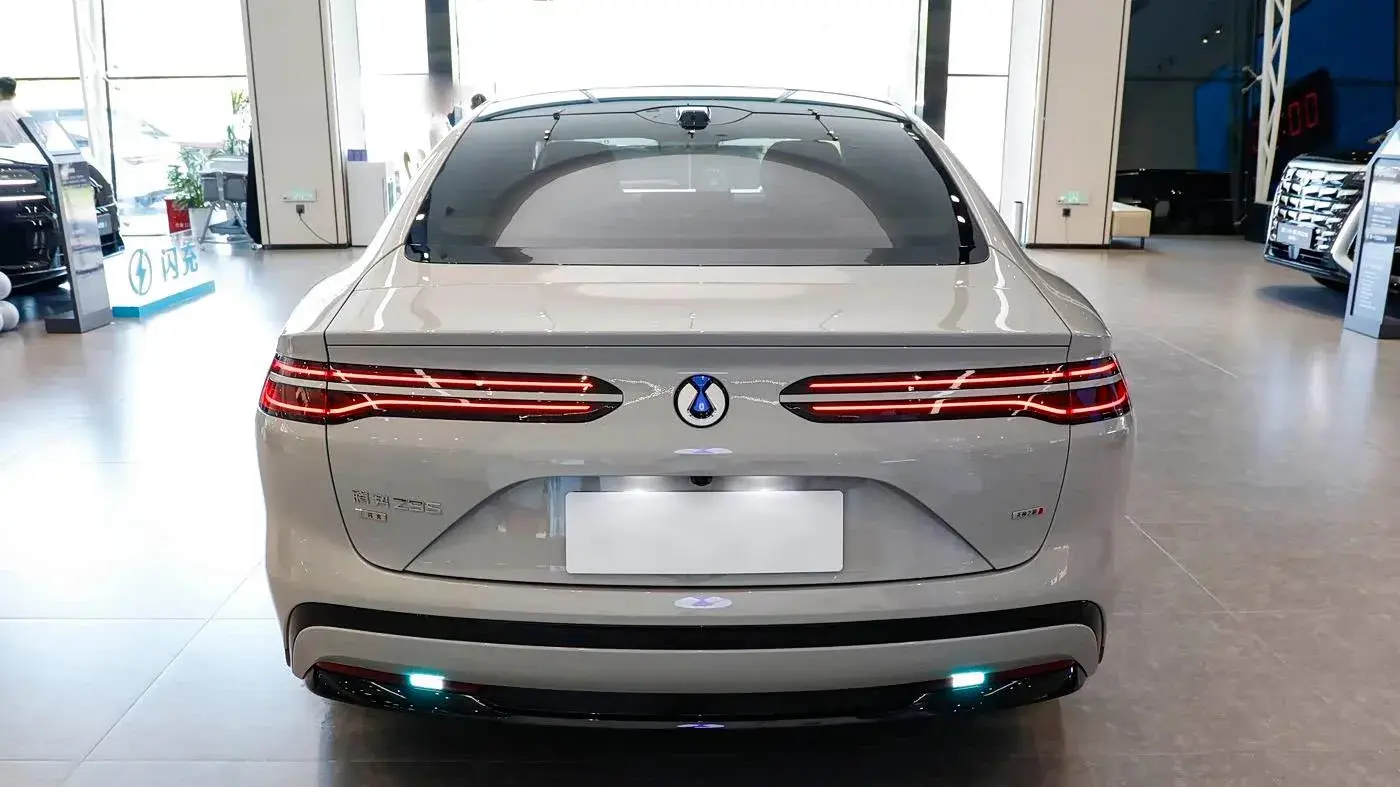
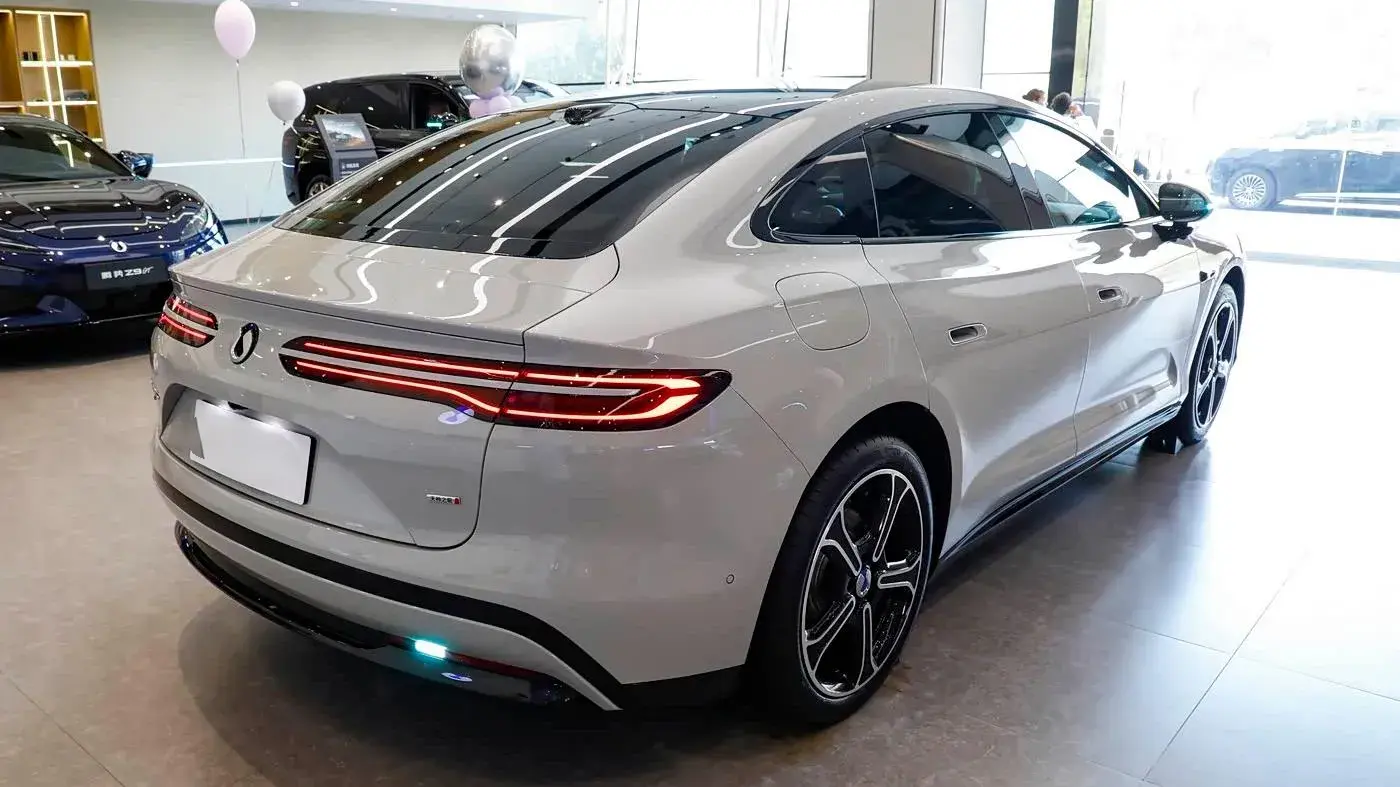
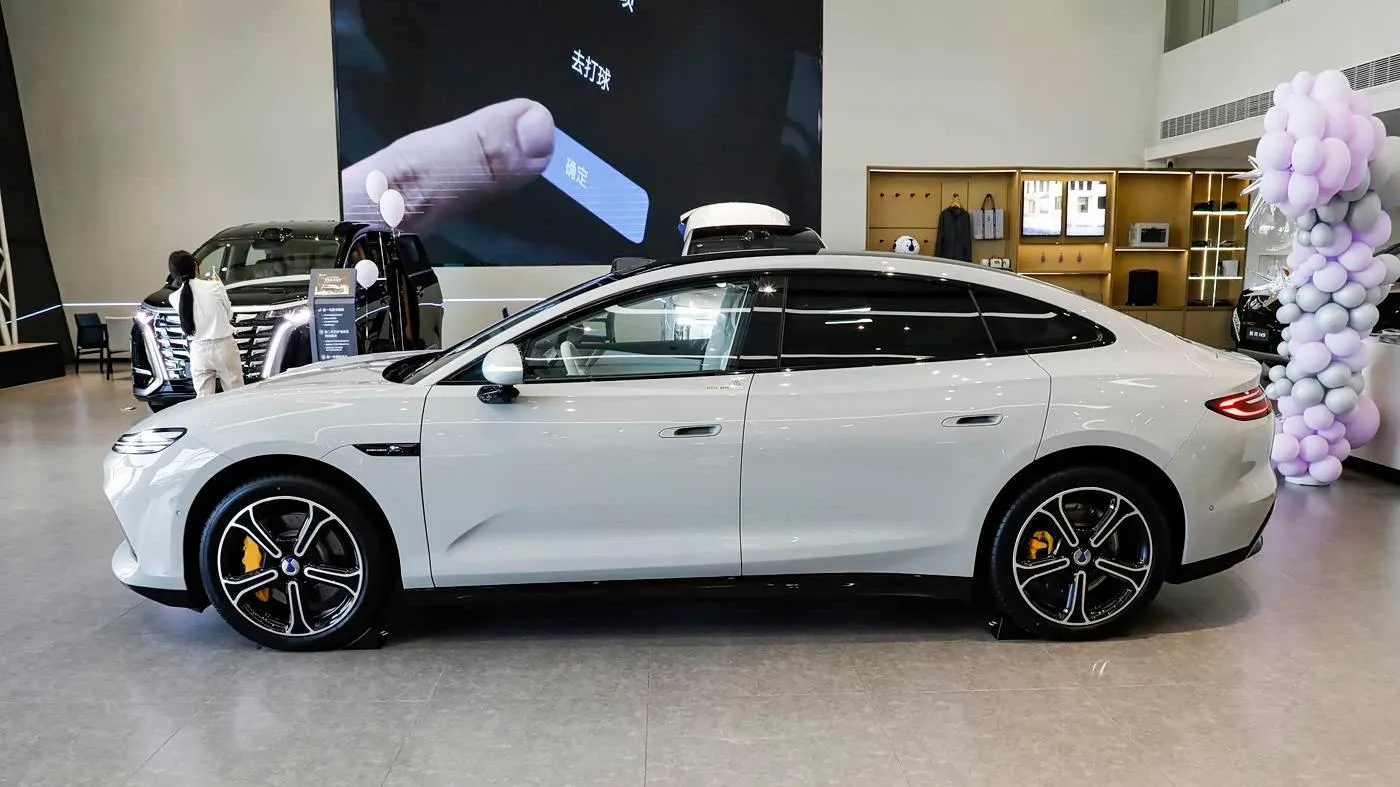
Sourcing note: The launch date, the three trim names, the launch prices, the pre-sale prices of August 3 and the resulting reductions are taken from the launch coverage of September 23 and from the price tables published by Chinese automotive media on September 24; the pre-sale prices in the table match those CnEVPost reported on August 3, when we covered the opening of pre-orders. Charging, range, powertrain, drag, dimensions and safety figures are manufacturer claims as reported at launch. The launch benefits and their validity period to October 31 are as announced by Denza. The August sales figure for Denza and BYD’s group total come from Chinese sales reporting, and the 3.6% share is our calculation. Images: the showroom and cabin photographs show the Z9S on display in September 2026. The launch-event frames are ours, extracted from video shot by EVsays at the event; they carry the subtitles from that footage. Neither set is Denza studio imagery. EVsays attended the launch; anything that is a first-hand observation is identified as such in the text, and everything else is attributed to the manufacturer or to named media. Our editorial standards are published in our editorial policy, and errors are handled under our correction policy.
Accuracy note: The Z9S went on sale on September 23, 2026; this article was written two days later, by which time the launch had been covered in English by CnEVPost. Denza does not publish pre-order numbers for the Z9S and we have not seen any, so the statement that the cuts reflect volume management rather than a measured demand shortfall is our interpretation, not a company statement. The 1,100 km and 920 km figures are CLTC, China’s homologation cycle, and are not directly comparable with WLTP or EPA ratings. Charging times, the 2.68-second acceleration figure, the 270 km/h top speed, the blowout-stability claims at 160 km/h and 200 km/h, the 0.22 drag coefficient and the 94% drive-unit efficiency are manufacturer figures that we have not independently verified. Dollar conversions use RMB 7.25 per USD for consistency across our coverage; outlets using a rate near 6.75, including CnEVPost, publish higher dollar equivalents for the same yuan prices. The August comparison of Denza against BYD’s group volume is our calculation from published monthly sales.
Sources & Further Reading
- CnEVPost — “BYD Denza launches Z9S electric sedan with range of up to 1,100 km” (2026-09-23) — the launch, trim names and prices, the pre-sale prices of August 3 and the size of each reduction.
- CnEVPost — “BYD Denza opens Z9S pre-orders from $47,100 with 1,100-km range” (2026-08-03) — the pre-sale price ladder that the launch prices are measured against.
- Chinese automotive media — launch price tables and specification summaries published on September 24, including Sina Auto’s trim table and the launch benefits list.
- Denza — launch announcement of September 23, 2026: trim names, standard equipment, the eleven launch benefits valid to October 31, and the manufacturer performance and charging figures.
- Chinese monthly sales reporting (August 2026) — BYD group new-energy volume of 440,293 units and Denza volume of 16,001 units.
- EVsays — related coverage: the Z9S pre-sale in August, the Fang Cheng Bao Formula S launch, the second-generation Blade Battery and BYD’s 10,000th flash-charging station.