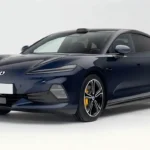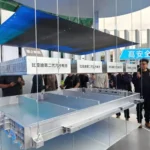

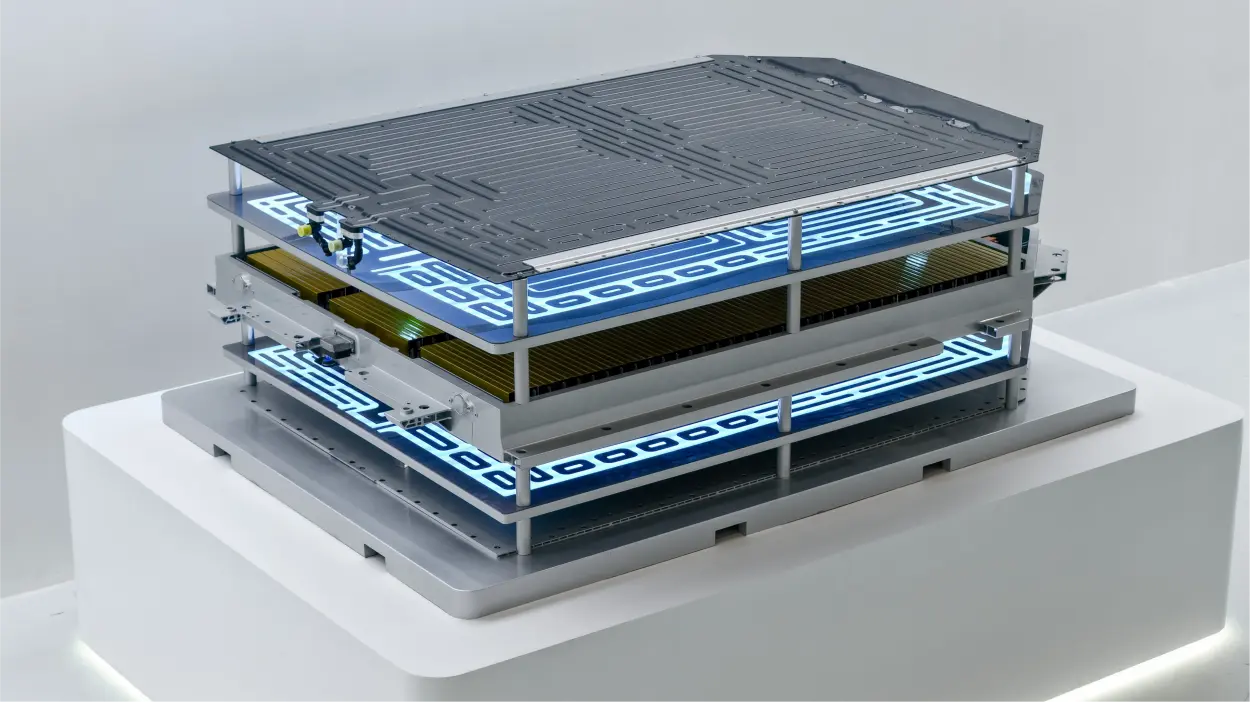
On September 23 in Ningbo, Geely introduced Geely Smart Charging and led with the number every outlet repeated: a fifth-generation station rated at up to 2,250 kW. The claim underneath it is the one worth testing. Geely says micro-pulse currents can reverse part of the fast charging battery degradation that lithium plating leaves behind — up to 20% more cycle life, in the company’s own wording. On November 29, Europe starts requiring that kind of number to be true on paper.
The Damage Geely Says Fast Charging Battery Degradation Leaves Behind
Fast charging wears a lithium-ion cell out through a mechanism called lithium plating. Push current in faster than the graphite anode can absorb it and lithium ions plate onto the anode surface instead of intercalating into it. Some of that lithium re-enters the lattice as the cell rests; the rest becomes electrochemically dead, and the pack loses capacity at an accelerating rate. It is why Tesla started capping Supercharging speeds on heavily DC-charged packs back in 2017, and why every ultrafast-charging programme in China now has to answer for what it does to the cell.
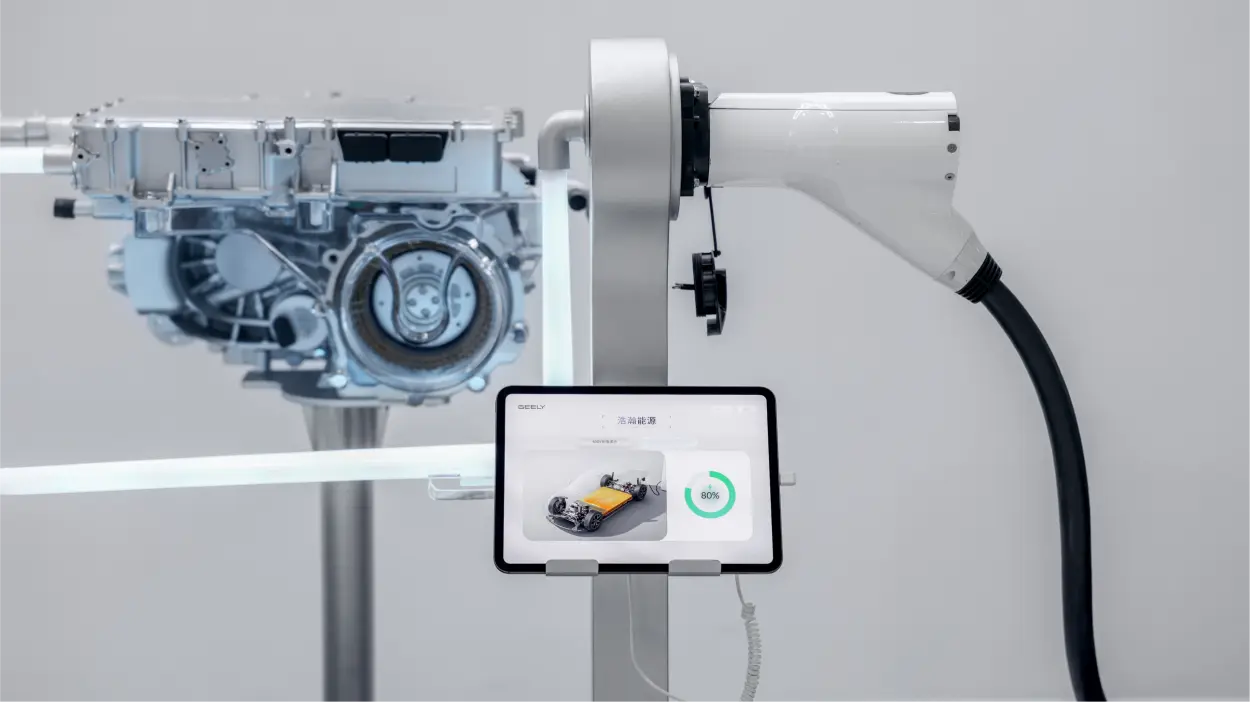
Geely’s answer has three parts, as set out in its own launch announcement. The first is what the company calls lithium-ion pulse restoration technology, which drives micro-pulse currents through the cells to reactivate lithium that accumulated at the negative electrodes during repeated fast charging. The second is AI charge management: Xingrui PowerMind, an energy model Geely co-developed with Chinese AI firm StepFun, coordinates the vehicle, the pack, the charger, the cloud, the grid and the station’s own storage battery, and forecasts battery temperature up to 30 seconds ahead rather than reacting to heat after it arrives. Geely’s targets are an average charging temperature below 55°C and a peak below 65°C, held there by a five-point liquid-cooling loop covering the station’s storage battery, the charging pile, the cable, the connector and the pack.
The third part gets less attention. Geely says it has developed a low-rate home charging strategy that gradually repairs degradation accumulated from repeated fast charging while the car sits plugged in overnight. Read together, the pitch is that ultrafast charging on a road trip and slow charging at home are a matched pair rather than a trade-off — you damage the pack in eight minutes and repair it over eight hours.
The 2,250 kW Station Is the Least Interesting Number in the Room
The speed result is real and, on Geely’s own bench, faster than BYD’s. A Lynk & Co 10 and a Zeekr 001 running the Shendun Golden Battery — a 12C cell — went from 10% to 70% in 4 minutes 30 seconds and from 10% to 97% in 8 minutes 40 seconds, which Geely calls its fastest production-ready charging performance to date. BYD’s Blade Battery 2.0 on a 1,500 kW flash charger does the same two runs in 5 minutes and 9 minutes. Both numbers come from the manufacturers that produced them, and the gap is seconds, not minutes.
| Charging claim | Geely Smart Charging | BYD flash charging |
|---|---|---|
| Peak station power | 2,250 kW | 1,500 kW |
| 10% to 70% | 4 min 30 s | 5 min |
| 10% to 97% | 8 min 40 s | 9 min |
| Pack in the test | Shendun Golden Battery, 12C | Blade Battery 2.0 |
| Evidence provided | Company’s own test, two models | Company’s own figures |
| Network disclosed | No station count published | 10,000+ flash chargers, August 2026 |
What Geely did not say is what its own vehicles will accept. A 2,250 kW connector is only useful to a car that can absorb that current, and no automaker yet sells a passenger EV that goes anywhere near it. The European rules put the number in perspective. Under the Alternative Fuels Infrastructure Regulation, charging pools on the TEN-T core network have had to deliver at least 400 kW since the end of 2025 and must reach 600 kW — including two points of at least 150 kW each — by the end of 2027, spaced no more than 60 km apart in each direction of travel. One Geely connector is 5.6 times the 400 kW an entire compliant European site had to provide last year, and 3.75 times the 600 kW it will need by the end of next year.
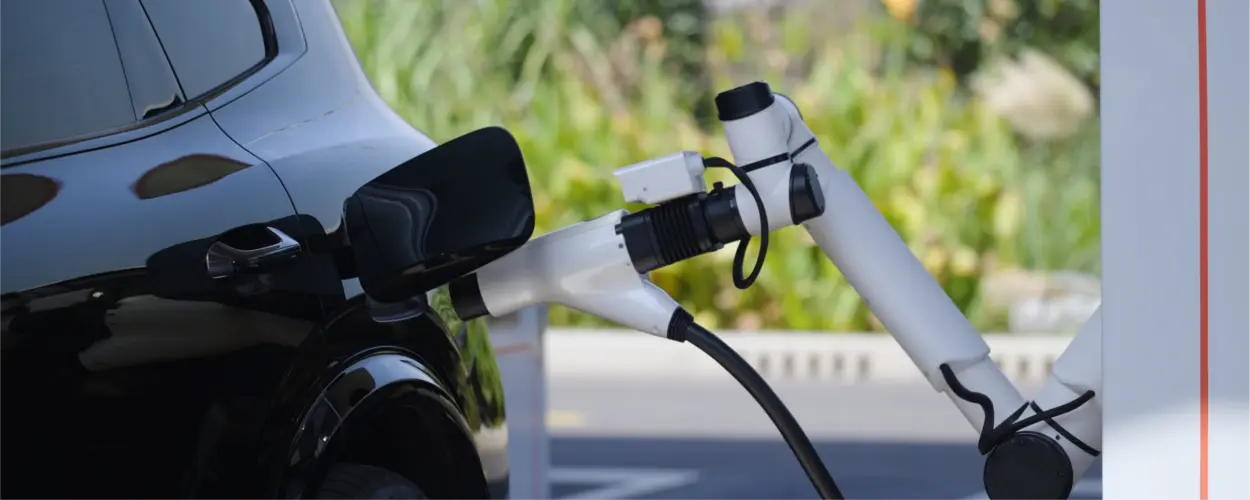
The hardware is also the part of Geely’s platform that already exists in volume elsewhere. Megawatt-class chargers are now a Chinese industry category rather than a Geely achievement — Sunwoda has announced a 10,000-station megawatt network, and BYD has published the architecture behind its 1.5 MW station. The part of this launch that is not yet a commodity is the battery-health claim.
29 November: Europe Turns Battery Health Into a Pass or Fail
Regulation (EU) 2024/1257 — Euro 7 — applies to all new types of M1 and N1 vehicles from 29 November 2026, and to all new vehicles in those categories from 29 November 2027. For the first time it sets minimum performance requirements for traction battery durability, which turns fast charging battery degradation from a marketing subject into a test with a date attached.
| Euro 7 requirement (Regulation (EU) 2024/1257) | Threshold |
|---|---|
| M1 battery-electric and plug-in hybrid, up to 5 years or 100,000 km | At least 80% of original capacity |
| M1 battery-electric and plug-in hybrid, up to 8 years or 160,000 km | At least 72% of original capacity |
| N1 light commercial, same two windows | At least 75% and 67% |
| Mandatory for all new M1 and N1 vehicle types | 29 November 2026 |
| Mandatory for all new M1 and N1 vehicles | 29 November 2027 |
The regulation also introduces an Environmental Vehicle Passport from November 2026, which has to carry battery state of health among a vehicle’s environmental data — degradation becomes something a used-car buyer can read rather than estimate from mileage. In July 2026 the Commission adopted implementing rules that include the methods for checking battery durability and for measuring electric range at low temperatures.
Put that beside the Ningbo launch and the economics of the announcement change. A manufacturer selling into Europe now has to demonstrate a durability figure over eight years and 160,000 km, not advertise a charge time over eight minutes. Any technology that slows or partly reverses lithium plating stops being a differentiator and becomes a compliance line item — and the only published route to it that anyone has is pulse control.
Pulse Restoration Is Real Science With a Modest Scoreboard
Neither half of Geely’s argument is new. Lithium plating is a well-documented cause of fast charging battery degradation, and the idea that current pulses can manage it has been in the literature for years. It is a control problem, not a physics problem: frequency, duty cycle and pulse amplitude decide whether pulsing helps or digs the hole deeper.
What published work shows is smaller than 20%. A study in InfoMat plated a controlled 0.4 mAh of lithium onto a graphite anode and then applied a 0.2C square pulse at 0.5 Hz for two hours. The pulsed anode ended up with bulkier, coarser lithium instead of sharp dendrites, and its capacity loss rate came out 2 percentage points lower than a rested reference cell. In Applied Energy, a protocol combining multi-stage constant current with negative pulses promoted what the authors call lithium stripping — pulling lithium back out of the plated layer — and reported 16% less charging time and 37% less capacity fade than a conventional multi-stage protocol in a battery-in-the-loop test rig. Earlier work in Electrochimica Acta reported a graphite anode free of plated lithium after 300 fast-charge cycles under a pulsed protocol, because the rest intervals redistribute the lithium ions piled up at the anode interface.
All of that is cell- and bench-level evidence, measured over durations the researchers chose, on cells they built. None of it is a production pack held for eight years and 160,000 km. Geely’s 20% is a company figure with no published protocol behind it — no pulse frequency, no amplitude, no duty cycle, no cycle count, no third-party replication. That does not make it false. It makes it unfalsifiable for now, which is the status Euro 7 is designed to end.
A Battery-Health Claim Without a Charging Network
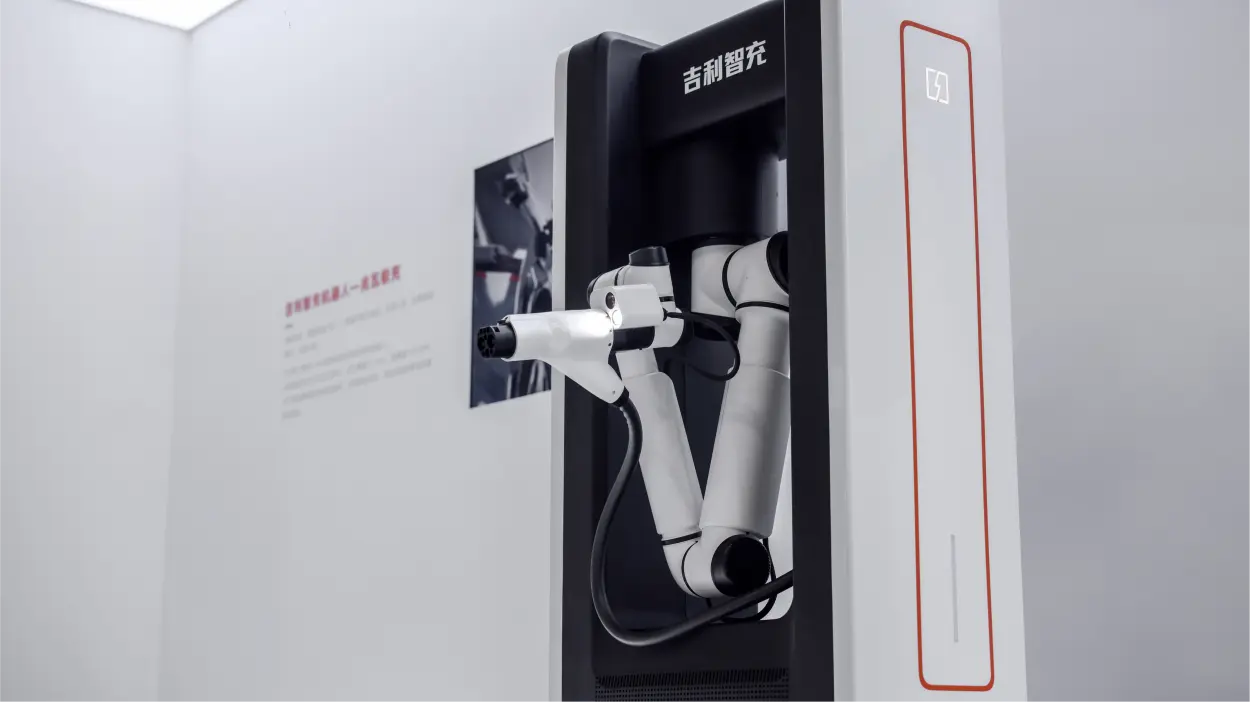
There is one more asymmetry worth naming. BYD opened its 10,000th flash-charging station in August and publishes network numbers as part of its story. Geely disclosed no station count, no locations and no pricing for a charging session. A charging claim without a network is a specification, not a service, and the pulse restoration feature only matters to owners who can find a fifth-generation station and plug into it.
Geely’s route into Europe runs through brands it already owns — Volvo, Polestar, Lynk & Co and Zeekr — and Lynk & Co has been rebuilding its European distribution around Volvo’s dealer network, which is the kind of channel a charging product would need. The home-charging half of the pitch is vaguer still: “gradually” is the company’s word for how the overnight repair is supposed to work.
The Bottom Line: Geely’s Smart Charging pairs a 2,250 kW station with a claim that micro-pulses can restore lithium lost to plating and add up to 20% of cycle life. The speed is a company test result that beats BYD’s on paper by seconds; the battery-health claim has no published protocol and no third-party verification. Euro 7 changes what that is worth: from 29 November, new M1 and N1 types sold in Europe must hold 80% of battery capacity to five years or 100,000 km and 72% to eight years or 160,000 km. That turns pulse restoration into a compliance technology — and turns Geely’s unverified 20% into a number it will eventually have to prove somewhere other than a launch event.
Accuracy note: Every Geely-specific figure here — 2,250 kW, the 12C Shendun Golden Battery, the 6C Next-Gen Ultra Short Blade Battery, the 10-to-70% and 10-to-97% times, the 55°C average and 65°C peak temperature targets, the 30-second temperature forecast and the five-point liquid-cooling loop — is a manufacturer claim made at the Ningbo launch on September 23, 2026, and none of it has been independently verified. The “up to 20%” cycle-life gain is the wording of Geely’s own bullet point; the body of the same release states it as a flat 20%, which is a wider claim than the evidence supports, and no test protocol, cycle count, cell chemistry, temperature or duty cycle was disclosed. Both charging-time results are Geely’s own tests on two specific models and are not independent measurements, and Geely has not disclosed the peak charging rate its own vehicles can accept. Euro 7 dates and battery durability thresholds are those of Regulation (EU) 2024/1257, in which the November 2026 date applies to new vehicle types and the November 2027 date to all new vehicles in the same categories; the Environmental Vehicle Passport and the July 2026 implementing rules on battery durability verification are as described by the Commission and by EU compliance guidance. AFIR figures are from Regulation (EU) 2023/1804. The three research papers are cited for the mechanisms they report at cell and bench level; their results measure different quantities over different durations from Geely’s cycle-life figure and are not directly comparable with it.
Sourcing note: Geely’s September 23, 2026 launch in Ningbo was disclosed on the company’s own newsroom, which is the source for every product claim above. Electrek’s analysis of September 25 is where the “up to” wording in Geely’s bullet point was flagged. Regulatory detail comes from Regulation (EU) 2024/1257 (Euro 7) and Regulation (EU) 2023/1804 (AFIR) as published on EUR-Lex. The pulse-charging evidence comes from the three peer-reviewed papers listed below. BYD’s network figure is as published by BYD and covered in our own reporting. EVsays did not attend the Ningbo event, did not test any product and has received no information from Geely beyond its public materials. Images are Geely Auto Group official imagery, published by the company with the launch materials. See our editorial policy and correction policy.
Sources & Further Reading
- Geely Auto Group official newsroom — “Geely Auto Group Introduces AI-Powered Geely Smart Charging” (2026-09-23, Ningbo) — the company’s own disclosure of the 2,250 kW station, Xingrui PowerMind, lithium-ion pulse restoration, the temperature targets, the five-point liquid cooling, both battery packs and the two charging-time results.
- Electrek — “Geely’s AI fast charging ‘heals’ EV batteries for 20% more cycle life” (2026-09-25) — the first English analysis of the battery-restoration angle, and the source of the observation that Geely’s own bullet point says “up to 20%”.
- Regulation (EU) 2024/1257 (Euro 7) — battery durability minimum performance requirements for M1 and N1 vehicles, the Environmental Vehicle Passport, and the application dates of 29 November 2026 and 29 November 2027.
- Regulation (EU) 2023/1804 (AFIR) — the 400 kW minimum for TEN-T core charging pools from the end of 2025 and the 600 kW requirement, with two 150 kW points, by the end of 2027.
- InfoMat — “In situ evaluation and manipulation of lithium plating morphology enabling safe and long-life lithium-ion batteries” — pulse-current regulation of plated lithium on a graphite anode, the 0.2C / 0.5 Hz protocol, and the 2-percentage-point reduction in capacity loss rate.
- Applied Energy (2026) — “Optimization of multi-stage constant currents fast charging protocol with negative pulses considering Lithium plating, stripping, and heat generation rates for Lithium-ion batteries” — negative-pulse protocols promoting lithium stripping, with a reported 16% shorter charging time and 37% less capacity fade than a conventional multi-stage protocol.
- Electrochimica Acta — “Insight into pulse-charging for lithium plating-free fast-charging lithium-ion batteries” — the redistribution mechanism during pulse rest intervals and the clean graphite anode observed after 300 fast-charge cycles.
- EVsays — earlier coverage of the same charging race: BYD’s megawatt flash-charging architecture, BYD’s 10,000th flash-charging station, Sunwoda’s 10,000-station megawatt plan and Lynk & Co’s European distribution reset.