


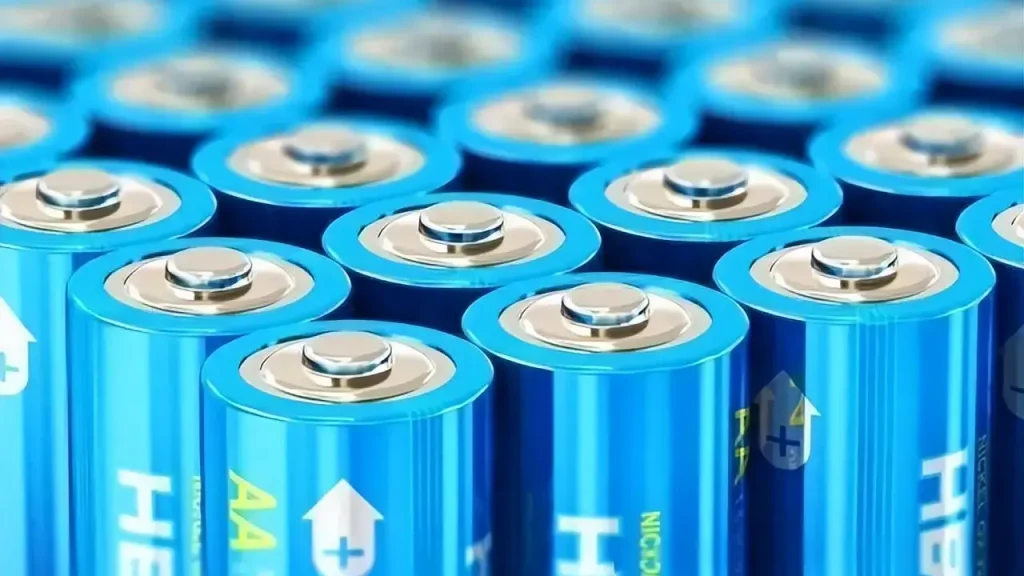
Chicago startup Pure Lithium says its lithium-metal battery ran 9,315 charge-discharge cycles — more than triple a conventional pack — by ditching graphite for a deposited lithium anode. Unlike the solid-state vs liquid battery debate playing out across the industry, this is a liquid-electrolyte cell, not a solid-state bet.
What Pure Lithium is claiming
Pure Lithium, a Chicago-based startup that recently moved its headquarters from Boston, says it crossed a milestone this month: a lithium-metal battery that completed 9,315 charge-discharge cycles. That is more than three times the cycle life of a conventional lithium-ion pack, and the company calls it unprecedented among lithium-metal cells under comparable testing. The claim is unverified by independent labs, but the numbers — if they hold — would be a serious outlier for a chemistry that normally dies young.
The cell is not solid-state and not a silicon-anode design. It is a lithium-iron-phosphate (LFP) battery with the graphite anode removed. CEO Emilie Bodoin told Bloomberg the result is “half the weight and double the energy density of the battery that we’re all using today.” The company puts hard numbers on that: Gen 1 at 300 Wh/kg, Gen 2 targeted at 425 Wh/kg.
Why graphite is the bullseye
Graphite is the quiet bottleneck of the EV battery world. More than 90% of the world’s graphite is processed in China. It is also heavy, space-hungry, and — critically — inert: it does not take part in the electrochemical reaction, it merely hosts lithium ions as they shuttle in and out. Pure Lithium’s argument is simple. Strip out the graphite, free up that volume inside the cell, and fill it with active material that actually stores energy.
That framing is why the story is as much geopolitics as chemistry. North America is racing to dilute its dependence on Chinese refining, and graphite is one of the most concentrated nodes in the chain. A graphite-free LFP cell that can be built from a North American supply chain is, in Pure Lithium’s telling, a direct shot at that dependency — a theme that overlaps with the new Chinese lithium-battery consumption tax reshaping cost math across the industry.
The anode trick — electrodeposition
Pure Lithium is graphite-free but not anode-free. Instead of shipping in pre-made anode material, it grows the anode in place. Using a process called electrodeposition, lithium metal is plated directly onto a copper current collector until it reaches the desired thickness — a single manufacturing step the CEO calls “magic.” S&P Global has reported the same mechanism. The bet is that making the lithium anode this way is cheap and scalable, which is what the startup says sets it apart from the 40-odd manufacturers it is now in talks with.
For the cathode, Pure Lithium sticks with LFP — a chemistry historically tied to Chinese supply chains but steadily localizing in the U.S. The upside: the cell needs none of nickel, manganese, cobalt, or graphite. The trade-off: LFP’s ceiling is lower than nickel-rich chemistries, a gap Pure Lithium says it closes by reclaiming the anode side of the cell. Our LFP vs NCM comparison guide lays out why that cathode choice matters for cost and range.
Read the fine print
The 9,315 cycles were run at a 1C rate — a full charge in one hour, a full discharge in one hour, repeated. That is brutal on a cell and a real stress test. The company says the cell held nearly all its discharge capacity through the run. But two caveats matter. First, the energy density of the specific cell that hit 9,315 cycles was not disclosed — the 300/425 Wh/kg figures are Gen 1 and Gen 2 claims, not necessarily this cell. Second, the test was not continuous: Pure Lithium paused around the 6,000-cycle mark during its Boston-to-Chicago move and let the battery rest four months at room temperature, after which retention looked even better. Early fluctuations, the company notes, came from weak temperature control and power failures in its Boston lab. A January 2025 test had shown 80%+ capacity after 2,200 cycles at the same 1C rate — so the newer cell does look more robust.
Pure Lithium is not alone
Factorial, Solid Power, and QuantumScape are all chasing graphite-free lithium-metal batteries too. The difference is the path. Factorial and QuantumScape are betting on solid-state or semi-solid electrolytes; Solid Power is building silicon-anode and lithium-metal tech around a sulfide solid electrolyte. Pure Lithium stays with a liquid electrolyte and hangs its thesis on how the anode is made. Plenty of startups have promised lithium-metal breakthroughs before; the graveyard of unpublished cycle data is large.
The Bottom Line
A Chicago startup says it built a graphite-free lithium-metal LFP cell that ran 9,315 cycles — a direct challenge to China’s grip on battery graphite. The science is plausible, the claim is unverified, and commercialization is years away.
Sources & Further Reading
- InsideEVs, “This American Battery Could Break China’s Grip On The EV Supply Chain” (Aug. 2026) — primary English report: insideevs.com/news/806443
- Bloomberg, interview with CEO Emilie Bodoin (cited by InsideEVs) — weight and energy-density claims.
- S&P Global (cited by InsideEVs) — electrodeposition anode process.
- Related EVsays coverage: Solid-state vs liquid EV batteries · LFP vs NCM guide · China lithium-battery tax


[…] work on the electrolyte side of that interface, and it is the opposite of the direction taken by graphite-free anode designs that remove the host […]