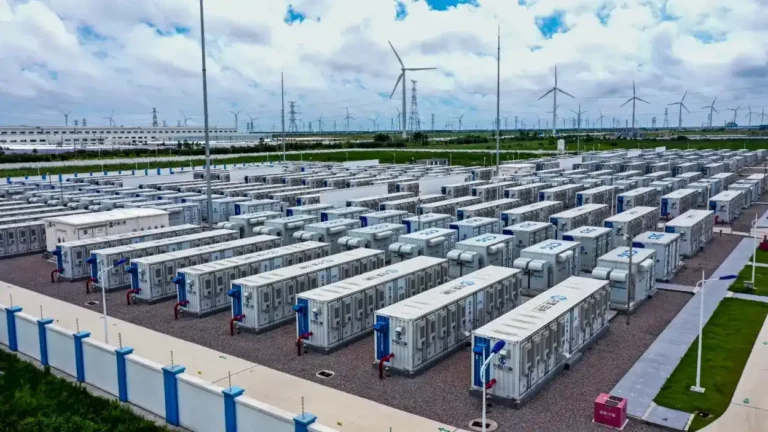



More than 140,000 home batteries sent power to California’s grid on the evening of September 9, peaking above 580 MW over a three-hour window. Sunrun and Tesla, which coordinated the dispatch, say it was the largest residential virtual power plant event ever recorded — and it was announced today, twelve days after the fact.
The two companies said in a joint release on September 21 that the event was carried out at the request of the California Energy Commission and the state’s utilities during a heat wave, with the batteries discharging into the grid for three hours in the evening to lift the grid’s operating margin and push down real-time prices. By their count, the power delivered was enough to cover every household in Sacramento County during peak hours.
Roughly 110,000 of the batteries were Tesla Powerwalls — more than half of them owned and operated by Sunrun — and they supplied 517 MW. Another 30,000-plus batteries from other manufacturers in Sunrun’s fleet contributed 63 MW. The evening after, September 10, Southern California Edison requested a separate three-hour dispatch, and the two companies delivered more than 140 MW.
What the Residential Virtual Power Plant Actually Did
The mechanics matter more than the headline, because they are what make the number repeatable.
Only one part of the event was automatic. The Demand Side Grid Support programme, run by the California Energy Commission, triggered when the California Independent System Operator’s day-ahead locational marginal price went above $200 per megawatt-hour — the signal that the system was short and power was expensive. The second programme, the Emergency Load Reduction Program run under the California Public Utilities Commission, was called directly by Pacific Gas and Electric as the heat wave peaked. Batteries in all three investor-owned utility territories participated.
| Event | Requested by | Window | Delivered |
|---|---|---|---|
| September 9 | California Energy Commission and utilities, via DSGS and ELRP | Three hours, evening peak | More than 580 MW combined; 517 MW from 110,000 Tesla Powerwalls and 63 MW from 30,000-plus other batteries |
| September 10 | Southern California Edison | Three hours, evening peak | More than 140 MW |
Mary Powell, Sunrun’s chief executive, framed the scale in the release: “Sunrun’s distributed home batteries are operating at a scale larger than many peaker power plants combined.” That is a defensible comparison. A gas peaker typically runs between 50 MW and 250 MW; a single evening of coordinated household batteries beat several of them at once, using hardware that was already installed in garages.
Why the Price Signal Is the Real Story
The interesting question about a residential virtual power plant is not whether it can do this once. It is whether the battery owners get paid enough to leave their systems available for it, and whether the grid operator gets a cheaper option than the alternative.
Both sides had a reason to show up on September 9. Wholesale prices above $200 per megawatt-hour mean the cost of serving the peak was already high; batteries that had been charged earlier in the day could sell into that. Homeowners in these programmes are compensated directly for the power they share, which is the part that makes a home battery pay for itself beyond backup power.
Sunrun and Tesla also point to a Brattle Group study projecting up to $206 million in net savings for Californians by 2028 from programmes of this kind. That figure should be read with its provenance attached: the study was commissioned by the two companies, not produced independently. We have not reviewed its assumptions.
The narrower point stands regardless of the estimate. Peak demand lasts a few hours on a handful of days a year, and covering it conventionally means building or firing up plants that sit idle the rest of the time. Distributed batteries that are already paid for by their owners solve the same problem without the capital cost landing on the utility’s rate base. What September 9 showed is that the software and the programmes can hold that many devices together on a single call.
The Part the Headline Hides
A few things the announcement does not establish, and which are worth being precise about.
580 MW is peak power, not energy. The release says more than 580 MW of peak power across a three-hour window, but does not disclose how many megawatt-hours were actually delivered, what the profile looked like across those three hours, or what the batteries were paid. For context on what distributed flexibility can be worth on paper, our reporting on China’s 50 GW vehicle-to-grid target covers the same problem from the other side of the Pacific.
“Largest on record” is the companies’ claim. There is no independent registry of virtual power plant dispatch events that we are aware of, so the superlative rests on the operators’ own framing. The underlying numbers — 140,000 devices, 580 MW — are specific, which is what matters.
The whole thing was possible because California pays for it. Two state programmes, one price trigger, and three utilities willing to call on household hardware. That combination exists in very few markets. Elsewhere, the same batteries are usually earning nothing beyond backup.
This is competition for the utility-scale sector, not an addition to it. Every megawatt a home battery sells into the evening peak is a megawatt a grid-scale project or a peaker does not sell. Our coverage of utility-scale storage — from long-duration systems aimed at the same hours to portfolios financed on contracted revenue — describes assets competing for the same slice of the day, and the dispatch on September 9 is a reminder that the residential fleet is now big enough to be a real participant rather than a curiosity.
The Larger Initiative This Sits Inside
Sunrun and Tesla are not doing this one heat wave at a time. Together with Renew Home they are pursuing an initiative to unlock more than 16.8 GW of flexible capacity from home batteries, rooftop solar, smart thermostats and electric vehicles, aimed at both utilities and the hyperscalers building data centres. Earlier in September the three companies said they would enrol nearly 21,000 existing devices into a new distributed power plant with Pacific Gas and Electric, funded by Google, expected to begin supporting the grid as early as this autumn.
That is the commercial thread to watch. Big tech has spent two years signing contracts for firm power; a distributed power plant assembled from devices already in people’s homes is a way to meet part of that demand without a transmission queue. It belongs in the same conversation as the grid equipment being ordered for AI campuses, and it explains why utilities are suddenly willing to call 140,000 garages at once.
Sources & Further Reading
- Sunrun investor relations — “Sunrun and Tesla Dispatch 580 Megawatts To California’s Grid During Heat Wave, Marking Largest Residential Distributed Power Plant Event In History” (2026-09-21) — the 580 MW peak, the device counts, the 517 MW / 63 MW split, the two state programmes and the price trigger, the September 10 dispatch, the 720 MW combined figure, the Brattle Group estimate, the Mary Powell quotation and the 16.8 GW initiative.
- Electrek — “Tesla and Sunrun’s virtual power plant dispatch record 580 MW to California grid” (2026-09-21) — used for the comparison with gas peaker capacity and the history of the Sunrun-Tesla Powerwall relationship.
- RTTNews and Stock Titan (2026-09-21) — corroborating coverage of the same release, including the market reaction and the summary of both dispatch events. Listed without links as they restate the company’s disclosure.
- California Energy Commission and California Public Utilities Commission programme documentation — Demand Side Grid Support and the Emergency Load Reduction Program, the two schemes under which the dispatch took place. Referenced by name.
- EVsays — related coverage: China’s vehicle-to-grid target, long-duration storage for the same evening peak, utility-scale storage financing in Europe and grid equipment demand from AI data centres.
Accuracy note: The dispatch figures, device counts, programme names, the $200 per megawatt-hour trigger, the September 10 event, the 720 MW combined figure and the 16.8 GW initiative are as stated in Sunrun’s press release of September 21, 2026. The Brattle Group estimate of up to $206 million in net savings by 2028 is a study commissioned by Sunrun and Tesla; we have not reviewed it and we present it as the companies’ cited figure, not as an independent finding. The comparison range for gas peaker plants comes from trade coverage, not from the companies. We could not find an independent register of distributed dispatch events, so the “largest on record” description is attributed to the operators rather than verified by us. The energy delivered in megawatt-hours, the payments made to participating households and the cost to ratepayers are not disclosed, and we have not estimated them. Neither company has published the event data behind the figures.
Sourcing note: The primary source is Sunrun’s release, read directly, including the quotation from chief executive Mary Powell. California programme and market details come from the release and from the California Energy Commission and CPUC programme documentation we consulted. Trade coverage from Electrek, RTTNews and Stock Titan was used for corroboration and context. The analysis is EVsays’ own; where a claim rests on a company’s own framing we say so in the text. Our standards are set out in our editorial policy and errors are handled under our correction policy.