

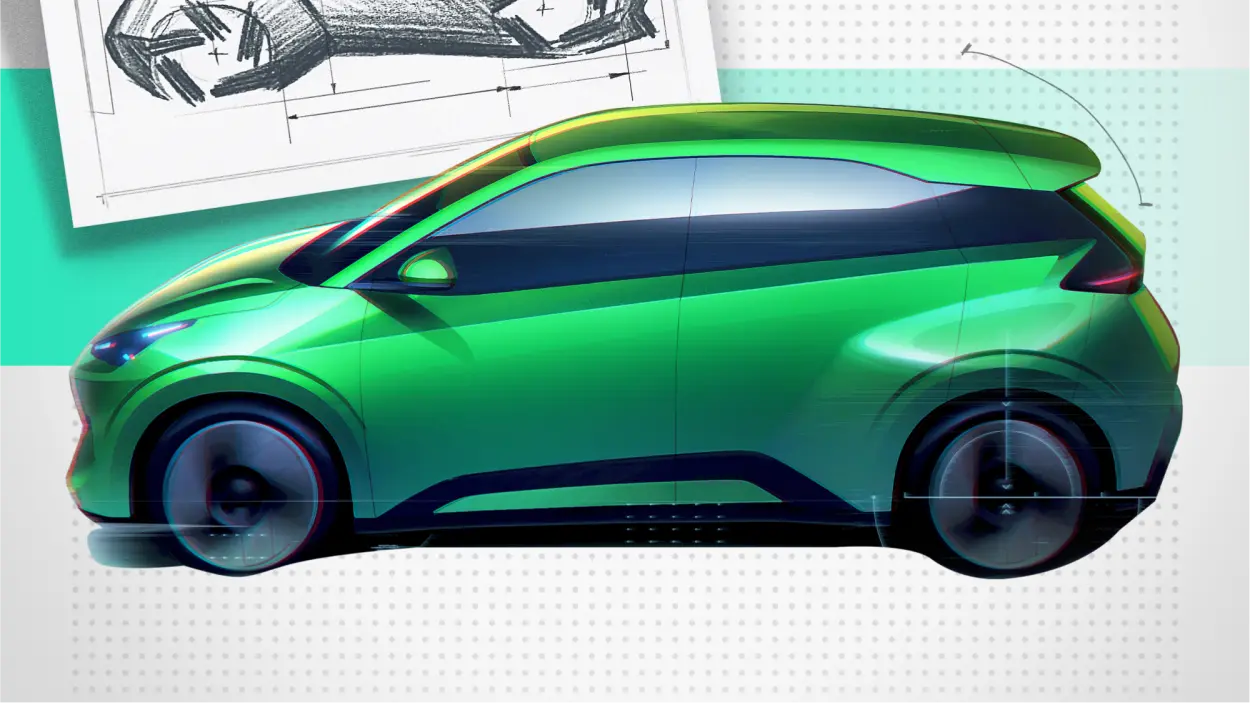
BYD has published design sketches of the second-generation BYD Seagull, its cheapest car — and the drawings show a car that has grown in every direction. The new model is 425 mm longer than the one on sale, with a wheelbase stretched by 150 mm, a motor up from 55 kW to 95 kW, and an optional roof-mounted lidar. The reason is not ambition for its own sake: the Seagull lost the entry-level segment in China this year, and BYD’s answer is to move the car up rather than defend the price floor.
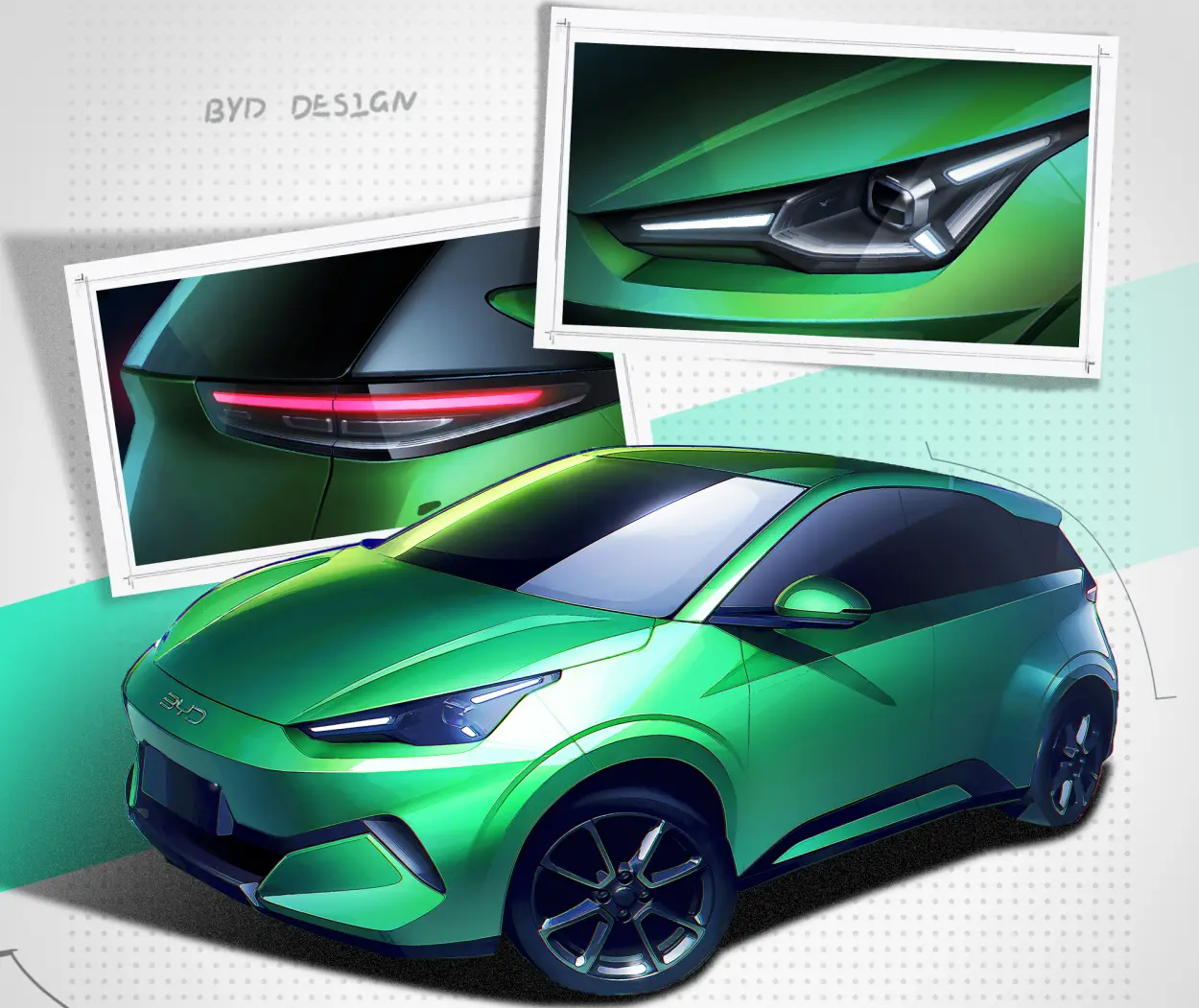
What BYD Showed
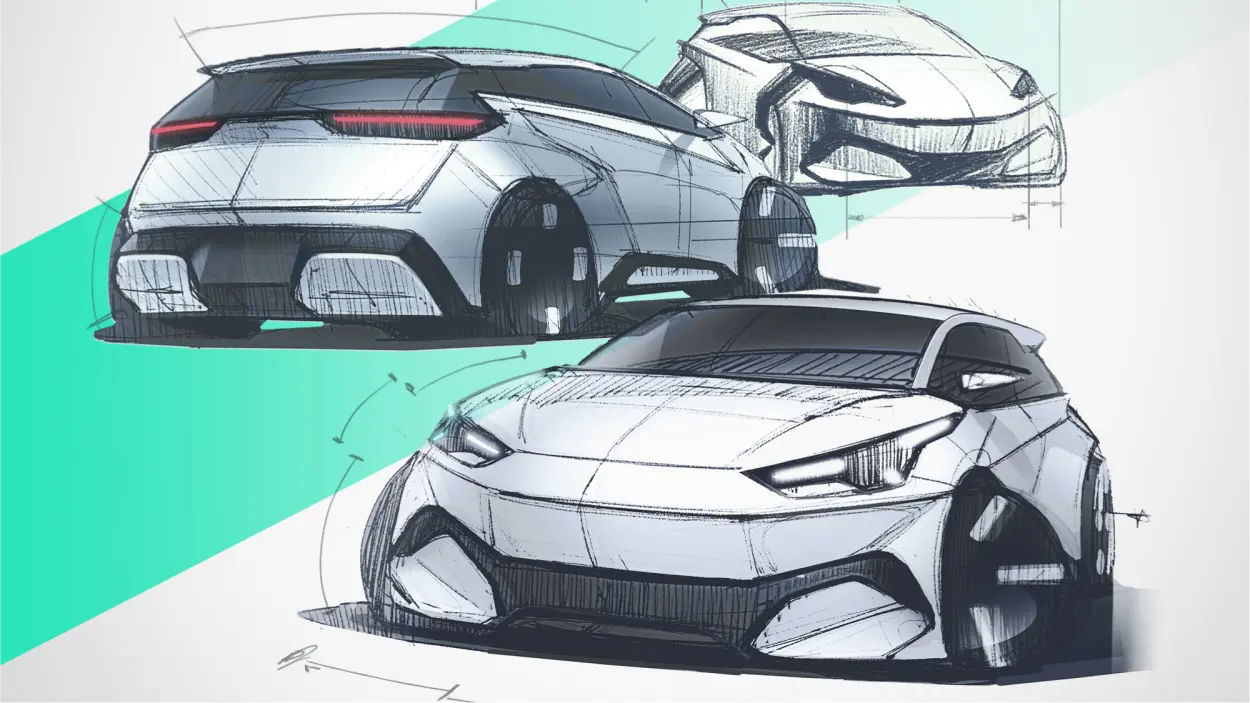
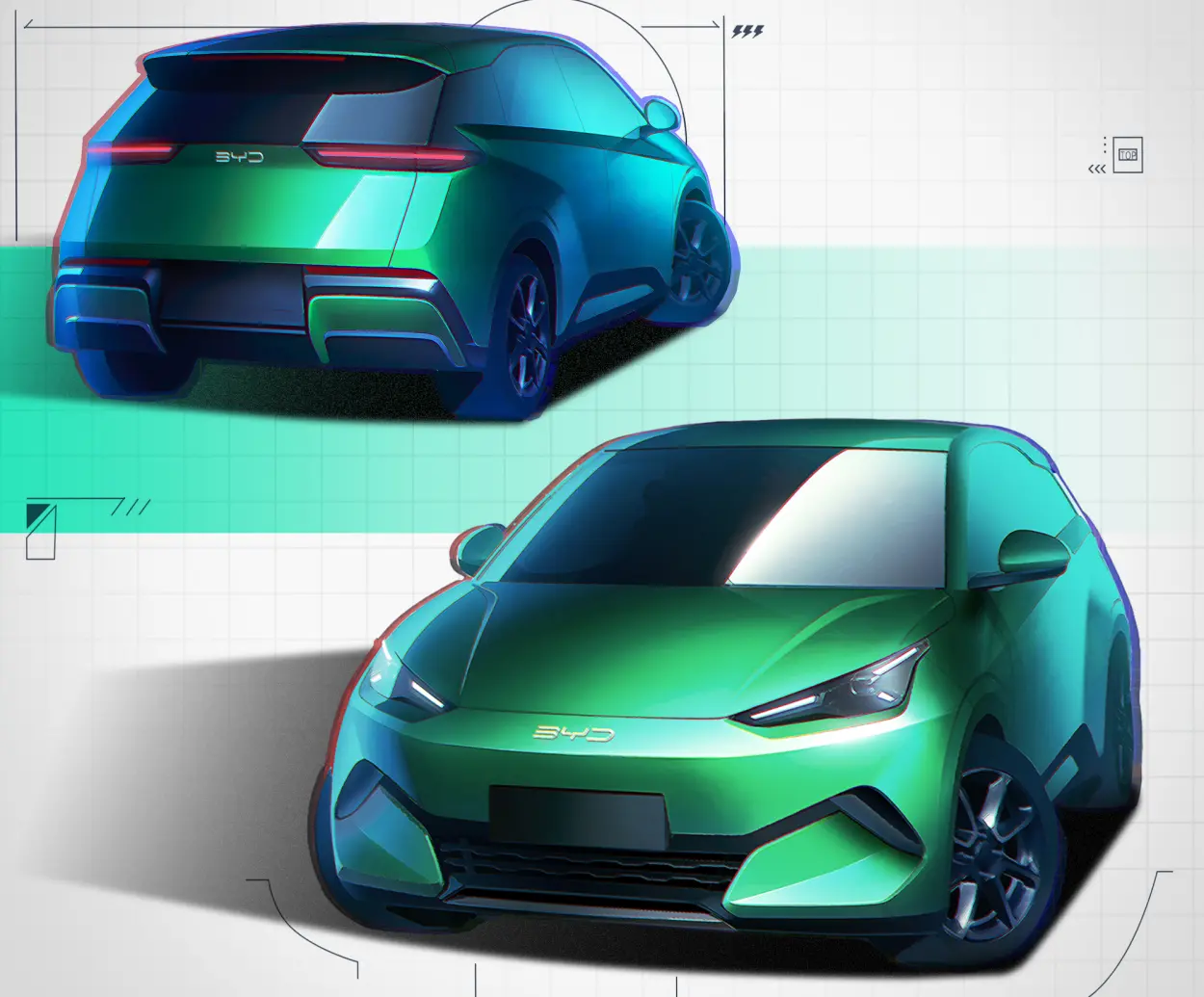
Zhang Zhuo, general manager of BYD’s Ocean network sales division, posted the sketches on September 22, describing a reworked body — “lines reshaped, surfaces renewed” — and promising more detail to come. The car will reach Chinese showrooms as the Great Seagull, a name BYD confirmed at the Chengdu auto show, and is due before the end of 2026.
The drawings themselves are a break from the current car. Sharp trident-shaped daytime running lights replace the rounded front end, the bonnet gains creases, and the front bumper now has working air ducts on each side. The floating roof effect comes from blacked-out B- and C-pillars. At the back, the full-width light bar is gone, replaced by two inverted-trapezoid lamps with the BYD wordmark between them. Most of this, though, is styling. The part that matters is underneath.

The Numbers the Filing Already Revealed
The second-generation Seagull was certified in China’s Ministry of Industry and Information Technology catalogue on 10 July 2026, so its core specifications are public even though the car is not on sale:
| Specification | Second generation | Current Seagull |
|---|---|---|
| Length × width × height | 4,205 × 1,810 × 1,570 mm | 3,780 × 1,715 × 1,540 mm |
| Wheelbase | 2,650 mm | 2,500 mm |
| Motor | 95 kW (127 hp), permanent magnet, Zhengzhou BYD | 55 kW (75 hp) |
| Battery | Two FinDreams LFP packs, 30 kWh and 39.2 kWh | FinDreams LFP |
| Range | 320–420 km CLTC | 305–405 km CLTC |
| Top speed | 150 km/h | 130 km/h |
| Curb weight | 1,180–1,255 kg | 1,160–1,240 kg |
The wheelbase increase of 150 mm is the most consequential line in that table, because it changes what the car is. At 4,205 mm the new Seagull comes within 65 mm of the BYD Dolphin, which is the next model up. A car that was designed as a city runabout is now a small family hatchback with five seats and 16-inch wheels; the filing lists 205/60 R16 tyres across all variants.
Two details stand out beyond the dimensions. The first is the motor: 95 kW is not a small step from 55 kW, and with a 150 km/h top speed the new car is specified for a different kind of use than the city-only original. The second is the roof-mounted lidar, which BYD pairs with its DiPilot 300 system — marketed as “God’s Eye B” — including urban and highway navigate-on-autopilot functions. Advanced driver assistance was not part of the Seagull’s proposition before. We looked at how that system is being certified in our report on BYD’s level 2 approvals.
Why It Grew: How the BYD Seagull Lost Its Own Segment
The generational change makes sense only against the sales data. The Seagull, priced from RMB 69,900 to RMB 85,900 (about $9,640 to $11,850 at RMB 7.25 per USD) and sold overseas as the Dolphin Mini, Dolphin Surf and Atto 1, was the car that made BYD the answer to “what is the cheapest decent electric car in China”. This year it stopped being the answer.
Deliveries from January to August 2026 came to 74,087 vehicles, down 66.5% year on year, according to the tracking firm China EV DataTracker. In June alone, Geely’s EX2 — sold in China as the Xingyuan — recorded 33,359 retail sales against the Seagull’s 9,825. That is not a slip in a growing market; it is a segment changing hands.
BYD has chosen not to fight for it on price. Instead of cutting the Seagull’s sticker, it is adding length, power and driver assistance, and positioning the result in the space between the old Seagull and the Dolphin — which is why the domestic name changes to Great Seagull. In effect the company is conceding the bottom of the market to Geely and moving its own entry point upwards, where the margin is better and where a Chinese buyer comparing specifications will still find it competitive.
What It Means Outside China
For readers outside China, the significant consequence is the one nobody advertising it will say out loud: the cheapest BYD is about to get bigger and more expensive. In Europe the current car sells as the Dolphin Surf from around €22,900, which makes it one of the least expensive battery-electric cars on the market. The larger second-generation model is expected to arrive as the next Dolphin Surf at under €30,000 — still cheap by European standards, but a different proposition from an €22,900 city car.
That shift matters to the European affordability debate, in which Chinese brands are cast as the force pushing prices down. If BYD’s own entry model steps up a size and a price band, the pressure at the very bottom of the market eases — and the cars that fill that space will be European. The same logic applies in the markets that take the Dolphin Mini and Atto 1, where the smaller, cheaper first-generation car may well continue alongside the new one. We set out the wider competitive picture in our coverage of Chinese brands’ European market share.
Author’s Take
This is a retreat dressed as a redesign, and it is probably the right call. The Seagull won the entry segment by being cheap; it lost that segment to a competitor that was cheaper still and better equipped for the money. Adding 425 mm of length and 40 kW of motor is expensive engineering to solve what looks like a pricing problem — but BYD cannot win a price war at the bottom against Geely without destroying the margins it needs for everything else, and it cannot sell an entry car in Europe for €22,900 forever with tariff-free access gone. The risk is the obvious one: a bigger, more expensive Seagull stops being the car people recommend to someone who just wants cheap electric transport, and BYD has no model left underneath it.
The Bottom Line: The second-generation BYD Seagull is 425 mm longer, 150 mm broader in wheelbase and 73% more powerful than the car it replaces, with an optional roof lidar and urban NOA. It arrives in China before the end of 2026 as the Great Seagull. The redesign is a response to losing the entry segment — down 66.5% year on year in the first eight months — and it means the cheapest car BYD sells in Europe is about to move up a size and a price band rather than down.
Accuracy note: These are design sketches released by a BYD sales executive, not photographs of the production car, and the specifications above come from the Ministry of Industry and Information Technology type-approval filing published on 10 July 2026 and reported at the time, not from a final specification sheet. Filing data can change before launch, and BYD has not published prices, equipment lists or availability for markets outside China. The claim that the car will use second-generation Blade batteries and flash charging has been reported from the Chengdu auto show but does not appear in the filing and should be treated as expected rather than confirmed. The sales figures — 74,087 Seagulls delivered from January to August 2026, down 66.5%, and 9,825 Seagull retail sales against 33,359 Geely EX2 sales in June — come from China EV DataTracker as reported by trade media; we have not audited the underlying registration data. The current price range of RMB 69,900 to RMB 85,900 is as listed in China. Dollar conversions use RMB 7.25 per USD, the rate we apply across our coverage, which is why our figures differ from outlets converting at roughly 6.7. The statement that the new car is 65 mm shorter than the BYD Dolphin is as reported by CarNewsChina; the current-generation dimensions, battery capacities, range figures and top speed in the comparison table are the published Chinese-market specifications for the car on sale today. EVsays did not attend any launch event for this model.
Sourcing note: The primary sources are the design sketches and remarks posted by Zhang Zhuo of BYD’s Ocean network sales division on 22 September 2026, and the Ministry of Industry and Information Technology filing of 10 July 2026, both as reported in detail by CarNewsChina, with additional specification detail from Chinese motoring media including Pacific Auto and Sina Finance. The competitive sales comparison is drawn from China EV DataTracker data as published by trade media. The analysis, the framing of the redesign as a response to losing the entry segment, and the assessment of what it means for European pricing are EVsays’ own. Our editorial standards are published in our editorial policy, and errors are handled under our correction policy. Images: the four design sketches are BYD’s own, released by the company’s Ocean network sales division; the photograph of the car on a shoot is an uncredited image circulating on Chinese social media, and we have neither published nor verified it.
Sources & Further Reading
- CarNewsChina — “Design sketches of the second-gen BYD Seagull were revealed in China” (2026-09-22) — the sketches, the Great Seagull name, the dimensions, the two battery options, the lidar and the January–August delivery figure.
- CarNewsChina — “New BYD Seagull hatchback exposed with 425 mm longer body and 127 hp motor” (2026-07-10) — the MIIT filing: dimensions, wheelbase, motor, battery supplier, weights, tyres and the comparison with Geely’s EX2.
- Sina Finance and Pacific Auto (2026-09-23) — Chinese-language detail on the design changes: trident lighting, front air ducts, floating roof, the replacement of the light bar, and the 40 kW motor increase.
- China EV DataTracker, as reported by trade media — Seagull deliveries from January to August 2026 and the June comparison with Geely’s EX2.
- EVsays — related coverage: BYD’s level 2 driver-assistance certification; Chinese brands’ European market share; the second-generation Blade battery.