
Xiaomi plans to pay 1.7 billion yuan (USD 253 million) for 5.34% of Sunwoda EVB — the company that builds the Dragon Armour cells Xiaomi specifies but does not make. Li Auto already holds 8.32% after a 2.65 billion yuan injection in September. Together the two carmakers will own about 13.7% of a battery business that lost 324 million yuan in the first half of 2026, at a valuation of roughly 32 billion yuan. That is about one times annualised revenue, for a company with no profit to capitalise.
What Xiaomi Is Actually Buying
The Shenzhen Stock Exchange filing published on the evening of 29 October is a capital increase, not a share purchase. Xiaomi invests through its wholly owned Hanxing Venture Capital, takes newly issued equity and becomes the third-largest shareholder. Sunwoda’s own stake, held through Sunwoda Huizhou New Energy, falls from 24.06% to 22.78%.
| Item | Detail |
|---|---|
| Investor | Xiaomi, via Hanxing Venture Capital |
| Amount / stake | 1.7 billion yuan for 5.34% |
| Rank | third-largest shareholder |
| Sunwoda’s stake | 24.06% to 22.78%; remains largest, loses board majority |
| Accounting effect | Sunwoda deconsolidates the unit; estimated one-off gain of 3.2–4.5 billion yuan in 2026 |
| Sunwoda EVB, H1 2026 | revenue 15.53 billion yuan; net loss 324 million yuan |
| Li Auto | 8.79% in September, diluted to 8.32% |
| Sunwoda’s Hong Kong listing | cancelled the same evening |
Two things happened on the same night, and they should be read together: Xiaomi came in as an investor, and Sunwoda gave up on listing the unit in Hong Kong. A company does not cancel an IPO and sell 5% to a customer unless the equity is needed for something other than a valuation event.
The Sunwoda EVB Valuation Is One Times Revenue
Divide the two investments by the stakes they bought and the unit’s valuation is remarkably stable. Xiaomi’s 1.7 billion for 5.34% implies 31.8 billion yuan; Li Auto’s 2.65 billion for 8.79% implied 30.1 billion. Two months apart, that is a 5.6% step up — close enough to be the same negotiation, far enough apart to suggest the second buyer paid a small premium for arriving later.
Against the unit’s first-half revenue of 15.53 billion yuan, annualised to about 31 billion, that valuation is roughly one times sales. Against its loss it is not a multiple at all. Battery businesses normally trade on capacity and contracts rather than earnings, so this is not absurd — but it does mean the buyers are not paying for profit. They are paying for priority.
Worth noting what the loss margin is: 324 million against 15.53 billion of revenue is −2.1%. That is the profile of a supplier running hard in a price war to hold volume — exactly the supplier an OEM wants to keep alive rather than squeeze.
From Specification to Shareholding
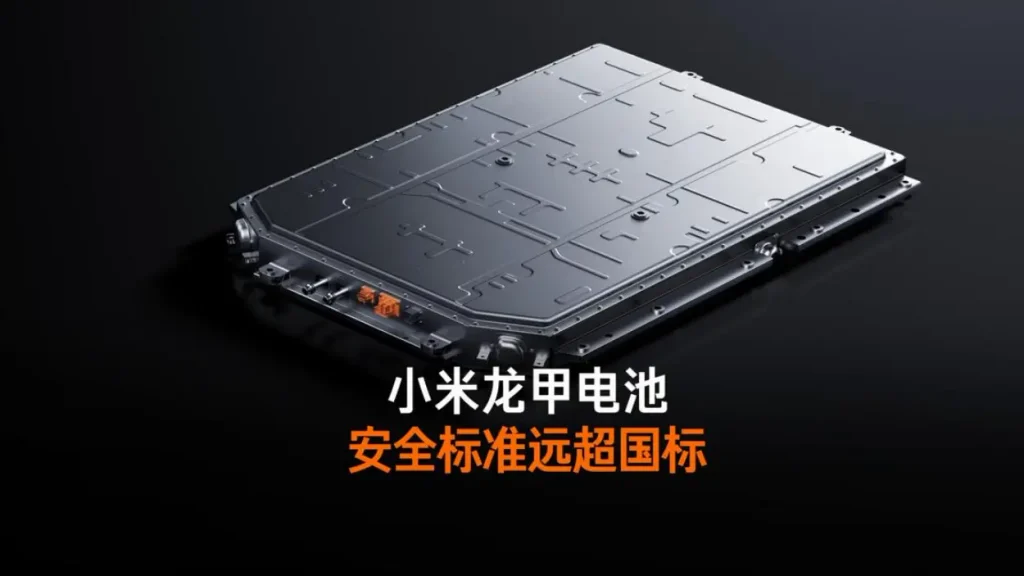
This is the second step of a strategy Xiaomi set out in September. At its Dragon Armour event on 4 September, Xiaomi described a cell it defines, specifies and warrants for life but does not manufacture, with CALB and Sunwoda as the builders. Four days later Li Auto put 2.65 billion yuan into the same unit. Now Xiaomi has followed.
The logic is consistent across both: if you cannot buy certainty of supply in a contract, buy equity in the supplier. Cells are the tightest constraint on any Chinese EV plan, and the price war has left most second-tier cell makers with thin margins and no cash for expansion. A customer that needs volume in 2027 has two options — sign a long-term agreement that the supplier may not be able to finance, or fund the capacity yourself and take a share of the upside. Li Auto and Xiaomi have chosen the second, and both already had supply relationships to build on.
Sunwoda is an unusually sensible partner for this. It is one of the volume LFP suppliers behind China’s cheapest electric cars — it built the 42 kWh pack in the NIO Firefly before that car moved to CATL’s Qilin — and it has been pushing a megawatt charging network of its own. It has industrial reach; what it does not have, on these numbers, is profit.
The Gain Sunwoda Books Is Bigger Than Its Business Earns
Here is the part that will confuse anyone reading only the headline profit number. Losing control of the unit is, for Sunwoda’s income statement, a windfall: remeasuring the retained stake at fair value produces an estimated 3.2–4.5 billion yuan gain in 2026. Over the first nine months of the year, the entire group earned 613 million yuan, down 56.37% year on year on revenue of 63.46 billion.
So the accounting gain is between 5 and 7 times the group’s operating profit for three quarters — and it is not cash. Nothing about the underlying business improves; it simply stops appearing on the consolidated line. Sunwoda says the move lets it concentrate on consumer batteries and energy storage and reduce its financing needs, which is true, and which is also what a company says when the unit it is exiting cannot fund itself.
What the Filing Does Not Say
Five things are absent, and each matters more than the percentage. There is no capacity figure for Sunwoda EVB, no committed offtake volume from Xiaomi, and no price per kilowatt-hour agreed for future supply. There is no indication that 5.34% carries board control — Xiaomi is a financial investor with a supply contract, not a controller. And there is no lock-up or exit timetable disclosed.
The strategic read is therefore an inference, not a fact: Xiaomi is buying influence and information, plus a claim on capacity, for a sum that is small relative to its vehicle programme. What it is not buying, on this filing, is certainty.
Author’s Take: The Chinese EV industry has quietly changed how it pays for batteries. Contracts were enough when cells were abundant; now that the volume leaders need locked capacity and the second tier cannot fund it, the customer becomes a shareholder. Two carmakers owning 13.7% of a loss-making cell unit is not a vote of confidence in that unit’s returns — it is a toll paid to keep a supplier standing.
The risk sits with the buyers. Equity in a supplier is a claim on capacity that only pays if the price war ends; if it does not, they own a share of the same losses they were trying to avoid. The discipline to watch is whether the next round of these deals comes with offtake commitments attached. Without them, this is balance-sheet support dressed as strategy.
The Bottom Line: Xiaomi plans to invest 1.7 billion yuan for 5.34% of Sunwoda EVB, joining Li Auto at 8.32% — about 13.7% of a battery unit that lost 324 million yuan in the first half of 2026, valued at roughly 32 billion yuan, or one times annualised revenue. Sunwoda loses control and books a 3.2–4.5 billion yuan accounting gain that is five to seven times what the whole group earned in nine months. No capacity, volume or price commitments were disclosed.
Sources & Further Reading
- Shenzhen Stock Exchange — Sunwoda Electric Vehicle Battery capital increase and shareholder change announcement (29 October 2026) — the 1.7 billion yuan investment, the 5.34% stake, the dilution of Sunwoda’s holding from 24.06% to 22.78%, the board composition change, the deconsolidation and the 3.2–4.5 billion yuan estimated gain, and the termination of the Hong Kong listing plan.
- Sunwoda Intelligent Technology — 2026 third-quarter report (29 October 2026) — nine-month revenue of 63.46 billion yuan, up 45.78%, and net profit attributable to shareholders of 613 million yuan, down 56.37%.
- Sunwoda EVB — first-half 2026 figures as disclosed in the announcement — revenue of 15.53 billion yuan and a net loss of 324 million yuan.
- Li Auto — 4 September 2026 disclosure of a 2.65 billion yuan investment for an 8.79% direct stake in Sunwoda EVB, and the 50:50 joint venture established in 2025 to manufacture Li Auto’s in-house developed batteries.
- EVsays — Xiaomi’s Dragon Armour battery — the September strategy event at which Xiaomi defined a cell it does not build, with CALB and Sunwoda as suppliers.
- EVsays — Sunwoda’s megawatt charging plan — the other half of the supplier’s strategy.
- EVsays — the NIO Firefly battery switch — where Sunwoda lost a volume LFP programme to CATL.
Notes: Investment amounts, stake percentages and the deconsolidation gain are taken from the Shenzhen Stock Exchange announcement and Sunwoda’s disclosures; the transaction still requires shareholder approval. The implied valuations (31.8 billion and 30.1 billion yuan), the revenue multiple, the loss margin, the combined 13.7% holding and the 5–7 times comparison with nine-month group profit are our own calculations from those disclosed figures. Sunwoda has not published capacity, offtake or pricing terms, and Xiaomi has not commented beyond the filing. EVsays has not seen the underlying agreements. Our editorial policy and correction policy apply.