

The world’s largest battery maker has spent the past year arguing that energy storage reliability is a system problem rather than a cell problem. At its own open-house event in Ningde and Xiamen on 20 and 21 September, CATL disclosed that it has built its own storage PCS, PMS and EMS, connected the DC and AC sides of a storage plant into one software stack, and put grid-forming control on its research list. Then it supplied the number that explains why: its storage cells are designed for a 20-year life, and the power electronics around them typically last 10 to 15 years.
What CATL Disclosed in Ningde and Xiamen
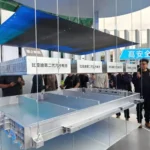
The event was the storage session of CATL’s “CATL Quality” 2026 global open month, held across the two Fujian sites on 20 and 21 September and reported by Xinhua Finance on 23 September. The company’s message, in the words of Wu Dianfeng, director of its energy storage technology centre, was blunt: “A good cell is the starting point, not the destination.”
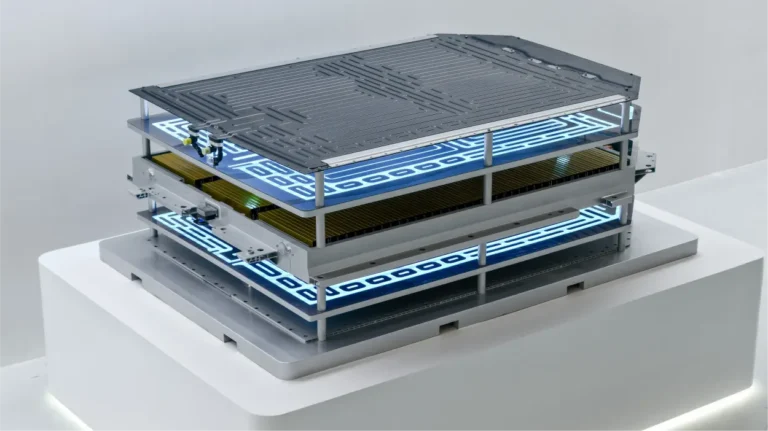
What is new is the scope of what CATL says it now builds itself. The company has connected the DC and AC sides of a storage plant into a single software system, coordinating the battery management system, the energy management system, the thermal management system and the AC-side controls. It says it has developed its own storage power conversion system, power management system and energy management system — the “3S” stack — and that grid-forming control, plant-level coordination and system-level verification are now part of its technology programme. Lin Jiubiao, CATL’s CTO for domestic storage solutions, framed the shift in the market itself: storage is no longer bought as a compliance cost attached to a renewable project but operated as an asset, and once that happens, capacity fade, system efficiency, availability, depth of discharge and response speed all start to affect revenue. A storage investor’s return model, he said, now runs to more than 60 variables, of which equipment price is one.
Wu’s analogy for the engineering problem was a rack of Nvidia GB300 accelerators, or a phone: the chip matters, but what makes the chip’s performance usable is the system designed around it. Grid-forming control is the model’s hardest exam, and Wu was unusually candid about the state of the field. Many grid-forming schemes today, he said, stay inside the “small loop” of a single PCS. The next steps are closed loops at plant level and, beyond that, coordination across solar-plus-storage and wind-plus-storage sites.
The Number That Matters: 20 Years of Cell, 12.5 Years of Electronics
The disclosure with the longest half-life is a durability mismatch, stated almost in passing.
Most storage cells in the industry are already designed around a 20-year operating life, Wu said. The power electronics are not: 10 to 15 years is typical, because voltage spikes, sustained temperature rise and harsh environments all accelerate the ageing of power devices. He described this as an area with “considerable room for optimisation”. Cells can fail quietly and gracefully; a PCS that enters its failure-prone phase before the battery does produces replacement cost, downtime and lost revenue inside the period the project’s financial model called steady state.
The arithmetic on his own numbers is worth stating plainly, because it changes how a storage project should be underwritten:
| Component | Design life | Replacements in a 20-year project |
|---|---|---|
| Storage cell | 20 years (CATL’s figure) | 0 |
| Power electronics, 12.5-year midpoint | 10–15 years | 1 |
| Power electronics, 10-year case | 10 years | 2 |
| Cell at the 15,000-cycle target above | 41 years (our calculation) | 0 |
A cell rated for 20 years sits in the same plant as electronics rated for 12.5 years at the midpoint of CATL’s own range — a cell that is 1.6 times as durable as the components it feeds. Set that against the 15,000-cycle target in China’s battery industry five-year plan, which works out at just over 41 years of daily cycling, and the gap becomes 2.7 to 4 times. The cell stops being the thing that wears out; the electronics take its place.
That is a different failure mode from the one the industry has spent a decade pricing. Storage economics have been argued mainly on cell cost per kilowatt-hour and cell cycle life, with augmentation modelled as a recurring cell-replacement line. If the binding constraint moves to power electronics, the line item does not disappear — it moves, and it moves to a component that is harder to swap in the field and harder to model.
Why PMS Talking to the Grid Directly Is the Hard Part
CATL’s control architecture is notable for what it removes. Conventionally, a plant’s power management system receives dispatch instructions through the energy management system. CATL’s PMS now interacts with the grid directly, while slower functions such as data storage and strategy calculation stay with the EMS, cutting one layer out of the instruction path.
Shorter is not automatically better, and CATL does not claim otherwise. Once the PMS responds to grid dispatch itself, the requirements for algorithm stability, fault protection and grid-code adaptability all rise, and grid strength, operating practice and connection standards differ by region. That capability, the company says, can only be accumulated through projects. This is the honest version of what is being attempted: not a product launch, but a company moving from electrochemical engineering into power electronics and power system control, against incumbents who have done nothing else for decades.
Energy Storage Reliability: One in Five Large Plants Underperforms
Why this matters beyond CATL is the evidence problem that the second day of the event was organised around.
A study by the German battery-analytics firm ACCURE, reported in Chinese coverage this year, found that close to one in five large storage plants performs below expectations. The mechanism is not usually a bad component. Chen Xiaobo, director of the Xiamen demonstration research institute, describes the failure mode as a mismatch between parts: the ionic conductivity of coolant changes as it circulates, raising insulation risk; an incorrect switching sequence can destroy a fuse; a voltage excursion on the AC side can propagate into the DC side. Cells, packs, inverters, fire systems and thermal equipment can each pass their own tests and still fail as a combination, because certification happens component by component and reliability happens at the system level.
The Xiamen facility was built to move that class of discovery earlier. Launched on 28 May 2026 by the Xiamen municipal government and CATL, it holds five laboratories — grid connection, high-voltage safety, thermal safety and combustion, environmental adaptability, and electromagnetic compatibility — with a 35 kV, 100 MVA controllable grid interface, a 20 MW calorimeter, and the ability to simulate 7,200 m altitude and temperatures from −50°C to 100°C, on a total investment of about RMB 3 billion. Two results are disclosed: at a 1.4 GWh high-altitude project in Tibet, the institute tested system efficiency, thermal management, insulation withstand and environmental performance under low pressure, temperature swings and sand; at another gigawatt-hour-scale project, testing found a high-voltage breakdown under overvoltage conditions before the equipment went to site.
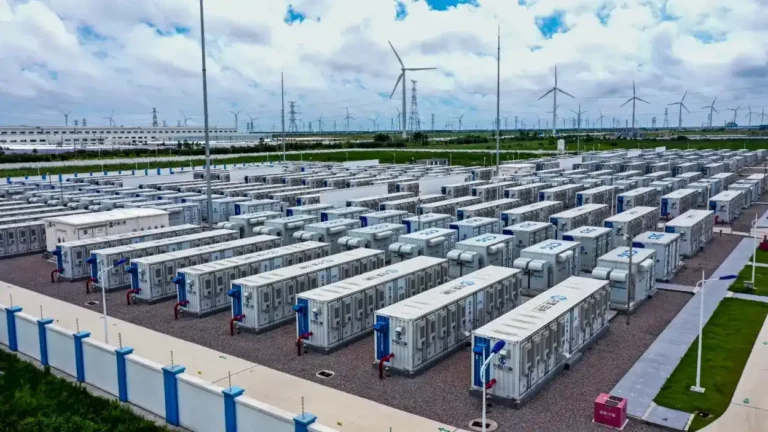
Put the scale in context. China ended 2025 with 136 GW / 351 GWh of new-type storage installed, which is an average of 2.58 hours across the fleet — a mix dominated by two-hour assets rather than the long-duration systems the reliability argument applies to most strongly.
The Same Lesson From a Transformer in Australia
There is a precedent from outside China that makes the same point more expensively. The Waratah Super Battery in New South Wales reached full commercial operation at 850 MW and 1,680 MWh on 28 September. Before that, a single failed high-voltage transformer held the world’s most powerful battery to 41% of its rated output for most of a year. The cells were never the problem; a piece of conventional grid hardware was.
CATL’s disclosure is the same argument applied to the standard parts list. A storage plant is priced on its cells per kilowatt-hour, and that number has fallen for three years. The components around the cells — transformers, inverters, controls, cooling hardware that has to be certified and enclosed — do not follow the cell’s cost curve, and they do not follow its durability curve either. The engineering logic points the same way as the shift towards longer-duration systems: as duration grows, the non-cell share of a project grows with it.
What CATL Has Not Shown
Four things are missing, and they are the ones that would let anyone check the claim.
No product data. There is no shipment volume, no efficiency figure, no availability number and no mass-production date for the company’s storage PCS. Announcing that a component is under development is not the same as shipping it.
No customers. No storage developer or utility is named as using a CATL inverter, and no site is identified as running the direct-to-grid PMS.
No third-party verification. The 20-year cell and the 10-to-15-year electronics range are both the company’s own engineering description. The Xiamen laboratory is jointly created and operated by CATL, which makes its results useful to the company and not yet independent evidence.
No concession on what the laboratory cannot reach. CATL’s own people say it: a test hall can reproduce boundary conditions, but a real plant still has to survive long-term operation, device ageing, changing dispatch and regional grid differences. Moving the discovery earlier lowers the cost of being wrong. It does not remove it.
The Bottom Line: Energy storage reliability has become a system problem, and CATL is the latest company to say so. At its 20–21 September storage event in Ningde and Xiamen, it disclosed that it has developed its own storage PCS, PMS and EMS, connected the DC and AC sides of a storage plant into one software stack, and listed grid-forming control as a research direction. It also stated the reason: storage cells are designed for a 20-year life while power electronics typically last 10 to 15 years, a mismatch our arithmetic puts at 1.6 times against the electronics midpoint and 2.7 to 4 times against the 15,000-cycle cell target in China’s battery five-year plan. CATL has published no PCS shipment, efficiency, customer or third-party verification data, and its Xiamen demonstration laboratory is jointly created and operated by the company itself.
Notes: The 20-year cell life, the 10-to-15-year power-electronics life and all quoted remarks come from CATL executives at the company’s own event and are the company’s engineering descriptions, not independently audited figures; the replacement counts, the 1.6-times ratio and the 41-year figure are our arithmetic on the stated numbers. The China storage installation total of 136 GW / 351 GWh for the end of 2025 and the 2.58-hour average duration are our arithmetic on published figures, and the average spans all new-type storage, not long-duration assets. The ACCURE finding of close to one in five large storage plants underperforming is cited from Chinese coverage of the study rather than from the study itself. All remaining figures on the Xiamen laboratory, including its RMB 3 billion investment and 35 kV / 100 MVA grid interface, are as published in Chinese trade coverage and have not been independently verified by EVsays. EVsays did not attend the event. See our editorial policy and correction policy.
Sources & Further Reading
- Xinhua Finance, via China Financial Information Network (新华财经/中国金融信息网) — “宁德时代举办2026全球开放月储能专场活动” (2026-09-23) — the 20–21 September dates and both venues, Wu Dianfeng’s remarks on integrating the DC and AC sides, and investor testimony from Wang Kun of Nanjing Sixiang and Ren Feng of Shenzhen Huagong Energy.
- 21st Century Business Herald (21世纪经济报道) — “为补齐储能交流侧能力,宁王要交多少学费?” (2026-09-30), published on the newspaper’s own Toutiao account. The source for CATL’s self-developed storage PCS, PMS and EMS; Wu Dianfeng’s statement that cells are designed for 20 years while power electronics last 10 to 15, and his description of grid-forming schemes stuck in a PCS-level “small loop”; Lin Jiubiao on storage as a long-term asset; and the Xiamen laboratory’s specification and test cases.
- Guangchuquan (光储圈) — “不止于电芯,储能真正拼的是20年资产价值” (2026-09-23), published on the account’s Toutiao page. Wu Dianfeng’s Nvidia GB300 and iPhone analogy, the integration of BMS, EMS, TMS and AC-side control, and the plant-level control roadmap.
- Sina Finance (新浪财经) — “宁德时代押注万亿资产‘信用基建’” (2026-05-29) — the Xiamen demonstration laboratory’s launch date of 28 May 2026, its five laboratories and its joint creation by the Xiamen municipal government and CATL, plus the ACCURE finding on large storage plants performing below expectation.
- EVsays — the reliability theme elsewhere: Waratah’s transformer and the two shapes of storage, China’s battery industry five-year plan, Hithium’s long-duration export to Israel, CATL’s 587 Ah storage cell pricing, Jupiter Power’s storage financing and storage designed for AI data centres.