

Volkswagen’s core brand chief Thomas Schäfer is expected to put a proposal to group management today: take the Volkswagen Xpeng architecture developed in Hefei for the Chinese market and use it as the base for European volume cars from Volkswagen, Škoda and Cupra. Manager Magazin, which first reported the plan, says it would cover about 75% of the three brands’ next-generation models and save €4–5 billion. The case inside the group comes down to one comparison: a Tiguan-class electric car would cost roughly €8,000 more on the Rivian software Volkswagen has already committed $5.8 billion to building.
What the Volkswagen Xpeng Architecture Would Cover
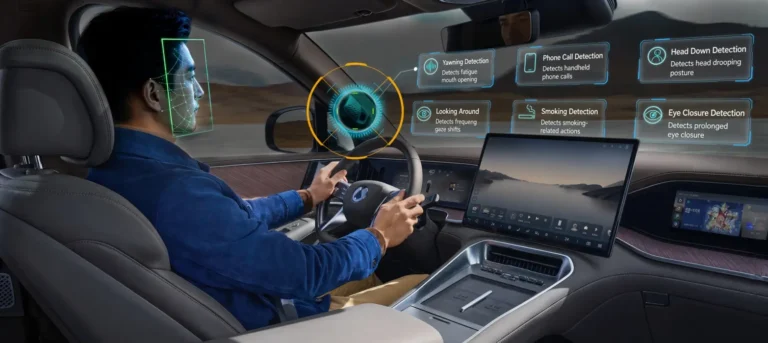
The technology is the China Electronic Architecture, or CEA: the electrical and electronic backbone that decides how many control units a car has, how they talk to each other, and whether features can be updated over the air. It was developed at Volkswagen China Technology Company in Hefei together with Xpeng, and it is already in production in China — including on the ID. UNYX 09 that Volkswagen Anhui launched last week.
| Element | What the report says |
|---|---|
| Architecture | CEA, developed at VCTC Hefei with Xpeng |
| Brands | Volkswagen, Škoda, Cupra |
| Coverage | about 75% of next-generation models |
| Platform and size | high-volume segments on SSP, from ID. Polo size to Tiguan size |
| Models named | ID. Golf, ID. Passat, Škoda Enyaq |
| Saving | €4–5 billion; about €3 billion net even if the group keeps co-financing the Rivian venture |
| Who proposed it | brand chief Thomas Schäfer with China board member Ralf Brandstätter |
| Who decides | the Volkswagen AG board under Oliver Blume; chief financial officer Arno Antlitz is described as pivotal |
Two things are worth separating. The first is that this is not a product decision — it is a decision about which software stack the group’s volume business runs on for the next decade. The second is that it is not yet a decision at all: Volkswagen declined to comment on the report, Xpeng has said nothing, and the board has not ruled.
The Number That Decides It Is an Hourly Rate
Strip away the strategy language and the argument is about engineering capacity. According to the report, a developer hour at the Rivian joint venture in California costs about €174. At Hefei it costs about €60. In Germany it is about €120.
| Where the hour is bought | Cost per developer hour | What €4.5bn buys |
|---|---|---|
| Rivian joint venture (California) | €174 | about 26 million hours |
| Germany | €120 | about 37.5 million hours |
| Hefei (VCTC) | €60 | about 75 million hours |
That last column is our arithmetic, not the report’s, and it is the cleanest way to see the trade: the same budget buys 2.9 times as much engineering time in Hefei as it does in California, and twice as much as in Germany. Volkswagen is not choosing between two architectures. It is choosing between two prices for the people who write them.
Set that against the group’s own arithmetic. The core brand group — Volkswagen, Škoda and Cupra — is reported to need about €12 billion of improved earnings by 2030, alongside a cut of nearly €15 billion in planned investment. A €4–5 billion development saving is between a third and two fifths of the profit gap on its own. No engineering argument survives that ratio for long.
How Volkswagen Ended Up With Two Software Stacks
The two-track structure was deliberate. In July 2023 Volkswagen paid $700 million for 4.99% of Xpeng and agreed to co-develop two Volkswagen-branded electric cars for China, with the architecture as the centrepiece. The Volkswagen Xpeng architecture was the China half of that arrangement, and in August 2025 the two extended it beyond battery-electric platforms to Volkswagen’s combustion and plug-in hybrid models in China — a strong signal that the Hefei stack was working well enough to carry more of the portfolio.
Separately, Volkswagen put $5.8 billion into a joint venture with Rivian to build a software-defined vehicle architecture for the rest of the world. That deal is the centrepiece of Oliver Blume’s software strategy and the reason Cariad, the group’s own software unit, was quietly demoted from doing everything to doing less.
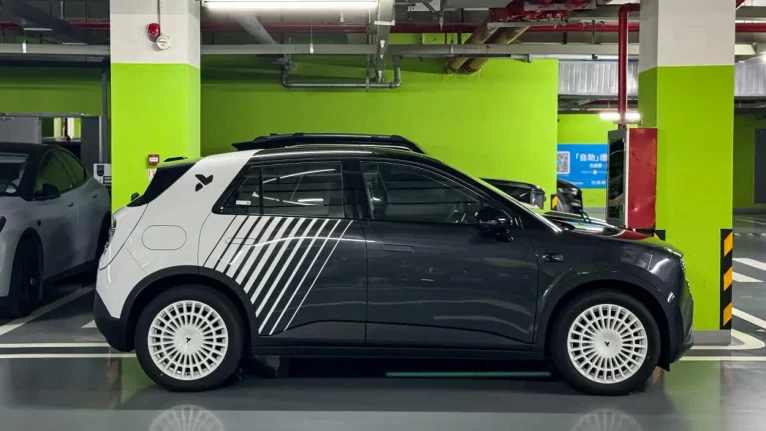
The logic was regional: China is fast, cheap and increasingly self-sufficient; the West needs a stack that satisfies European type approval and American politics. What the report shows is that the second half of that sentence has become expensive enough to question. The proof is on the road already — the ID. UNYX 09 that VW Anhui launched on 24 October starts at 169,900 yuan (about USD 23,400) with 92 kWh and 750 TOPS of Chinese compute. That is not a car a Western software stack produces at that price.
What Rivian Stands to Lose
The joint venture’s economics depend on volume. If the three volume brands move to CEA, the Rivian venture loses the models that were supposed to amortise its fixed costs, and the remaining users — Audi, Porsche and what is left of the Volkswagen range — carry more of the burden per car. Audi chief executive Gernot Döllner, who helped build the Rivian alliance, is reported to be resisting precisely on those grounds.
This is where the proposal becomes a governance fight rather than a purchasing decision. Schäfer’s camp says the core brand group would still be about €3 billion better off after continuing to co-finance the Rivian venture. The Rivian camp says the technology is already paid for and switching costs are being understated. Both can be true, which is why the chief financial officer, not the engineers, will settle it.
The Obstacles That Cannot Be Negotiated Away
Three are structural. European approval: CEA would have to be re-certified against EU cybersecurity and type-approval rules, which is new engineering, not a translation exercise. The United States: Chinese-developed automotive software is not going to be sold into American cars for political reasons, regardless of cost — so CEA can be a European and Chinese solution but not a global one, which caps the saving. Jobs: moving volume development to Hefei puts German software employment under pressure at exactly the moment Volkswagen is negotiating with its works council over cuts.
And the competitive argument cuts both ways. Opel chief executive Florian Hüttl has announced a fully electric C-segment SUV for 2028 built on the architecture of the Leapmotor B10 — Stellantis doing from the other direction what Schäfer is proposing. Inside Volkswagen, the fear is that Stellantis will move its entire volume range onto Chinese technology, and that the group would then be competing against that cost base with a $174-an-hour one.
Author’s Take: The headline is a cost saving. The substance is a reversal of direction. For forty years the architecture flowed from Germany to China; the proposal on the table has Europe’s largest carmaker building its European volume cars on a Chinese-developed electrical backbone, with German engineering as the adaptation layer.
What makes it credible is not the €8,000 figure — that is a negotiating instrument as much as an estimate. It is that the Hefei stack already ships in production cars, while the alternatives have a record of delay. Volkswagen’s problem was never that it lacked a software strategy. It is that it has had three at once, and the cheapest one is now the only one with a shipping product.
The Bottom Line: A proposal presented to Volkswagen’s board on 27 October would put the Volkswagen Xpeng architecture — known as CEA, developed in Hefei — under about 75% of next-generation Volkswagen, Škoda and Cupra models in Europe, for an estimated €4–5 billion saving. Volkswagen has not confirmed it and Xpeng has not commented. If it goes through, the group’s two-track software strategy ends, and Rivian’s $5.8 billion joint venture becomes a supplier to Audi and Porsche rather than the base of the group.
Sources & Further Reading
- Manager Magazin — “VW will Chinasoftware für zentrale Modelle – und nicht Rivian” (26 October 2026, Michael Freitag) — the original report: the Schäfer and Brandstätter proposal, the 75% coverage, the €4–5 billion estimate, the named models, the Rivian conflict and the board process. Paywalled; the headline and summary are public.
- electrive — “VW could bring Chinese tech to Europe amid cost-saving pressures” (27 October 2026) — the most complete summary of the report, and the source of the developer-hour comparison (€174 at the Rivian joint venture, €120 in Germany, €60 in China), the €8,000 per-vehicle figure, the €12 billion earnings requirement and the €15 billion investment cut.
- Volkswagen Group and Xpeng — declined to comment on the report. Neither company has published a statement on the proposal.
- EVsays — Volkswagen’s China-built cars and Europe — why the Hefei stack matters commercially, not just technically.
- EVsays — Chinese brands in European registrations — the market pressure behind the cost argument.
- EVsays — Zeekr’s European launch and what it leaves out — the other side of the same question: what Chinese platforms do and do not bring to Europe.
Notes: This article is based on reporting by Manager Magazin, citing people familiar with the matter, and a summary of that report by electrive; Volkswagen and Xpeng both declined to comment and no document has been published, so the coverage figure, the €4–5 billion saving and the per-vehicle €8,000 comparison are unconfirmed. The developer-hour table, the hours-per-budget column and the proportion of the earnings gap are our own calculations from those reported figures. EVsays has not seen the proposal. Our editorial policy and correction policy apply.