


Speaking in Beijing on 21 October, BYD’s head of new technology put 2028 on BYD L3 autonomous driving — and another one to two years on top of that for anything higher. The same company already fits three of its own 4 nm chips delivering more than 2,100 TOPS, runs a mapless system in 300 cities, and has 3.3 million cars feeding data back. The hardware is finished. The wait is not about hardware.
What the BYD L3 Autonomous Driving Timeline Actually Says
The occasion was the 2026 World Intelligent Connected Vehicles Conference in Beijing’s Yizhuang district, hosted by the Ministry of Industry and Information Technology, the Ministry of Transport and the Beijing municipal government, with more than 3,000 delegates from over ten countries.
Yang Dongsheng, BYD group senior vice president and president of its automotive new technology research institute, said L3 conditional autonomy is “hopeful of landing in 2028”, and that higher-level autonomy would follow after another one to two years of iteration, as reported by Guancha. Chinese trade coverage of the same remarks described the sequencing as scenario-limited L3 first in 2028, with unrestricted operation later.
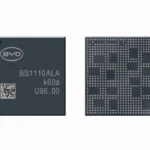
That timeline sits oddly against the company’s own hardware position. BYD launched the Xuanji A3 in May 2026, billed as China’s first 4 nm automotive-grade driver-assistance chip, with native support for L3 and L4 and roughly 20% lower power per unit of compute than comparable parts. Three of them work together for more than 2,100 TOPS. Its God’s Eye system moved to version 5.0 in January 2026, runs mapless city navigation across 300 cities, and BYD says the system has covered 120 million km of real driving. The assisted-driving fleet passed 3.3 million vehicles at the end of June.
Read the company’s two public statements together and the shape becomes clearer. Chairman Wang Chuanfu told shareholders that BYD had prepared across chips, algorithms, data and ecosystem, and could “quickly launch a full range of L3 products” once the rules land — which its technology chief now dates to 2028. That is not a contradiction. It describes a 2027 capability and a 2028 product.
Same Stage, Opposite Answers
BYD was not the only company with a view. Xpeng’s founder and chief executive He Xiaopeng told the same conference that autonomy should skip L3 altogether. His argument is that L3 moves liability to the system without improving the experience or the safety, and that the real opportunities sit in L2, L4 and a redefined L5 — with L3 amounting to an enhanced L2.
That is a direct disagreement with BYD on the same stage, and it is not really a technology argument. It is a business-model argument: Xpeng’s story is robotaxi and L4, so L3 is a detour with legal exposure and no product narrative. BYD’s story is selling several million cars a year with the feature as standard equipment, so L3 is the point.
| Speaker, same conference | Position on L3 |
|---|---|
| Yang Dongsheng, BYD | 2028 for L3; higher levels one to two years later |
| He Xiaopeng, Xpeng | Skip L3; L4 technology is the target |
| Jin Yuzhi, Huawei Intelligent Automotive Solution | Standard published, effective 1 July 2027; liability moves to the system above L2 |
| Li Bin, NIO | Standard takes effect July 2027, but road use depends on state permission; users must be willing to pay |
| Wan Gang, China Association for Science and Technology | L3 penetration above 35% by 2030 |
The regulatory position was stated plainly by Huawei’s Jin Yuzhi: the Ministry of Industry and Information Technology is organising L3 approval in an orderly way, the relevant mandatory standard has already been published, and it is expected to take effect on 1 July 2027. Under L2 the driver carries the liability; from L3 upward it moves to the system. NIO’s Li Bin added the practical caveat — a standard taking effect is not the same as a car being allowed on the road.
The Number That Explains the Delay
Two figures from the conference, put side by side, explain why a company with 2,100 TOPS of silicon still says 2028. It is our arithmetic.
China’s national test programme had, by the end of June 2026, opened 57,000 km of test roads, issued more than 20,000 test licences, and accumulated just over 220 million km of testing. Huawei said at the same event that its Qiankun assisted-driving system has covered close to 17 billion km. Divide one by the other and a single supplier’s operating mileage is roughly 77 times the entire national validation corpus.
The same asymmetry shows up in the installed base. As of the end of August, about 61 million passenger cars in China carried combined driver assistance, of which roughly 15 million had navigation-assisted driving — about 24.6%, again our calculation. Meanwhile L2 fitment reached 70% of new passenger cars in the first half of 2026 and is projected above 95% by 2030, with L3 forecast at more than 35% by the same year.
Read those together and the Chinese market is heading for a stretch of several years in which nearly every new car has an L2 system, a quarter of the fleet can steer itself on a highway, and almost none of it is legally allowed to stop watching the road.
Why 2028 Is Arithmetic, Not Caution
Treat the BYD L3 autonomous driving date as a schedule rather than a promise. If the standard takes effect on 1 July 2027, a 2028 launch leaves between six and eighteen months for type approval, validation, and the supporting work that does not appear on a spec sheet: insurance terms, accident adjudication, driver-monitoring rules, and the handover window in which the car must recognise that the human has resumed control.
That window is where L3 actually breaks. The failure mode is not a missed detection — it is a driver who believes the system is still driving while the system believes the driver has taken over. No amount of TOPS fixes a disagreement about who is in charge.
BYD has already started paying for that transition. Since 28 May 2026 it has offered a one-year liability backstop on city navigation assist for God’s Eye A and B customers, covering repair costs, third-party property damage and injury in accidents it attributes to the system. That is a company buying credibility for the moment liability moves from the person to the product — the cheapest possible rehearsal for what an L3 warranty will eventually cost.
Author’s Take: The date is the least interesting part of this. What matters is who said it. The most vertically integrated carmaker in China — its own cells, its own 4 nm ADAS chip, 3.3 million connected cars producing training data — is the one telling a Beijing audience that L3 is a 2028 problem. That is an admission that the constraint is not compute, not sensors and not data. It is the certification corpus and the liability contract. He Xiaopeng’s “skip L3” argument is intellectually clean and commercially convenient, but it runs into a wall of its own: China has written one mandatory standard that covers L3 and L4 in the same framework, so skipping the product stage does not skip the approval process. If I were watching one indicator rather than the calendar, it would be the backstop. A one-year liability guarantee on city navigation assist is the cheapest option BYD will ever write on this risk; the price of the L3 version is the number that decides whether 2028 is real. The other thing to watch is the shape of the launch: limited-scenario L3 in named cities on named roads is how every autonomy approval in China has started, and it is almost certainly how BYD’s will start too.
The Bottom Line: At the World Intelligent Connected Vehicles Conference on 21 October, BYD’s Yang Dongsheng put the BYD L3 autonomous driving target at 2028, with higher levels a further one to two years out — a more conservative timeline than the 1 July 2027 date on which China’s mandatory standard takes effect. The company already has the silicon: three Xuanji A3 chips, more than 2,100 TOPS, a mapless system in 300 cities and 3.3 million cars sending data back. What it does not have is a validation corpus anywhere near the scale of its own operating data — one supplier’s 17 billion km against the national programme’s 220 million — or a settled answer to who pays when the car is driving. That is what 2028 is for.
Notes: Yang Dongsheng’s remarks, He Xiaopeng’s position, Jin Yuzhi’s and Li Bin’s comments, and the national test-road, test-licence, L2-penetration and 2030 forecast figures are as reported from the 2026 World Intelligent Connected Vehicles Conference in Beijing on 21 October 2026; EVsays did not attend and has not spoken to any of the companies, and the remarks are paraphrased from conference reporting rather than from a published transcript. BYD’s chip, TOPS, city-count, mileage and fleet figures are company claims and have not been independently verified. The 77-times comparison between Huawei’s cumulative assisted-driving mileage and the national test programme, the 24.6% share of the installed base with navigation-assisted driving, and the six-to-eighteen-month approval window are our calculations from published numbers. The 17 billion km and 61 million / 15 million figures come from conference reporting and were not in the official MIIT readout. The mandatory standard’s effective date is stated as given by Huawei’s Jin Yuzhi at the event. See our editorial policy and correction policy.
Sources & Further Reading
- Ministry of Industry and Information Technology — “2026世界智能网联汽车大会在北京开幕” (21 October 2026) — the official readout: hosts, attendees, Vice Minister Xin Guobin’s four-point programme including the call to implement the mandatory autonomous-driving standards, and the “15th Five-Year Plan” for intelligent connected new energy vehicles.
- Guancha (观察者网) — “安全是底座、智能是引擎、出海是纵深,世界智能网联汽车大会释放三重信号” (22 October 2026, Pan Yuchen) — the fullest account of the conference floor, including Yang Dongsheng’s 2028 timeline, He Xiaopeng’s argument for skipping L3, Jin Yuzhi’s statement that the standard is published and effective 1 July 2027, Li Bin’s comments on payment and permission, and the test-road, licence, penetration and 2030 forecast figures.
- Xinhua — report on Vice Minister Xin Guobin’s remarks at the opening session, 21 October 2026 (by Tang Shining), carried by China.com.cn and provincial government portals. Consulted for the official policy language on “prudently advancing” L3 approval and road-use pilots; no stable canonical link used here.
- Chinese trade reporting from the same event, consulted without hyperlinks, for Yang Dongsheng’s scenario-limited sequencing, BYD’s Xuanji A3 specification (4 nm, three-chip configuration above 2,100 TOPS, native L3/L4 support, roughly 20% lower power per unit of compute), the God’s Eye 5.0 upgrade in January 2026, the 300-city mapless coverage, the 120 million km real-world figure, the 3.3 million-vehicle fleet at end-June, and the one-year city-navigation liability backstop that began on 28 May 2026.
- EVsays — BYD’s L2 driver-assistance certification — background on where BYD’s assisted-driving approval stood before this conference.
- EVsays — BYD’s 4D radar chip — the sensor side of the same stack.
- EVsays — the second-generation Seagull — where God’s Eye B landed in a car costing under 100,000 yuan, and why fitment rates matter to the L3 argument above.