
CATL and Hangzhou-based Blue Vector signed strategic and product agreements on 2 November, with Blue Vector naming CATL its exclusive battery partner for the Skyla V30, a six-seat tilt-rotor electric aircraft. The interesting part is not the signature. It is that a version of the CATL condensed matter battery built for aviation has already cleared the test that matters most in this business — two adjacent cells driven into thermal runaway without the fire spreading, under the eyes of Civil Aviation Administration delegates — and CATL says it is ready for volume production. The same chemistry is slated for cars, at the same 350 Wh/kg. The aircraft, meanwhile, is a demonstrator with no type certificate.
What Was Signed, and What It Flies In
The agreements cover battery development for the V30 specifically, with Blue Vector — whose eVTOL arm trades as Skyla Aviation — committing to CATL as its sole battery supplier. Beyond the aircraft, the two sides said they will work together on standards, technology and what they call scenario operations. CATL disclosed no contract value, no battery specification and no supply timeline.
The aircraft is real enough to have numbers. Skyla’s own product page puts maximum take-off weight at 2,700 kg, seating for six — one pilot and five passengers — a maximum range of 260 km and a top speed of 320 km/h, on a tilt-rotor layout that lifts vertically and then flies as a fixed-wing aircraft. Chinese trade coverage variously calls it a 2-tonne or 2.5-tonne class machine; the manufacturer’s figure is the one to use.
| Item | Detail |
|---|---|
| Aircraft | Skyla V30, tilt-rotor, all-electric, six seats (1 pilot + 5 passengers) |
| MTOW / range / speed | 2,700 kg / up to 260 km / 320 km/h |
| Stated operating target | point-to-point trips within 200 km |
| Demonstrator | A/C01, first full-scale airframe, rolled out 31 August 2026 in Harbin |
| Pre-orders | more than 100, including 60 signed in Hangzhou in September and 30 of those from Singapore’s Moon Aero |
| Assembly site | Shaoxing, Zhejiang — about 1 billion yuan, 138.7 mu, 150 aircraft a year at full capacity |
Two notes on the numbers. The 260 km figure and the 200 km operating target differ by 23% — roughly what a commercial operator would hold back as reserve, and a reminder that brochure range and dispatchable range are not the same quantity. And the Shaoxing plant, at 1 billion yuan for 150 aircraft a year, works out to 6.7 million yuan of factory investment per aircraft of annual capacity — against a cumulative order book that would fill about eight months of it.
Why the Battery Is the Whole Problem
An electric aircraft is a battery with a fuselage attached, and the physics is unforgiving. Jet fuel carries roughly 11,900 Wh per kilogram. A 350 Wh/kg cell carries 34 times less; even CATL’s 500 Wh/kg laboratory-grade cell is 24 times worse. That single ratio explains why a six-seat aircraft with a two-and-a-half-tonne maximum weight gets 260 km, and why the electric aviation industry talks about regional hops rather than routes.
It also explains why certification, not chemistry, sets the pace. A battery failure in a car means a stop at the shoulder. In an aircraft at 900 metres it means something else entirely, and the regulator treats the pack as a fire-containment problem before it treats it as an energy-storage problem.
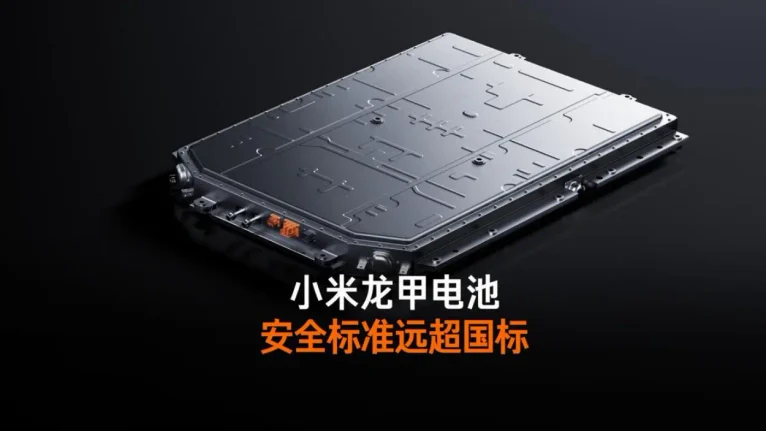
The test that counts is thermal runaway propagation. The CATL condensed matter battery in its aviation form — a 350 Wh/kg prismatic cell — was subjected to two adjacent cells triggered simultaneously, at mid-pack and at a corner position, and the runaway did not spread. CATL says it is the first aviation battery system at that energy density to pass, that production, inspection and testing were carried out in front of CAAC delegated representatives, and that the system is ready for volume manufacture.
That last clause is the difference between a press release and a product. Most eVTOL battery announcements describe cells on a bench. This one describes a system that has been through a witnessed abuse test at a defined energy density — which is the artefact an airframer needs before it can even start talking to a regulator about the pack.
The CATL Condensed Matter Battery, Bound for a Car
Here is the part that matters to anyone who does not plan to fly. The CATL condensed matter battery was introduced in April 2023 at a claimed 500 Wh/kg, flew on a four-tonne commercial aircraft, and has an eight-tonne airframe scheduled next. For the eVTOL market the company de-rated the cell to 350 Wh/kg. And it has said the aviation-validated version will be sold to carmakers as the Qilin condensed matter battery: 350 Wh/kg and 760 Wh/L at cell level.
Set that against what is in cars today. Mass-produced nickel-rich cells sit in the 250–300 Wh/kg band; LFP, which now dominates Chinese volume, is well below that. A 350 Wh/kg cell in a passenger car is not a marginal gain — it is roughly a fifth more energy for the same pack weight, or the same range from a pack a sixth lighter.
This is how CATL uses aviation. The airframe business is tiny: a hundred pre-orders here, sixty there. But it is the only customer that will pay for a witnessed thermal-runaway test and accept the paperwork. Aviation is where the chemistry gets certified. Cars are where it gets sold. The eVTOL deal is not a revenue line; it is the qualification route.
Blue Vector Is Not First in the Queue
CATL’s aviation programme predates this deal by three years, and it is already attached to someone else. In 2023 it formed a joint venture with COMAC — COMAC Times (Shanghai) Aviation, 600 million yuan of registered capital, CATL holding 47%. In August 2024 it invested hundreds of millions of dollars in Autoflight, the Shanghai eVTOL developer, as its exclusive strategic investor. And CATL has said the 350 Wh/kg system that passed the propagation test will go first to Autoflight’s passenger aircraft.
So the sequencing is worth stating plainly. Blue Vector has the exclusivity it wants on its own side of the table — it will not buy cells elsewhere — but it is behind a company CATL owns a stake in, using a battery CATL has already declared production-ready. The V30’s first demonstrator flew in August. Autoflight’s aircraft have been flying for years.
What the Aircraft Still Owes
Skyla’s own account of what comes next is the most useful disclosure in the whole announcement: the A/C01 demonstrator will go through systems integration, ground testing and tilt-transition flight tests, and the company will continue airworthiness certification work. Tilt transition — the moment the rotors rotate from lift to cruise — is the phase where tilt-rotor programmes historically get into trouble, and none of it has happened yet in public.
The commercial machinery, by contrast, is moving fast. Blue Vector has raised more than 400 million yuan across five rounds in about six months. It signed for the Shaoxing site in late September, took the land in late October, and plans 150 aircraft a year. Pre-orders passed 100 before a single aircraft has been delivered or certified.
That is not a criticism of the company; it is how the sector works right now. But it does mean the honest headline is not “CATL wins eVTOL battery contract”. It is that a battery has passed a test its aircraft has not yet reached.
Author’s Take: Watch the direction of travel, not the contract. CATL has spent three years building a position where every serious Chinese eVTOL programme ends up at its door — a joint venture with COMAC, a stake in Autoflight, a certified 350 Wh/kg system, and now an exclusive supply agreement with a company that already holds a hundred pre-orders. That is a supplier building a chokepoint, in the same way it built one in cars. The part that will actually change something for readers is the downstream move: if a 350 Wh/kg pack reaches a production car in 2027 or 2028, it will not arrive as an aviation spin-off story. It will arrive as a spec sheet, and every other cell maker will have to answer it. The aircraft is the test bench. The car is the market.
The Bottom Line: CATL will supply the Skyla V30, a 2,700 kg six-seat tilt-rotor with 260 km of range and more than 100 pre-orders, as Blue Vector’s exclusive battery partner. The CATL condensed matter battery behind the deal has already passed a CAAC-witnessed thermal runaway propagation test at 350 Wh/kg and is in volume-production readiness, but the first application is Autoflight, not Blue Vector. The version that matters commercially is the 350 Wh/kg Qilin condensed matter cell CATL intends to sell to carmakers.
Sources & Further Reading
- Skyla Aviation — Skyla V30 product page — maximum take-off weight 2,700 kg, six seats (1 pilot + 5 passengers), up to 260 km range, 320 km/h top speed, tilt-rotor configuration, software-defined architecture, and the 200 km point-to-point operating target.
- CATL statement of 2 November 2026 on the strategic and product cooperation agreements with Blue Vector — the exclusive battery partnership, the V30 as the target aircraft, the scope extending to standards and operations, and the absence of contract value, specification and timeline. Distributed through Chinese media; not posted to CATL’s own newsroom at the time of writing.
- Blue Vector statements of 24 September 2026 on pre-sales — 60 aircraft ordered at the Hangzhou Global Digital Trade Expo, 30 of them from Singapore’s Moon Aero, and cumulative pre-orders above 100 since the July global debut. First full-scale demonstrator A/C01 rolled out 31 August 2026 in Harbin.
- Shaoxing Daily — “每年150台‘低空特斯拉’将从越城起飞” (24 October 2026) — the Yuecheng assembly base: 138.751 mu of land, about 1 billion yuan of investment, 150 aircraft a year at full capacity, and the order book above 100 units.
- Low-Altitude Economy Observer (低空经济观察), via X-TechCon — CATL’s 350 Wh/kg passenger-eVTOL battery system passing two-adjacent-cell thermal runaway non-propagation verification under CAAC delegated-representative witness, batch production readiness, first application to Autoflight; the 500 Wh/kg condensed matter first flight on a four-tonne aircraft and the planned eight-tonne validation; the COMAC joint venture (600 million yuan registered capital, CATL 47%); the August 2024 Autoflight investment; and the Qilin condensed matter car cell at 350 Wh/kg and 760 Wh/L.
- Blue Vector funding disclosures — more than 100 million yuan raised on 30 June 2026, jointly led by Shenzhen Capital Group and an unnamed industry-backed US dollar fund, and more than 400 million yuan across five rounds in roughly six months.
- EVsays — CATL’s all-solid-state cells reach 20 Ah — the company’s other high-energy-density bet, and why a 20 Ah sample is not a product.
- EVsays — the 2027 solid-state production race and solid-state versus liquid electrolyte — the chemistry contest that the condensed matter route sits outside of.
Notes: Aircraft figures are Skyla’s own published specifications, not independently measured. The battery claims — the 350 Wh/kg aviation system, the CAAC-witnessed two-cell propagation test, production readiness and the Autoflight-first allocation — come from CATL through Chinese trade reporting; CATL has not published a technical release, and EVsays has not seen a test report. The 500 Wh/kg figure is a company claim. Jet fuel’s specific energy is a standard reference value, and the 34-fold comparison is our calculation from it. The 6.7 million yuan per aircraft of annual capacity is our arithmetic on the disclosed investment and capacity, not a cost figure. EVsays holds no position in any company named and has not flown in, or tested, any of the aircraft mentioned. Corrections follow our correction policy; sourcing standards are set out in our editorial policy.