

A Veteran Driver’s Detailed Breakdown of EVs: 8 Angles on the Pros and Cons
I honestly can’t believe that in 2026, people are still arguing about gas cars versus electric vehicles.
But the fact that the debate is still this heated tells me one thing: a lot of people are seriously thinking about buying an EV. Just recently, a bunch of friends came asking for advice, and every one of them ended the conversation saying they’d probably get an electric car in the second half of the year.
It seems there’s a real need for the opinion of a hardcore “electric user” like me.
If you’re considering an EV, read this first.
1. First, Figure Out Your Actual Driving Needs
Let me give you the core conclusion right up front: three annual mileage thresholds will directly determine whether you should buy an EV, a gas car, or skip car ownership entirely.
- Less than 5,000 km (approx. 3,100 miles) per year: Don’t buy a car. The fixed costs far outweigh the practical value. (Exceptions for rigid needs like transporting kids, taking elderly family members to the doctor, or, let’s be honest, impressing a date.)
- Between 5,000 km and 11,000 km (approx. 6,800 miles) per year: A gas car makes more financial sense. The money you’d save driving an EV won’t cover its higher upfront premium.
- Over 11,000 km per year: An EV is the smarter choice. The more you drive, the more you save. Beyond 20,000 km (approx. 12,400 miles) annually, the EV advantage becomes massive.
I personally split my time between offices in three cities in a central Chinese province, so I rack up over 30,000 km a year. That’s the textbook definition of ultra-high-intensity usage—I’m basically the ideal EV driver.
Use these thresholds as a guide, and you can quickly figure out which type of car fits you.
2. Let’s Run the Numbers: Gas vs. Electricity Annual Cost
Using a mix of industry data and my own real-world experience, we can do a precise calculation. This is how you’ll see exactly why 11,000 km is the tipping point.
My car gets 8 kilometers per kWh (my driving is mostly city and intercity, so I’m a bit more efficient than average).
The 2025 industry average is 7.5 km per kWh, which we’ll use as our baseline.
The average price of regular gasoline in China that year was about 8.5 yuan per liter, and the average gas car consumes 7.5 L/100 km.
Home electricity rates averaged 0.56 yuan per kWh. (I paid about 0.5 yuan for the first two years, and it’s gone up to 0.7 this year, so the industry average is a fair reference point.)
Note: All monetary figures are based on the Chinese market. Energy prices, insurance, and maintenance costs will vary significantly by country and region.
Let’s look at three scenarios:
- 30,000 km/year (my situation):
Annual electricity cost for the EV: roughly 2,100 – 2,240 yuan (mine was even lower at 1,875 yuan, thanks to earlier cheaper rates).
Annual fuel cost for the gas car: roughly 19,125 yuan.
You save over 16,000 yuan on energy alone in a single year. - 11,000 km/year (the break-even point):
EV annual electricity: ~822 yuan.
Gas car annual fuel: ~7,012 yuan.
An annual saving of about 6,190 yuan.
This amount perfectly offsets the higher insurance premium and the initial purchase price gap of an EV. That’s exactly why 11,000 km is the magic number. (I’m setting aside battery degradation for this calculation, especially since most EVs now come with a lifetime warranty on the battery, motor, and electronic control system.) - 5,000 km/year (the “don’t buy a car” point):
EV annual electricity: ~374 yuan.
Gas car annual fuel: ~3,187 yuan.
You save less than 3,000 yuan a year.
This can’t even reliably cover the higher insurance premium (about 1,000-2,000 yuan) an EV costs each year, not to mention the higher purchase price, parking, and maintenance. This is a classic case of “you can afford to buy it, but not to keep it.”
To use my own numbers: I drive 30,000 km a year and use about 3,750 kWh. At my old electricity rate of around 0.5 yuan, my annual energy cost is 1,875 yuan, give or take 200.
If I drove a gas car for that same 30,000 km, I’d be burning through about 22,000 yuan in fuel.
The fact that EVs have drastically lower energy costs is indisputable.
Just look at all the ride-hailing drivers who have switched to electric. These people are the ultimate pragmatists. They can clock 200,000 km a year, saving a staggering 120,000-130,000 yuan on energy alone. That’s the core reason for the switch.
Here’s a table to make the comparison crystal clear:
| Item | EV | Gas Car |
| Annual Mileage | 30,000 km | 30,000 km |
| Energy Consumption | 12.5 kWh/100km | 7.5 L/100km |
| Energy Unit Price | 0.5 yuan/kWh | 8.6 yuan/L |
| Annual Energy Cost | 1,875 yuan | 21,900 yuan |
| Cost Per Kilometer | 0.063 yuan | 0.73 yuan |
(Pricing data is specific to a region in China and reflects a specific timeframe. Energy costs in your country will differ.)
3. Is EV Insurance Really That Crazy Expensive?
There’s a common refrain: “You just hand all the gas savings to the insurance company.” This is only half true—and it only applies to people driving less than 11,000 km a year.
My personal insurance is just over 4,000 yuan a year. I had one claim in 2025, and I doubt my premium will go up this year. In my EV owners’ group, most people’s premiums are around the same level; it’s rare to see anything over 5,000.
The 2025 national average for EV insurance in China was around 4,500 yuan, compared to 3,500 yuan for a similarly-priced gas car. So an EV costs about 1,000 yuan more per year.
Those scary 10,000-yuan-plus quotes you see online are for luxury EVs (like a Tesla Model S or Nio Es9) where the cost to repair or replace the car is inherently high, or for drivers with a terrible claims history.
Here’s a rough breakdown by vehicle price range:
| Vehicle Price Range | Average Annual EV Premium | Average Annual Gas Car Premium |
| 100,000–200,000 yuan ($14k-$28k USD) | 4,500 – 6,000 yuan | 3,000 – 5,000 yuan |
| 200,000–300,000 yuan ($28k-$42k USD) | 6,000 – 8,000 yuan | 4,000 – 6,000 yuan |
| Over 300,000 yuan ($42k+ USD) | 8,000 – 12,000 yuan | 6,000 – 9,000 yuan |
(Note: These are China-specific figures. Insurance costs are highly dependent on local regulations, repair networks, and market risk assessments in each country.)
4. Maintenance is Another Hidden Goldmine of Savings
Maintenance costs further amplify the “more you drive, more you save” effect.
In four years, I’ve done practically zero maintenance beyond replacing the cabin air filter annually. I once damaged a wheel rim on a rugged mountain road in Chamdo (in Tibet) and just had a roadside repair guy hammer it back into shape. Done.
2025 industry data shows that annual EV maintenance runs just 300-1,500 yuan, a third to half of a gas car’s cost.
A gas car will typically set you back 2,000-4,000 yuan a year, with a minor service every 5,000 km and a major one at 100,000 km.
The difference is stark when laid out:
| Maintenance Item | EV | Gas Car |
| Service Interval | 10,000-20,000 km | 5,000 km |
| Annual Services | 1-2 | 3-4 |
| Minor Service Cost | 200 – 500 yuan | 500 – 1,000 yuan |
| Major Service Cost | 500 – 1,000 yuan | 3,000 – 5,000 yuan |
| Annual Maintenance Cost | 300 – 1,500 yuan | 2,000 – 4,000 yuan |
| Total (6 Years) | ~3,000 – 9,000 yuan | ~15,000 – 25,000 yuan |
(Labor rates and part costs are based on the Chinese automotive aftermarket and may not translate directly to other markets.)
So yes, the claim that you could save 170,000 yuan (roughly $24,000 USD) over 6 years seems wild, but the math checks out—as long as you really do drive those 180,000 km.
5. The Battery and Motor: Will They Last?
This was my biggest worry when I first bought the car. After 4 years and 150,000 km, I’m not worried at all anymore. It also proves that if you drive over 11,000 km a year, battery health is a non-issue.
My car’s indicated range has dropped from 430 km when new to 410 km now. The degradation is negligible and well below average.
According to Geotab’s 2025 Battery Health Study (released in 2026), which looked at real-world data from over 22,700 EVs globally, light-duty EV batteries degrade at an average rate of just 2.3% per year. After 13 years, they still retain over 75% of their original capacity. Degradation is generally under 8% at 150,000 km, which hardly affects daily driving or road trips.
A fellow driver I know has put 300,000 km on their EV, and the battery loss is still in the single digits. Their daily commute is totally fine.
Plus, most major brands now offer an 8-year/150,000 km battery warranty, with some providing a lifetime warranty. Even if you did need a replacement out of pocket, the cost has fallen from over 100,000 yuan a few years ago to around 50,000-80,000 yuan today. The money you’ve already saved on fuel and maintenance would easily cover that.
But again, the prerequisite is that you drive a lot.
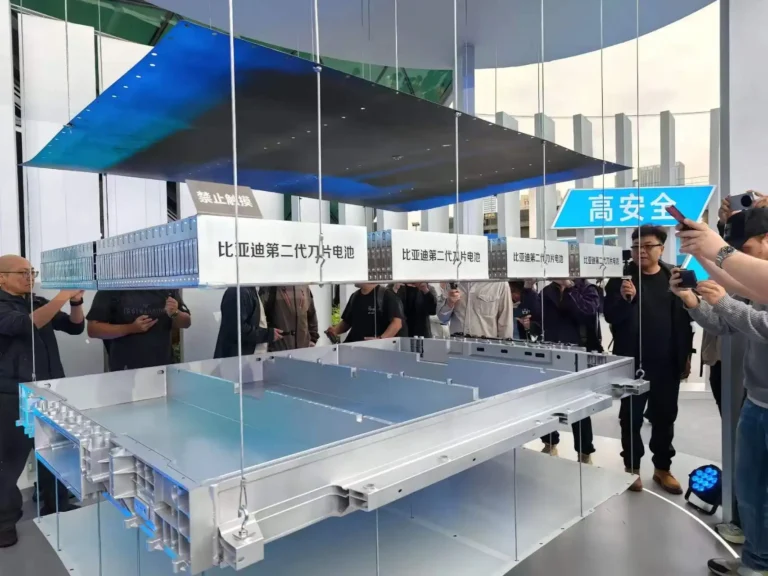
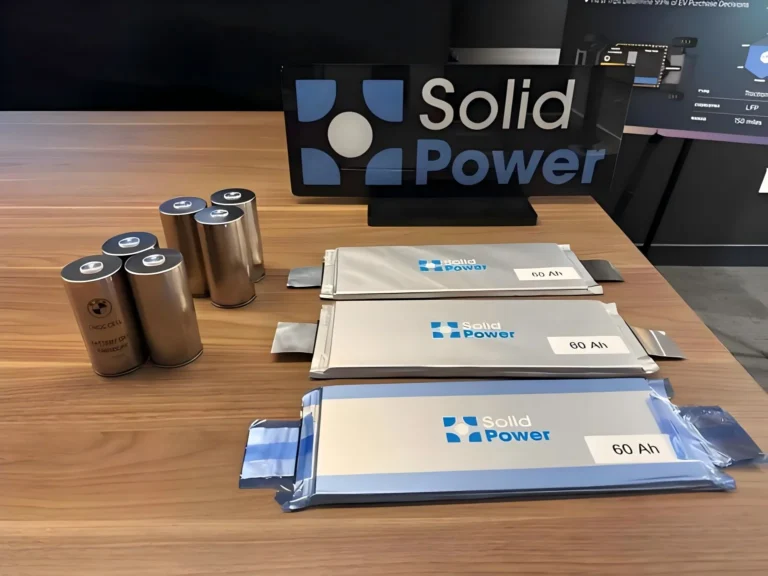
Of course, one must also consider whether the electric vehicle uses lithium iron phosphate batteries or ternary lithium batteries.
6. Electric Power is Simply a Superior Form of Energy
I’ve always believed: Electricity is a more direct, more advanced form of energy.
Combustion is a complex, inefficient conversion process. At high altitudes, a gas car is clearly outmatched by an EV. If you’ve ever driven over the Zheduo Mountain pass, you’ll see the roadside littered with gas cars with their hoods propped open, overheating.
The difference in power loss at altitude is undeniable:
| Altitude | Gas Engine Power Loss | Electric Motor Power Loss | Net Difference |
| 2,000 m | 10-15% | 0-5% | 10% |
| 3,000 m | 15-25% | 3-8% | 12-17% |
| 4,000 m | 20-30% | 5-10% | 15-20% |
| 5,000 m | 30-40% | 8-15% | 22-25% |
If you live on a high plateau like Tibet, I’d say you could consider an EV. From what I’ve observed, the charging infrastructure there is steadily developing. Of course, this is just my personal observation. I’ve also had to pay an outrageous 3 to 5 yuan per kWh in some places—a single charging station for an entire town, a pure monopoly.
In areas with severely inadequate infrastructure, no matter how cheap an EV is to run, it’s a non-starter.

7. A Cold Shower on Self-Driving Tech
I use Level 2 driver-assist heavily, but I don’t really like to talk it up.
Let’s be real. We are intelligent beings. I’m driving, and that’s a form of intelligence too. Deep learning is modeled after the way the human brain learns. The brain’s main flaw is fatigue, but when you’re tired, you should rest. Driving tired is illegal for a reason.
Once you’ve built up a driving “dataset” of two or three hundred thousand kilometers, it’s like growing a second brain. Every action behind the wheel becomes unconscious and automatic.
But if you’re an inexperienced driver, and you’re thinking of trusting your life to so-called “autonomous driving”?
Please don’t. You’re just asking for trouble, for yourself and everyone else on the road.
8. The Bottom Line: What to Choose, What to Buy?
It all comes back to that old saying: An Apple Watch may be packed with features, but it still can’t hold a candle to a Rolex. In the world of watches, they say, “The poor play with electronics, the rich play with mechanics.” To a certain extent, a similar dynamic exists in the car market today.
For the vast majority of people who treat a car as a tool to pile on miles, an EV is the economical, practical choice. For those who love traditional luxury and mechanical feel, a gas car will always have its pull.
Here are my three concrete, no-nonsense buying recommendations:
- Less than 5,000 km/year: Don’t buy a car.
A standard family car, whether electric or gas, has fixed annual costs (insurance, maintenance, parking, depreciation) of at least 20,000 yuan in our market. Driving less than 5,000 km means your per-kilometer cost is a painful 4 yuan. Public transit plus ride-hailing would be far cheaper, or just rent a car for the occasional long trip. If you’re on a budget, don’t have a dedicated parking spot, and only drive on weekends, a car will only be a financial drain. - 5,000 km ≤ annual mileage < 11,000 km: A gas car is the more sensible pick.
At this mileage, the fuel and maintenance savings of an EV won’t offset its higher purchase price and insurance. A gas car is also more convenient (no charging anxiety) and holds its value better (in China, a 3-year-old gas car retains about 63% of its value versus 43% for an average EV). Pick a reliable, fuel-efficient model like a Toyota Corolla or Honda Civic, and your annual running costs should stay well under 15,000 yuan. - Annual mileage ≥ 11,000 km: Go for the EV, no question. The harder you drive it, the more you save.
At this point, the financial advantage explodes.- At 11,000 km/year: net savings of ~6,000 yuan.
- At 20,000 km/year: net savings of ~12,000 yuan.
- At 30,000 km/year (like me): net savings of ~18,000 yuan. In 5 years, you’ll have effectively saved enough to buy a whole new budget family car.
An EV is also smoother, more responsive, and more modern. It’s the perfect tool for long-distance commuters, business drivers, and road trip enthusiasts.