
The Big Picture
- Geely Ford Spain: Geely takes over Ford’s idle Body 3 line at Almussafes. Spanish PM Sanchez announces deal. 2027 operations, 2028 first vehicle.
- Unprecedented: first Chinese-US-EU factory-sharing deal. Not an acquisition (Volvo). Not a greenfield (BYD Hungary). Almussafes: once Ford’s largest non-US plant at 450K capacity, now <25%. Geely builds EX2 on GEA platform.
1. Geely Ford Spain: What’s Happening
Geely Ford Spain is not a takeover. It’s a cohabitation. Geely will occupy Ford’s idle Body 3 assembly line at the Almussafes plant, building its own vehicles on its own platform while Ford continues producing the Kuga crossover on other lines. The Spanish government has been brokering this arrangement for months. Sanchez will announce it personally at the plant — the highest possible political endorsement for a Chinese automaker entering EU manufacturing.
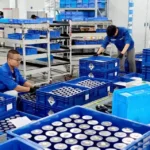
The factory tells the story. Almussafes was once Ford’s crown jewel in Europe — 450,000 units of annual capacity. It now runs at less than a quarter of that. Ford’s European business has been shrinking for years, and the plant’s workforce and local suppliers have been bleeding. Geely’s entry preserves jobs, keeps the supply chain running, and gives the Spanish government a manufacturing win at a time when other EU members are competing for Chinese EV investment. It’s a deal that solves Ford’s overcapacity problem, Geely’s tariff problem, and Sanchez’s employment problem — simultaneously.
The vehicle: Geely will likely build a localized version of the EX2 — known as the Xingyuan in China, a compact hatchback that sold over 800,000 units. It will be offered with hybrid, PHEV, and BEV powertrains on Geely’s GEA platform. The model will be co-developed by Geely and Ford, meaning it carries both companies’ engineering input and, crucially, Ford’s European brand presence. A vehicle built in a Ford factory, with Ford’s engineering contribution, sold through a network that benefits from Ford’s European reputation. That’s the play.
2. The History: Sixteen Years From Volvo to Almussafes
Geely and Ford have done this before — but never like this. In 2010, Geely acquired Volvo Cars from Ford for $1.8 billion. It was the first major Chinese acquisition of a Western auto brand, and it was widely doubted at the time. Sixteen years later, Volvo is profitable, Geely owns a portfolio of global brands (Lotus, Polestar, Zeekr, Lynk & Co), and the company that was once dismissed as a budget Chinese manufacturer is now negotiating factory-sharing agreements with Ford on equal terms.
The Ford-Geely relationship has been building toward this for months. In February, Reuters reported that the two companies were in talks about sharing manufacturing and technology — including autonomous driving. In May, Spanish media outlet La Tribuna de Automoción reported Geely would take over the Body 3 line and build an NEV on its GEA platform. Today, the deal is being announced by a sitting EU prime minister at the factory. The trajectory from “Chinese carmaker in talks” to “Spanish PM announces deal” took five months. That’s fast for any industrial agreement. For one involving a Chinese automaker, an American automaker, and an EU government, it’s breakneck.
3. Why This Matters: The New Model for Chinese Auto Globalization
Chinese automakers have entered Europe through three models so far: acquisition (Geely buying Volvo/Lotus), greenfield construction (BYD’s Hungary plant, BYD’s Brazil factory), and cooperation with local distributors (Leapmotor through Stellantis). The Geely-Ford Spain deal introduces a fourth model: shared-capacity manufacturing with a legacy Western brand in that brand’s own factory. It’s a partnership of equals — Ford gets utilization, Geely gets tariff-free EU production, and both companies get political cover.
Spain is becoming the hub for this model. Chery has already revived a former Nissan factory in Barcelona through a JV with Spanish brand Ebro. CATL and Stellantis are building a €4.1 billion battery plant in Zaragoza, set to open in 2028. Sanchez has been personally courting Chinese automakers, offering local manufacturing as the solution to EU tariffs. The strategy is working: Spain is turning its underutilized auto infrastructure into a landing zone for Chinese EV investment.
Geely needs this deal. The company’s domestic sales fell 29.64% in June. But exports surged 157% to a record 102,874 vehicles — the first time Geely crossed 100,000 monthly exports. That’s the equation: domestic market contracting, export channel exploding. A factory in Spain converts some of that export volume into locally produced volume — tariff-free, freight-free, and politically protected. If the global factory expansion is the second act of China’s auto export story, the Geely-Ford Spain deal is the scene that shows what Act Three looks like: not just building factories, but sharing them with the companies that used to own the market.
Author’s TakeThis isn’t a factory deal. It’s a template.
Ford has excess capacity. Geely needs EU production. The Spanish government wants jobs and investment. All three problems intersect at a single assembly line in Almussafes. The deal works because it’s not zero-sum — Ford doesn’t lose its factory, Geely doesn’t have to build one, and Sanchez gets to announce a manufacturing win at a facility that was heading toward closure.
If this model works — and there’s every reason to think it will — every European automaker with underutilized capacity has a new option: bring in a Chinese partner, share the line, co-develop the products, and split the political risk. The Geely-Ford deal isn’t just a joint venture. It’s a proof of concept. The concept is that the future of European auto manufacturing may involve Chinese companies building cars in American-branded factories with European prime ministers cutting the ribbon.
The Bottom Line
Geely Ford Spain: Geely takes over Ford’s idle assembly line in Valencia. Spanish PM announces it at the plant. First Chinese-US-EU factory-sharing deal. Operations 2027, first vehicle 2028. This is not an acquisition, not a greenfield — it’s a new model of globalization where Chinese automakers and Western incumbents share production capacity rather than competing for it. Sixteen years after Geely bought Volvo from Ford, the two companies are splitting a factory floor. The era of “Chinese automaker arriving to disrupt” is giving way to “Chinese automaker arriving to partner.”
Sources & Further Reading
- Reuters — “Ford and Geely in talks for manufacturing, technology partnership” (February 4, 2026) — via Yahoo Finance
- La Tribuna de Automoción — “Geely to acquire Ford’s Body 3 line in Almussafes” (May 5, 2026) — via Sohu
- Bloomberg — “Ford and Geely agree to share underused Spanish auto factory” (July 22, 2026) — bloomberg.com
- CnEVPost — “Geely agrees to take over part of Ford’s Spanish factory” (July 23, 2026) — cnevpost.com