
The Big Picture
- CATL battery alliance launched at London Climate Action Week: founding members CATL, Google, Xiaomi, BMW, Renault, and Volvo.
- Battery Circular Design Guide — the alliance’s first deliverable — arrives in 2027. Standards for cell testing, pack disassembly, remanufacturing, and lifecycle valuation.
- The Ellen MacArthur Foundation coordinates. CATL sits at the center. This is the world’s biggest battery maker transitioning from supplier to standard-setter.
1. CATL Battery Alliance: Who Signed Up
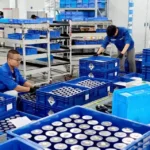
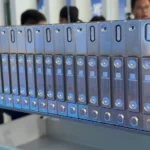
CATL battery alliance launched during London Climate Action Week. The Global Energy Circular Economy Alliance brings together CATL (world’s largest battery maker), Google (software, data, cloud), Xiaomi (consumer electronics + EV maker), and three European automakers — BMW, Renault, and Volvo. The Ellen MacArthur Foundation coordinates.
The first output: Battery Circular Design Guide, 2027. Three areas:
- Diagnostic cell testing — uniform methods for battery operating history, degradation rates, residual health
- Simplified pack disassembly — design standards for repair and remanufacturing
- Cell remanufacturing — technical parameters for passenger EVs and heavy commercial vehicles
This is the supply chain defining technical specifications that will determine which batteries can be resold, recycled, and what they’re worth at each lifecycle stage.
2. Why 2027 Matters
By 2027, the first wave of mass-market EVs from 2020-2022 will be coming off lease. Millions of used battery packs need somewhere to go. Nobody agrees on how to value them, test them, or who’s responsible for them.
Automakers want predictable residual values. Fleet operators need lifecycle cost models. European regulators are writing carbon-border rules requiring verified recycling pathways. CATL, anchoring this alliance, gets to shape the answers.
CATL’s subsidiary Brunp processed 210,000 tons of battery waste in 2025, recovering 99.6% of core minerals. Recycled components cut carbon intensity by 32%. When the Design Guide arrives in 2027, CATL has the data to back up the standards it helped write.
3. From Factory Floor to Rulebook
CATL spent five years scaling production — gigafactories in China, joint ventures in Hungary and Spain. It now supplies ~37% of global EV batteries.
The next phase isn’t about making more cells. It’s about controlling what happens to them. The battery swap network in Hong Kong gives CATL operational control over charging and degradation tracking. The Design Guide provides the standards framework to make that data commercially valuable across brands and borders.
CATL has reduced core factory emission intensity by 77% since 2022 through 1,000 efficiency projects. Last year it achieved carbon neutrality across all manufacturing facilities. By embedding its practices into the Design Guide, CATL is pre-aligning global standards with its own operational baseline.
4. The Strategic Play: Standards as Market Access
The alliance’s composition is deliberate. Google brings cloud infrastructure. Xiaomi represents the electronics-to-EV bridge. BMW, Renault, and Volvo carry regulatory credibility in Brussels. CATL supplies all of them.
The unspoken message: to sell EVs in Europe after 2030, your batteries must comply with circular-economy rules. Those rules are being drafted now. CATL has a seat — and brought its customers.
This follows the same logic as Chinese automakers buying overseas factories: build local, comply local, own the infrastructure. CATL is now one level up — writing the standards everyone else must meet.
Author’s Take: The most consequential detail is who isn’t in the room. No Tesla. No Panasonic. No LG Energy Solution. No Samsung SDI. CATL’s main battery competitors are absent from the alliance that will write circular-economy standards for their industry. They’ll eventually adopt the standards — but someone else wrote them, and that someone is their largest competitor, at a table with their customers.
The Bottom Line
The CATL battery alliance with Google, Xiaomi, BMW, Renault, and Volvo is a standards-setting body with a 2027 deliverable. CATL spent the last five years winning the production war. It is now positioning to win the regulation war — by writing the rules before regulators do. If the Battery Circular Design Guide becomes the global benchmark, CATL won’t just make the most batteries. It will decide what a good battery looks like.