

The Big Picture
- Chinese engine technology surpasses Japan in combustion efficiency, Nikkei reports. Three Chinese automakers now claim thermal efficiency figures above 48%.
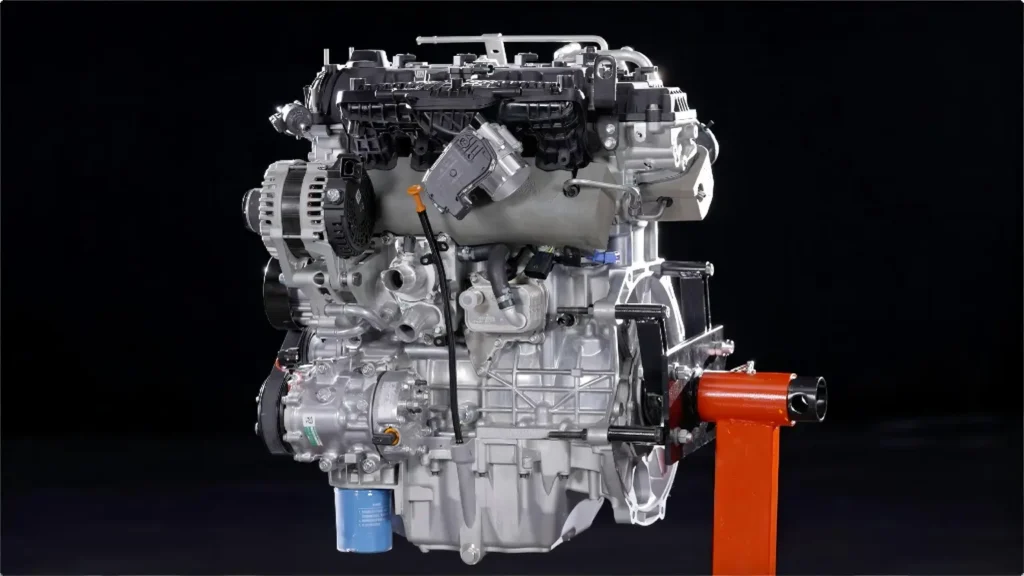
- Chery’s 48.57% thermal efficiency leads the field. Geely’s i-HEV hits 48.41%. Changan’s Bluecore features the world’s first 500-bar direct injection.
- The dual-track strategy is real. While the world obsesses over EV dominance, Chinese automakers are quietly winning the combustion game too — and 70 million buyers a year still choose gas-powered cars.
1. Chinese Engine Technology Surpasses Japan: By the Numbers
The Nikkei article, titled “Chinese Automakers Rapidly Catching Up with Japanese Rivals in Engine Technology,” does something Japanese media rarely do: it publicly acknowledges that Chinese engineering has surpassed Japanese engineering in a core automotive discipline.
| Automaker | Technology | Thermal Efficiency | Key Innovation |
|---|---|---|---|
| Chery | Kunpeng Tianqing hybrid | 48.57% | Highest publicly claimed by any automaker |
| Geely | i-HEV powertrain | 48.41% | 15.5:1 compression, AI-driven energy management |
| Changan | Bluecore Super Engine | 44.28% | World’s first 500-bar direct injection |
| Toyota (benchmark) | Dynamic Force hybrid | ~41% | Previous industry leader |
The gap is not subtle. Chery’s 48.57% is roughly seven percentage points above Toyota’s best. A seven-point gain in thermal efficiency represents roughly a 15% reduction in fuel consumption — the kind of leap that normally takes a decade.
2. It’s Not Just Hardware. It’s AI on ICE.
What makes the Chinese approach different isn’t just the efficiency number. It’s the integration of AI into combustion control.
Geely’s i-HEV system continuously adjusts combustion parameters in real time — using sensor data on altitude, humidity, temperature, and driving behavior — to optimize every combustion cycle.
Changan’s 500-bar direct injection system is a mechanical breakthrough that Japanese and German suppliers have been chasing for years. Higher injection pressure means finer fuel atomization, which means more power from less fuel.
This undermines a narrative that has persisted: that Chinese automakers can build EVs because the technology is simpler, but they can’t build world-class combustion engines. The battery conversation has been so loud that the engine conversation went unnoticed. Nikkei just turned up the volume.
3. 70 Million Reasons This Matters
The global auto industry is in transition. EVs are growing fast — China’s NEV penetration hit 63.8% in early June — but roughly 70 million vehicles sold globally each year still run on gasoline or diesel.
Chery sold 2.8 million vehicles in 2025. Seventy percent were gasoline-powered. The same company exporting 1.34 million combustion-engine vehicles also just launched an 800V PHEV pickup. It is fighting on two fronts — and winning on both.
Nikkei notes Japanese firms still lead in non-electric segments with a 30% global share versus China’s 20%. But GF Securities analysts argue China’s combination of efficient engines and vehicle intelligence is “poised to reshape the hybrid market through 2038.”
This is the dual-track strategy. While BYD and Nio push the EV frontier, Chery and Geely are taking market share from Toyota and Honda in markets where charging infrastructure is sparse — that’s what’s happening right now.
Author’s Take: The Nikkei piece is significant not because of the data — we’ve known about Chery’s 48.57% efficiency. It’s significant because of who published it. Japanese media do not casually concede technological leadership to China. The article reads like a memo to Toyota’s board: the gap you thought you had? It’s gone.
The strategic implication: if China leads in both EVs and combustion engines, the argument that “EV mandates are the only way to compete” collapses. Western and Japanese automakers can’t retreat to ICE as a safe harbor. The Chinese are already there.
The Bottom Line
For years, the assumption was that Chinese automakers were winning EVs because the playing field was new. Combustion engines were Japan’s game. That assumption is now dead. Chinese engine technology has surpassed Japan in thermal efficiency, injection precision, and AI-driven combustion control. The numbers are public. The source is Japanese. The dual-track strategy — dominate EVs while overrunning ICE — is the scoreboard.