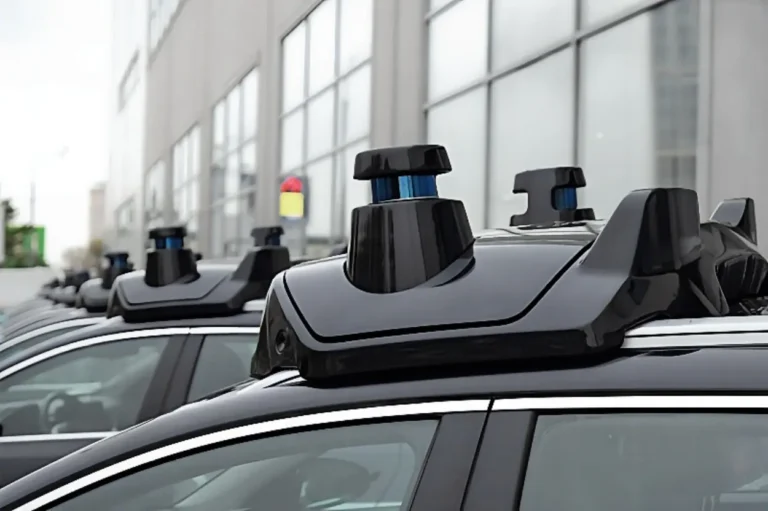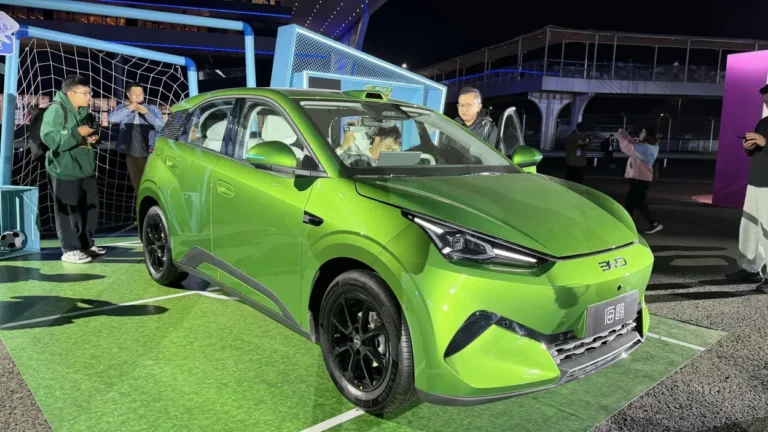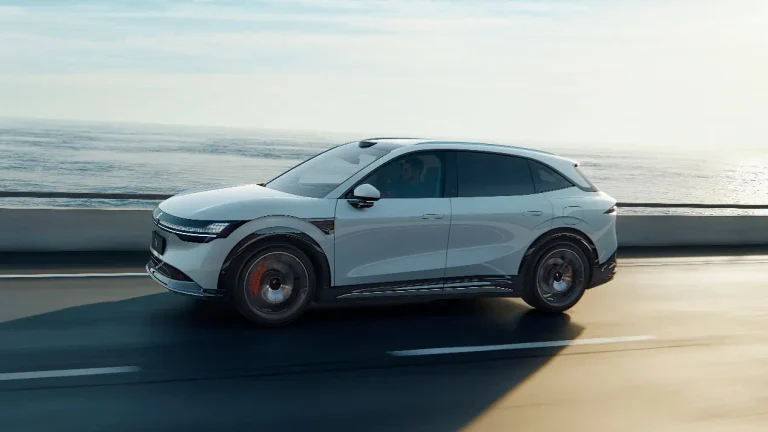


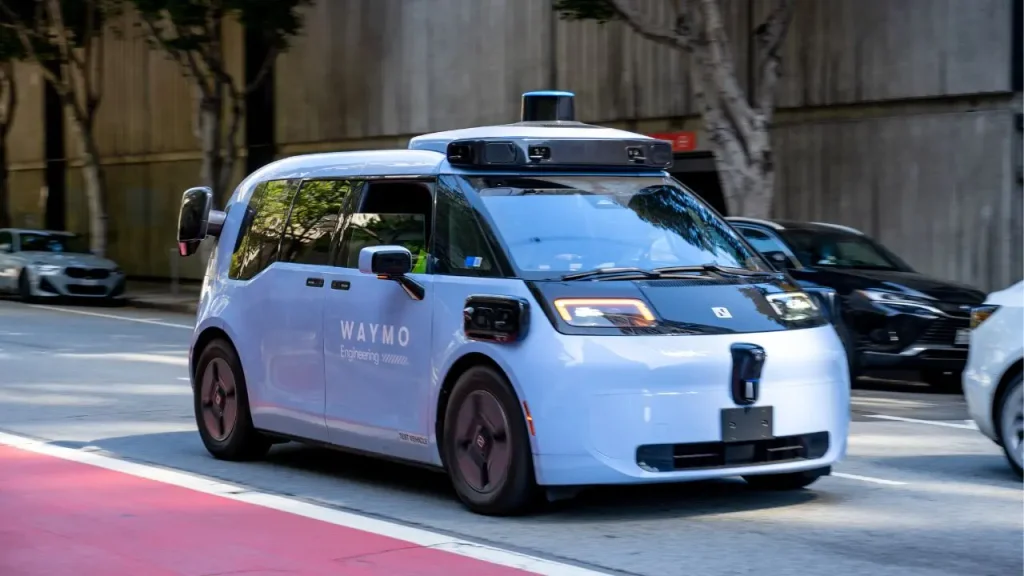
Waymo has imported more than 3,200 China-built Zeekr robotaxis into the United States since 2024 — even as a stacked tariff of 127.5% on Chinese electric vehicles made the arithmetic look absurd. US customs bill-of-lading data compiled by ImportGenius and reported by Forbes shows Alphabet’s self-driving unit is still taking delivery at roughly 300 vehicles a month, with over 2,600 arriving in 2026 alone. The cars are not for sale to the public; they are the backbone of Waymo’s expanding robotaxi fleet, and a blunt demonstration that, for a US tech champion, the tariff is a line item, not a wall. The episode also reframes a debate EVsays has tracked across China’s broader EV export push: the constraint on American roads was never price, but supply.
The math that “shouldn’t work”
Per import filings, each vehicle — internally named Ojai, model code CM1e — carries a declared value of about $38,000, close to its roughly $39,000 price in China. Stack the 127.5% duty on top and the bare chassis lands at roughly $86,500. In Mesa, Arizona, supplier Magna then bolts on Waymo’s sixth-generation Driver system; Forbes estimates that autonomous hardware and software at about $25,000 a unit. Fully outfitted, each Ojai costs around $110,000.
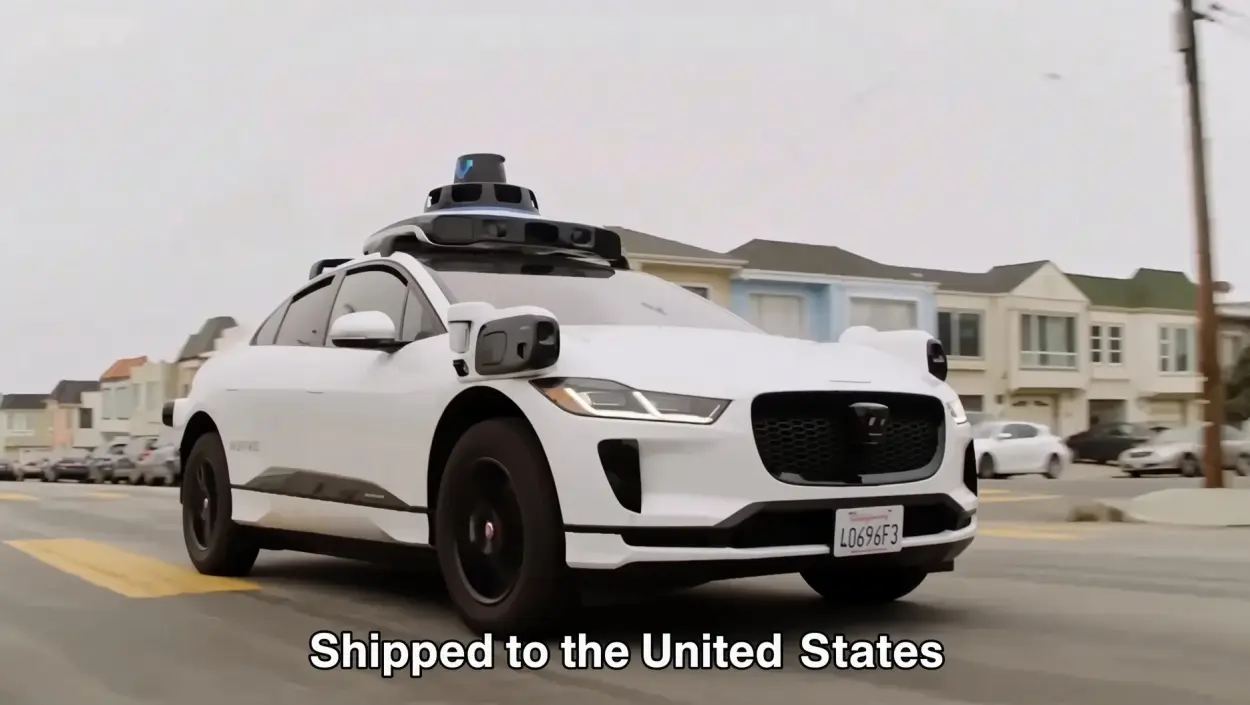
That still undercuts the alternative. Waymo’s prior robotaxi, a modified Jaguar I-PACE, ran more than $200,000 per unit after autonomous retrofitting — and Jaguar discontinued the I-PACE, making parts scarce and the bill only higher. Zeekr’s package is about half the cost and, more importantly, offers a roomier cabin built for moving passengers rather than a converted luxury crossover.
Why Zeekr, and not a Detroit or Tesla car
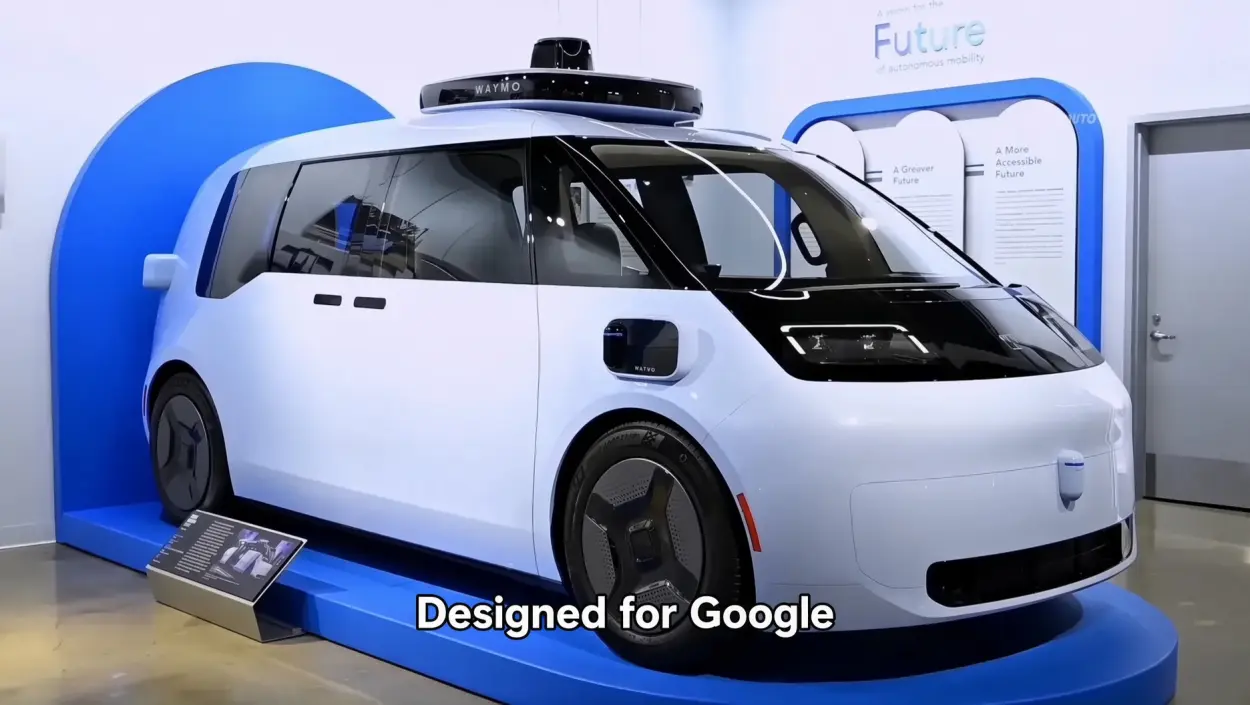
The vehicle was designed for this job from the start. Zeekr and Waymo announced the partnership on December 29, 2021; the M-Vision concept previewing the robotaxi debuted on November 17, 2022, built on Zeekr’s SEA-M architecture and engineered at CEVT, Zeekr’s Gothenburg innovation center. The production Ojai has no B-pillar, dual sliding doors, a flat floor and a low step-in — odd for a family car, ideal for a driverless taxi where passengers open their own doors and elderly riders or luggage need easy access. Three structural reasons explain why Waymo did not buy American:
- Sensor strategy. Waymo’s sixth-generation Driver uses 13 cameras, 4 lidar units and 6 radar sensors working as one system — a multi-modal fusion approach Waymo says is essential for the long-tail edge cases of urban driving. Tesla’s robotaxi bet, by contrast, is camera-only. Waymo has logged nearly 200 million fully autonomous miles; Tesla’s unsupervised footprint remains a limited, geofenced pilot. For a system designed around multi-sensor redundancy, a pure-vision rival’s car is simply incompatible.
- Vehicle fit. Tesla’s purpose-built Cybercab is a two-seater. A scaled robotaxi operation needs to seat four to five, carry luggage and board quickly — the basic spec of a taxi.
- Rivalry. Waymo and Tesla are direct competitors in autonomous mobility, not supplier and customer. Handing your fleet’s lifeline to your largest rival was never on the table.
The tariff is a cost, not a wall
The 127.5% figure is real but navigable. It stacks a 2.5% base auto duty, a 25% Section 232 national-security tariff (March 2025) and a 100% Section 301 duty on Chinese EVs — the last effective since the Biden administration’s 2024 action and kept, then expanded, by the Trump administration. The policy was built to keep Chinese EVs off consumer driveways in the US, and it worked for retail.
What it did not stop was Waymo importing bare chassis with no Chinese connectivity or self-driving hardware, then installing its own systems in Mesa. That structure also sidesteps the US Connected Vehicle Ban, whose hardware restrictions phase in by model year 2030 but exempt contracts signed before then. Supply capability, not the rate schedule, is the actual barrier: a tariff table changes with a signature, but a production line takes a decade to stand up. The contrast with BYD’s run against Tesla in Britain shows how differently the same Chinese supply chain plays out once a market is actually open.
The bigger signal
The real story is not one company’s procurement. It is that the next decade’s contest is not how many cars China exports, but how many global giants like Waymo will bypass their own government’s tariff wall to buy Chinese production capacity. Waymo’s 3,200 imports are the first crack in that seam. For China’s EV industry, the advantage is no longer just a lower sticker price — it is the ability to deliver a purpose-built, mass-produced, cost-controlled autonomous platform that no US plant currently matches. Google’s own bets in the space, including its battery tie-ups with CATL and BMW, point the same way: the bottleneck is manufacturing, not tariffs.
The Bottom Line
Tariffs block shoppers, not supply chains. Waymo’s 3,200 Zeekr imports prove that when a US tech champion needs a robotaxi it cannot build at home, it will absorb a 127.5% duty rather than wait a decade for domestic capacity. The wall was always about consumers; the commercial math was never in doubt.
Sources & Further Reading
- Forbes, citing ImportGenius US customs bill-of-lading data — Waymo imported 3,200+ Zeekr CM1e (Ojai) units; ~$38k declared value; 2,600+ in 2026. (See Forbes/ImportGenius summary)
- Waymo official blog — “Beginning fully autonomous operations with the 6th-generation Waymo Driver” (13 cameras / 4 lidar / 6 radar; ~200M fully autonomous miles): waymo.com/blog
- Zeekr / CEVT — Waymo partnership announced Dec 29, 2021; M-Vision concept unveiled Nov 17, 2022 (SEA-M architecture, Gothenburg): Pandaily coverage
- US tariff stacking: 2.5% base + 25% Section 232 (Mar 2025) + 100% Section 301 = 127.5%: CalcMyTariff, China EV Exporter
- EVsays related: China’s EV export push · Carmakers building humanoid robots