

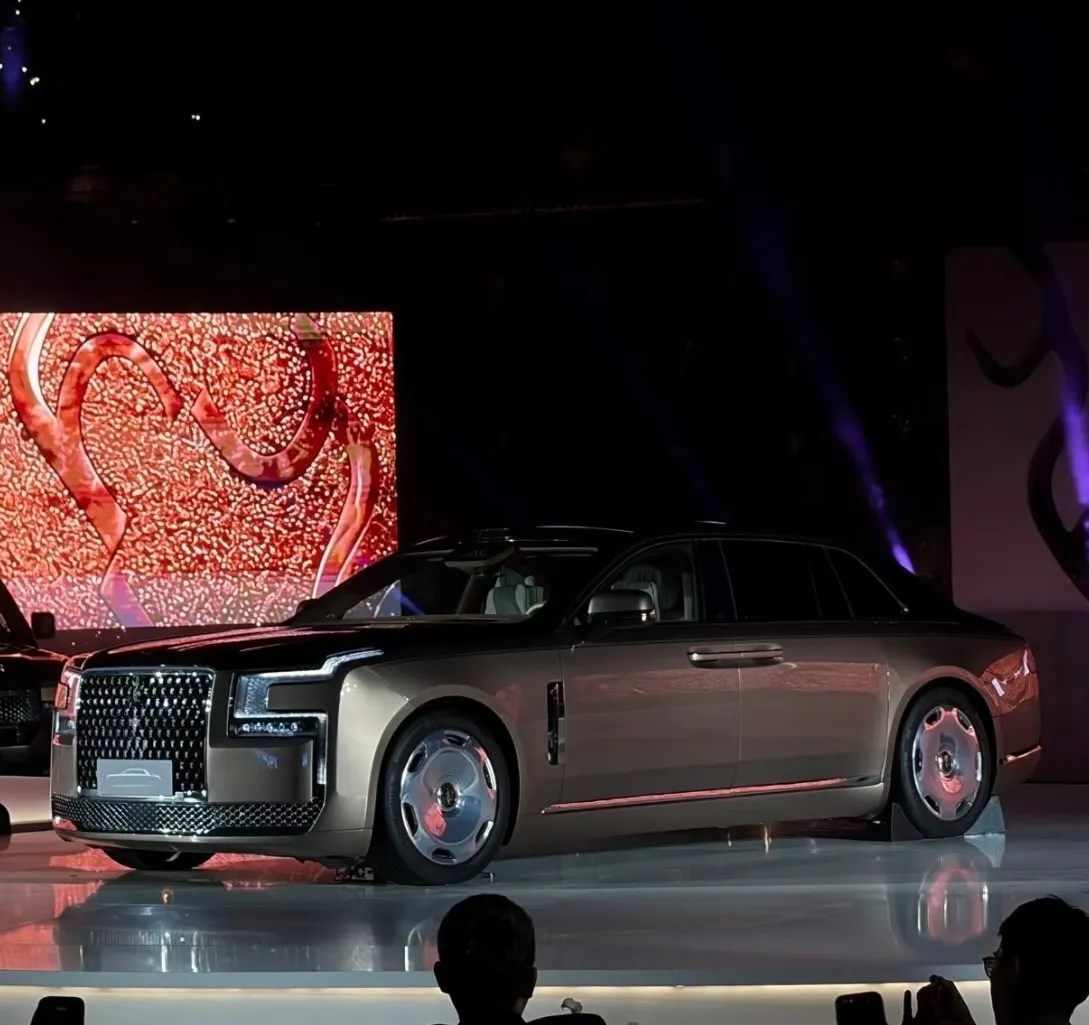
BYD’s Yangwang Altior — 鼎曜 in Chinese — was unveiled on 7 November at the Emirates Palace Mandarin Oriental in Abu Dhabi, the brand’s first global launch held outside China: a 5.6-metre, four-seat electric limousine with rear-hinged coach doors, a 3.5-metre wheelbase and a claimed 1,000 km of CLTC range. Nearly every English report put its price at 2,080,000 yuan. That figure is not an official price. It is a pre-selection total that appeared in the booking app, and Yangwang’s own site still carries no number — only a benefits window running “from 7 November 2026 until the car officially goes on sale”. What is official is a 300,000 yuan deposit, and a limited edition whose production run appears on the order screen as 1 of 399.
What the Yangwang Altior Actually Is
The car fills the last hole in Yangwang’s line-up. The brand already had the U8 off-roader, the U9 supercar and the U7 sedan; what it did not have was a car built to be sat in rather than driven. The Altior is that car, and it is aimed squarely at the Rolls-Royce Ghost, the Mercedes-Maybach S-Class and the Maextro S800.
| Yangwang Altior | Figure |
|---|---|
| Length / width / height | 5,600 / 2,030 / 1,590 mm |
| Wheelbase | 3,500 mm |
| Layout | Four seats, 2+2, rear-hinged coach doors (front 80°, rear 90°) |
| Powertrain | e⁴ four-motor, more than 1,000 kW (about 1,300 hp) |
| Battery | Second-generation Blade, 1,000V architecture |
| Range | More than 1,000 km CLTC |
| Charging | 10–70% in about five minutes, on a matched megawatt charger |
| Driver assistance | God’s Eye A, first use of BYD’s 4 nm Xuanji A3 chip |
| Suspension | New-generation DiSus fully active, with road preview |
| Build location | Shenzhen Pingshan |
| Deposit / run | 300,000 yuan / 399 units |
Against the Rolls-Royce Ghost Extended, the comparison is closer than the headline suggests. The Ghost EWB is 5,716 mm long on a 3,465 mm wheelbase. The Altior is 116 mm shorter, but its wheelbase is 35 mm longer — the whole car has been pushed out to the corners to buy rear legroom, which Yangwang quotes at 1,209 mm, with 354 mm of knee room and a 532-litre boot.
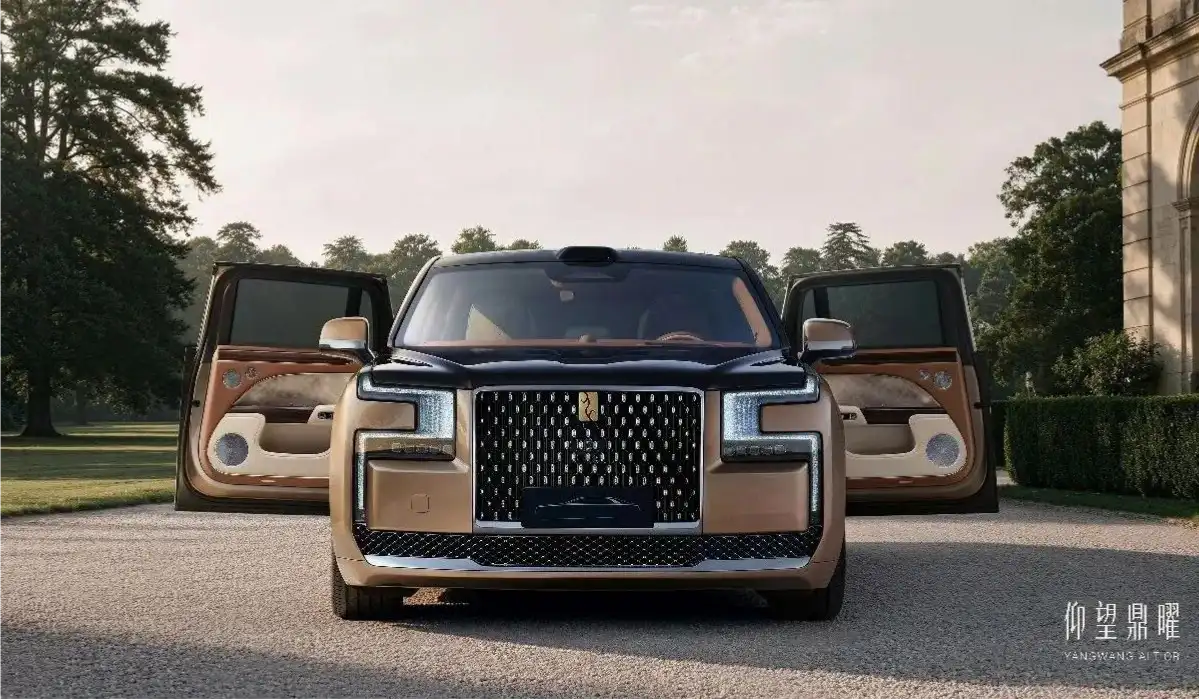
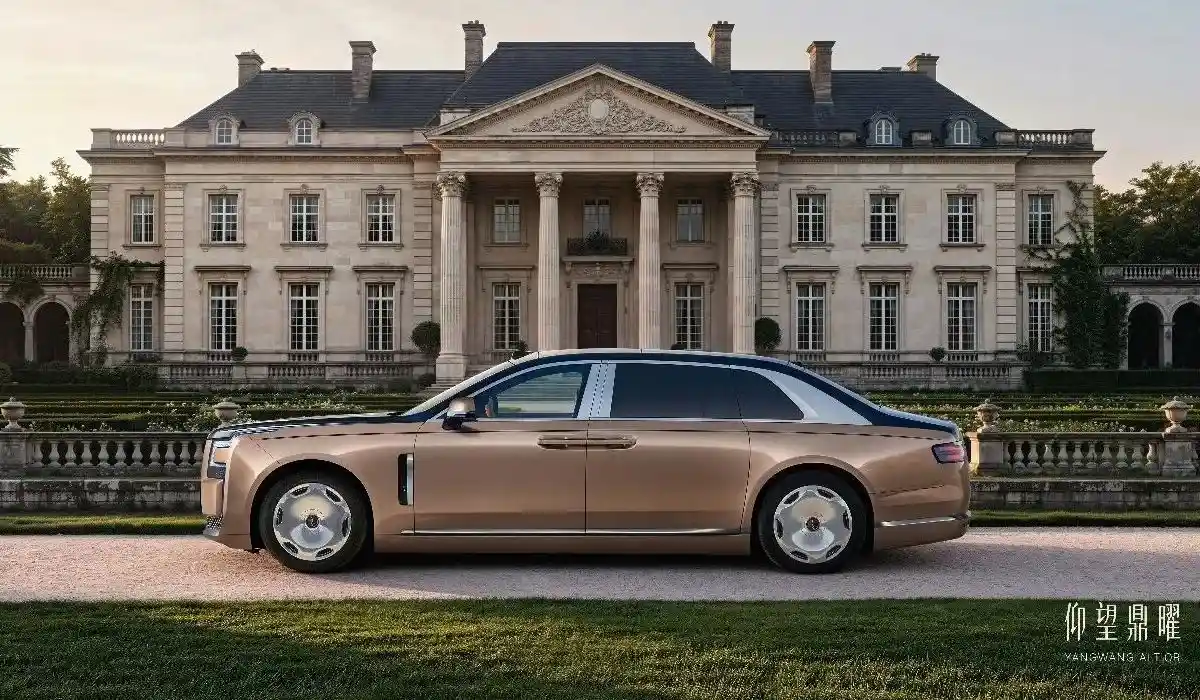

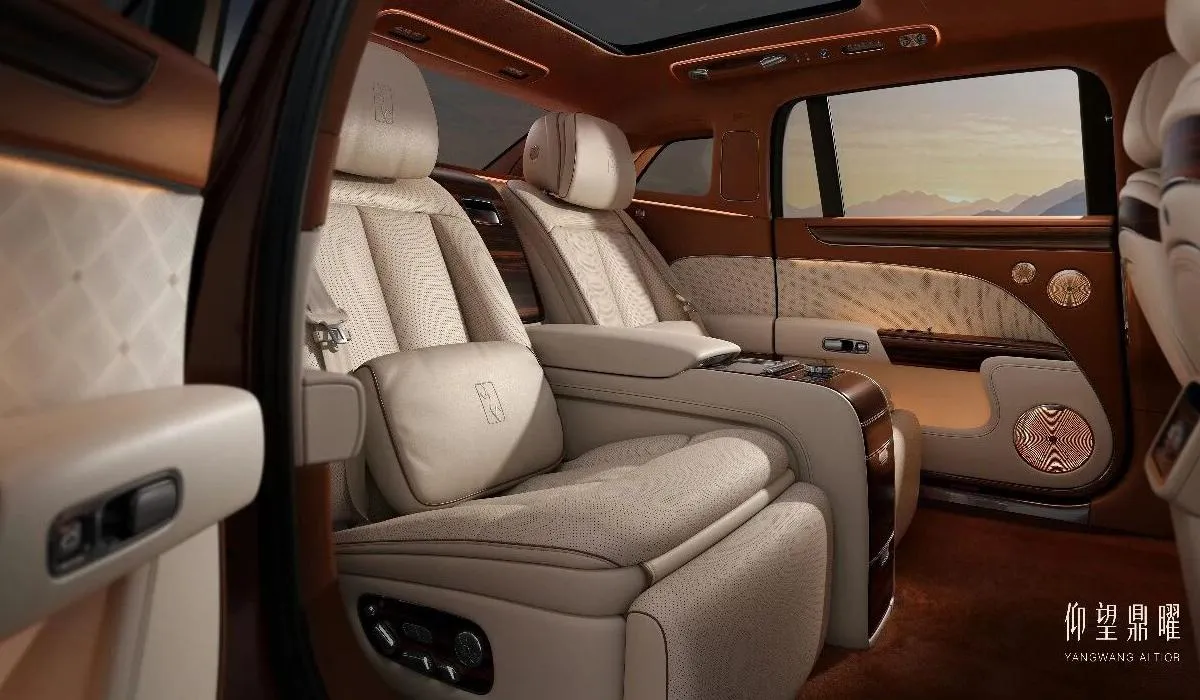
The Coach Doors Cost More Than They Look
Rear-hinged doors with no B-pillar are the single most expensive decision on this car, and the least visible.
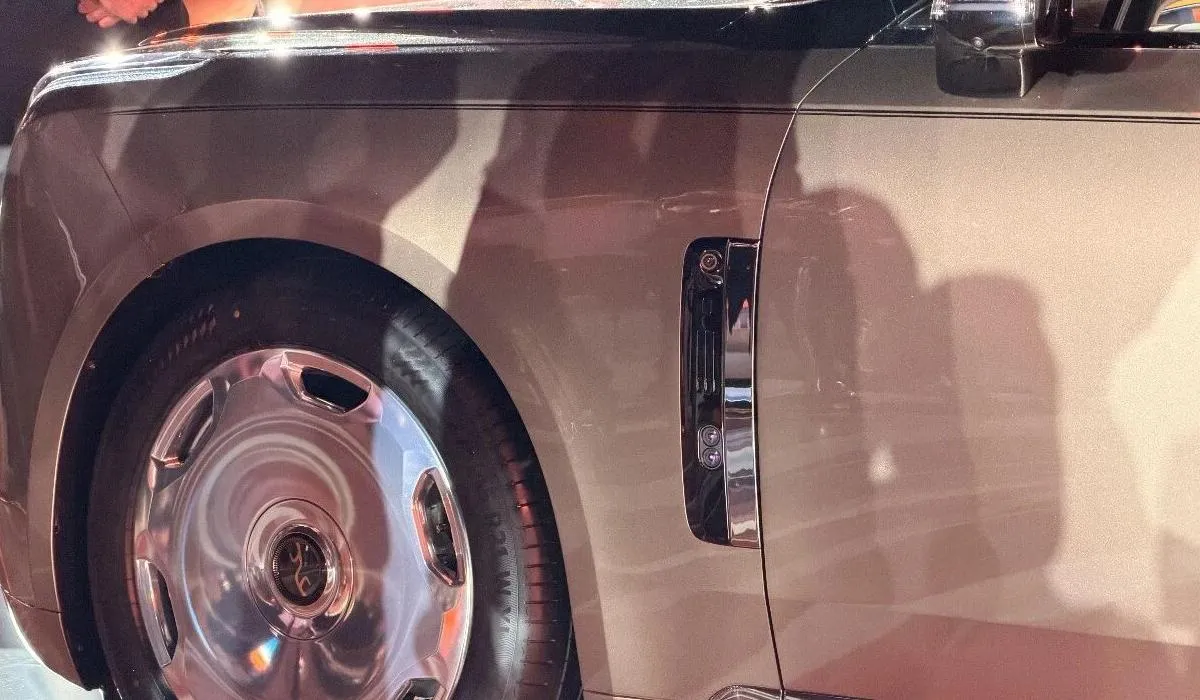
Removing the B-pillar removes the member that normally carries side-impact load between the floor and the roof. The sill, the floor cross-members and the A- and C-pillars have to be re-engineered into one continuous load path, and the hinges and latches have to be strengthened to hold a door that now closes against nothing in the middle. Yangwang’s answer on the limited edition is an added layer of high-density aramid fibre in the side structure.
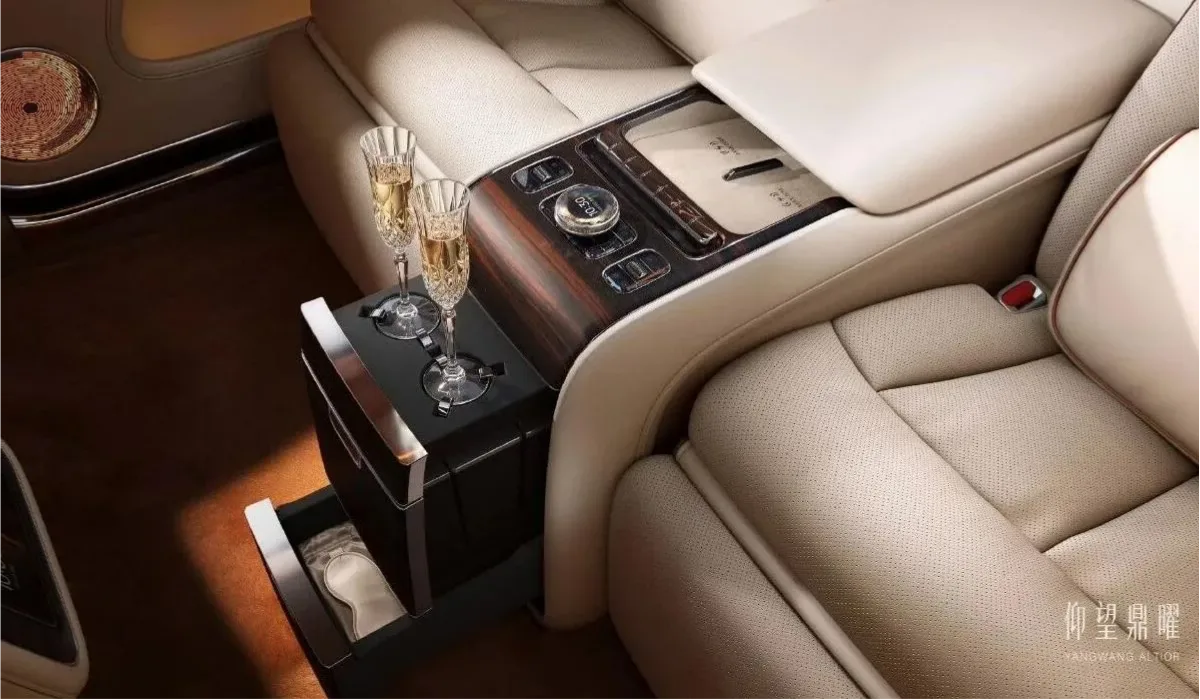
That is the part of this car that is genuinely difficult, and it is the part no photograph shows. Everything else — the 137 gemstones in the grille, each cut with 51 facets, the 24K gold emblem modelled on the oracle-bone character for electricity, the 4.8-metre hand-painted coachline, the jade air-vent surrounds, the Suzhou embroidery on the seats — is craftsmanship. Craftsmanship is expensive. Structural engineering with no B-pillar is hard.
The Arithmetic Behind “Five Minutes”
Yangwang says 10% to 70% in about five minutes, on a 1,000-volt architecture it calls megawatt flash charging. It has not published the pack capacity, so the number has to be inferred.
More than 1,000 km of CLTC range on a car this size implies consumption somewhere around 18–21 kWh per 100 km, which puts the pack between roughly 180 and 210 kWh. Sixty per cent of that is 108–126 kWh delivered in five minutes — an average of 1.3 to 1.5 MW, which is what “megawatt” is supposed to mean and rarely does. Our arithmetic, resting on a consumption figure nobody has published.
Two footnotes worth keeping. First, that rate is only reachable on a charger that can supply it; the constraint moves from the car to the grid connection. Second, one Chinese outlet reported the Altior as BYD’s first production car with a solid-state battery. BYD’s own material says second-generation Blade — a lithium-iron-phosphate chemistry — and the company has denied the solid-state claim. It is the second-generation Blade that should be in the sentence.
Abu Dhabi Is the Point
Holding the global launch in the Gulf rather than Shenzhen or Beijing is not a venue decision. It is a market decision, and the numbers explain it.
BYD only entered the UAE passenger market in 2023. In the first nine months of 2026 it sold 11,495 vehicles there — fifth overall with 5.9% of the market, and first in new energy with roughly 70% of that segment. At group level, overseas sales hit 169,600 in October, up 103% year on year, while domestic deliveries fell.
So the Altior joins a pattern from the same week. On 1 November the U9 Xtreme ran 503.17 km/h on a closed section of the E11 outside Abu Dhabi. Six days later, on the same turf, BYD launched a limousine whose price is roughly the same as a Ghost. A brand that cannot grow at home by discounting is trying to grow abroad by pricing high, and the Gulf is where that argument is easiest to make. The local distributor, Al-Futtaim, already sells the U8 and U9.

The Brand Sells About 380 Cars a Month
Here is the number that should sit next to every photograph of the crystal rotary controls.
| Yangwang, China | Figure |
|---|---|
| January–September 2026 | 3,251 units, up 38.9% |
| September 2026 | 377–389 units, down about 47–49% year on year |
| Monthly average, nine months | about 361 |
| Altior launch edition | 399 units |
Two things fall out of that. The first: the entire launch edition is the size of one month of the brand’s Chinese sales. The second: the brand is shrinking, not growing, into the segment it is entering. At 2.08 million yuan a car, all 399 units together are worth about 830 million yuan — roughly 0.4% of BYD’s 221.5 billion yuan of third-quarter revenue. This is not a revenue programme. It is a permission programme: an attempt to establish that a Chinese company can charge Ghost money, which is a thing no Chinese brand has yet managed at volume.
The competition is closer than the Rolls-Royce comparison implies. In China, a Mercedes-Maybach S580 has been discounted into the 2.18 million yuan range. That is the car the Altior actually has to beat — a mild-hybrid with a century of brand equity, at a similar price, from a dealer network that already exists.
What Is Still Missing
No official price. No confirmed delivery date — Chinese media report the second quarter of 2027, but Yangwang has not stated it, and the benefits window on its site is written to end at “official launch”, which has not happened. No kerb weight, which for a 5.6-metre electric limousine with four motors is a number that matters. No pack capacity, no 0–100 km/h time, no WLTP or EPA range. No confirmation that the three-chip, 2,100-plus TOPS arrangement BYD has discussed elsewhere applies to this car. No European or American homologation plan, which is the difference between a Gulf showpiece and a global competitor.
And no five-seat version yet, though one is expected later.
Author’s Take: The most interesting thing about the Yangwang Altior is not the jade or the coach doors. It is that BYD priced it into the Maybach’s territory while its own luxury brand was selling under 400 cars a month — and chose Abu Dhabi, where it holds 70% of the new-energy segment, to make that claim. That is a coherent strategy, and it is not the one most coverage describes. The car is not really competing with the Ghost; at 2.18 million yuan after discount, the Maybach S580 is the benchmark, and beating it requires service, residuals and patience rather than specifications. Watch two things: whether a real price ever appears, and whether the 399 cars are delivered in 2027 as reported. A deposit is not a sale.
The Bottom Line: The Yangwang Altior debuted in Abu Dhabi on 7 November: 5,600 mm, four seats, coach doors, more than 1,000 kW, second-generation Blade battery on a 1,000V architecture, more than 1,000 km CLTC. The 2.08 million yuan figure circulating as its price is a pre-selection total from the booking app, not an official price; the official commitment so far is a 300,000 yuan deposit on a 399-unit edition. Yangwang sold 3,251 cars in China in the first nine months of 2026 and about 380 in September, down roughly half year on year.
Sources & Further Reading
- Lianxian Xinnengyuan (连线新能源) via Sina Finance — “定金30万!中国顶级豪车亮相,仰望鼎曜中东首发” (8 November 2026) — the Emirates Palace venue, the 5,600 × 2,030 × 1,590 mm dimensions and 3,500 mm wheelbase, the 137-gemstone grille, the coach-door angles, the 1,209 mm rear legroom, the 532-litre boot, the four-motor e⁴ system with 100 torque adjustments per second, the second-generation Blade battery at 1,000V, the Xuanji A3 chip, the UAE market figures, and BYD’s October overseas volume.
- Yangwang official launch material, 7 November 2026 — the model name and its Latin root, the “great vessel, cast in the ding” design language, the 24K gold oracle-bone emblem, the 39-speaker Dynaudio Platinum Evidence system, the 21.4-inch folding ceiling screen, the twin refrigerators, the jade and Suzhou embroidery details on the Shanhe Dingyun edition, and the aramid-fibre side protection.
- Yangwang’s Chinese order page — the 300,000 yuan deposit, the benefits period running from 7 November 2026 to official launch, and the “1 of 399” production marker. The page carries no price.
- Chinese industry coverage of 7–8 November 2026 — the 2.08 million yuan figure as a pre-selection total rather than a list price, the Ghost Extended comparison at 5,716 mm and 3,465 mm, the Maybach S580 discounted to about 2.18 million yuan, and the reported second-quarter 2027 delivery window. Reported, not official.
- China EV DataTracker and Gasgoo figures — Yangwang’s 3,251 domestic sales in January–September 2026, up 38.9%, and September’s 377 to 389 units, down roughly half year on year. The two trackers differ by a dozen cars.
- EVsays — the Yangwang U9 Xtreme at 503.17 km/h — the other half of the same week, on the same stretch of Abu Dhabi road.
- EVsays — the Yangwang U7’s 30,000 km endurance run — the brand’s other attempt to buy credibility with distance rather than showroom space.
- EVsays — the second-generation Blade battery, taken apart — what is actually inside the pack the Altior runs on.
- EVsays — second-generation Blade goes to a rival — the same cells being sold outside BYD, and what that says about scale.
- Photography: eight official Yangwang images supplied for this launch, published unmodified. Image: Yangwang official imagery.
Notes: Every specification here is Yangwang’s own published material; Evsays did not attend the launch and has not driven the car, and the 1,000 km range is a CLTC figure that has not been independently tested. The 2.08 million yuan figure is not an official price — it comes from a pre-selection total in the booking app and has been repeated as a price by most outlets; the official commitments are the 300,000 yuan deposit and the 399-unit run. The 2027 delivery window is Chinese media reporting, not a Yangwang statement. The pack capacity of 180–210 kWh, the 1.3–1.5 MW average charging power, the 830 million yuan edition value and the 0.4% revenue comparison are our own arithmetic, built on an unpublished consumption figure and on BYD’s reported third-quarter revenue. Yangwang’s September volume is given as a range because two Chinese trackers disagree. Follow our correction policy for amendments, and our editorial policy for sourcing standards.